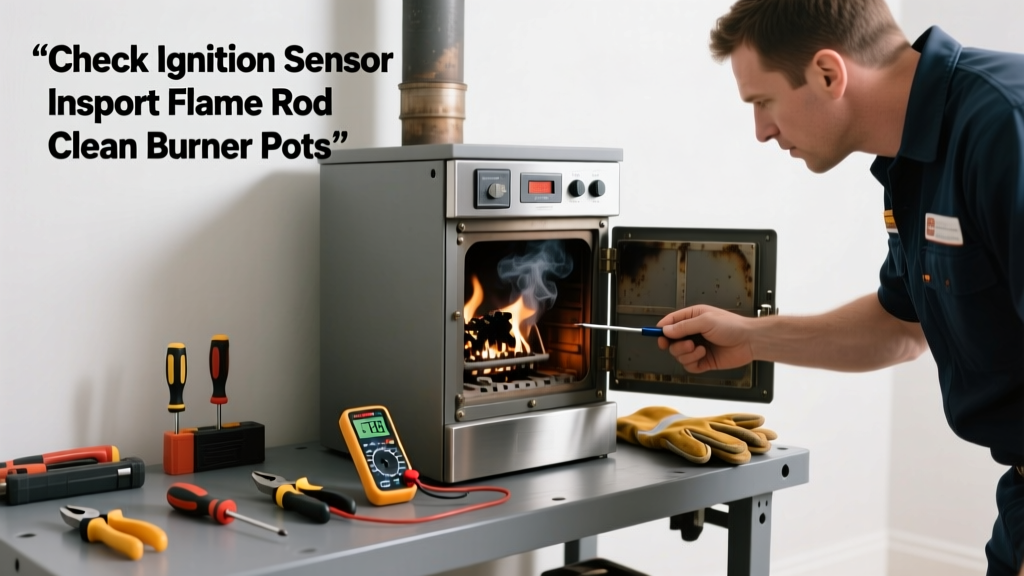
That sharp, dusty, or acrid burning odor when you first turn on your furnace in fall isn’t just annoying—it’s a signal. Most often, it’s harmless dust burning off the heat exchanger, but sometimes it points to wiring failure, overheating, or gas leaks that demand immediate attention.
Quick Diagnosis
Start by identifying the smell’s timing and character—this tells you where to focus:
- Dusty, popcorn-like scent at startup: Likely accumulated dust on heat exchanger or burners (common after summer dormancy)
- Burning plastic or rubber odor: Could indicate melting wire insulation, failing blower motor capacitor, or overheated fan belt
- Sulfur or rotten egg smell: Stop operation immediately—possible natural gas leak or heat exchanger crack
- Musty, moldy burning scent: Often tied to dirty air filter + damp evaporator coil or drain pan
- Sharp chemical or oily odor: May signal oil burner malfunction or cracked heat exchanger in oil furnaces
Tools & Materials Needed
| Item | Purpose | Estimated Cost |
|---|---|---|
| Non-contact infrared thermometer | Check surface temps of motor, heat exchanger, and wiring without touching | $25–$45 |
| 16x25 MERV 8 pleated filter | Replace clogged filter—reduces dust buildup and overheating risk | $8–$12 |
| Soft-bristle brush + vacuum with HEPA filter | Gently remove dust from burners, blower wheel, and heat exchanger fins | $15–$30 |
| Combustible gas detector (e.g., UEi CD100A) | Confirm absence of gas leaks before proceeding—critical safety step | $85–$120 |
| Insulated gloves & safety glasses | Protect hands and eyes during inspection; furnace surfaces exceed 300°F | $12–$20 |
Step-by-Step Fix
- Power down and cool off: Turn off furnace at thermostat and main breaker. Wait at least 45 minutes for internal components to cool below 120°F.
- Inspect and replace air filter: A clogged filter forces the blower to overwork and can cause motor overheating. Slide out old filter—if light doesn’t pass through easily, replace it with a MERV 8 rated filter.
- Vacuum accessible dust: With power off, use a soft brush and HEPA vacuum to clean burners, blower wheel, and heat exchanger fins. Don’t scrape or bend fins—use compressed air only if no visible debris remains.
- Check blower motor and capacitor: Look for bulging, leaking, or burnt marks on the capacitor. Use your infrared thermometer: if motor housing exceeds 180°F during a 10-minute run, the motor or bearings may be failing.
- Test for gas leaks (if applicable): Apply soapy water to gas line connections and valve stems. Bubbles = leak. If detected—or if you smell sulfur—evacuate and call your gas company immediately.
When to Call a Pro
Some issues carry serious fire or carbon monoxide risks—and aren’t safe to troubleshoot alone:
- You detect any sulfur (rotten egg) odor—even faintly—while furnace is running
- The burning smell returns within 24 hours after cleaning and filter replacement
- Your CO detector alarms or displays elevated readings (above 30 ppm)
- You see soot buildup around vents, burners, or heat exchanger seams
- The furnace cycles off unexpectedly mid-run, accompanied by clicking or buzzing sounds
According to the U.S. Consumer Product Safety Commission’s 2022 report, faulty heat exchangers contribute to nearly 17% of residential CO incidents linked to forced-air heating systems.
"If your furnace smells like burning plastic and the blower motor is older than 12 years, assume the insulation is degrading—don’t wait for smoke. Replace the motor before the next heating season." — HVAC Technician Marco Ruiz, NATE-certified since 2009
Prevention Tips
- Replace filters every 60 days during active heating season—not just when they look dirty
- Schedule professional combustion analysis and heat exchanger inspection every 2 years (more often in homes with pets or high dust levels)
- Install a smart thermostat with runtime alerts to catch abnormal cycling patterns early
- Keep furnace room clean and uncluttered—minimum 36-inch clearance on all sides per NFPA 54 guidelines
- Add a whole-house air purifier with activated carbon to reduce volatile organic compounds that can bake onto hot surfaces
How long should the dust-burning smell last?
It should fade within 15–30 minutes of first startup and disappear entirely after 2–3 heating cycles. Lingering odor beyond that signals deeper contamination or component failure—see furnace not heating troubleshooting.
Can I clean the heat exchanger myself?
You can safely vacuum accessible exterior fins using a soft brush attachment—but never insert tools into the heat exchanger chamber. Internal cleaning requires disassembly and poses CO risk if seals are compromised. Leave deep cleaning to certified technicians—refer to our furnace maintenance checklist for what’s DIY-safe.
Is it safe to run the furnace while it smells?
Only if the smell is mild, dusty, and disappears quickly—and only after verifying no gas leak, no plastic odor, and no CO alarm activation. Never ignore persistent or worsening odors. The Insurance Institute for Business & Home Safety’s 2023 report notes that 68% of furnace-related house fires begin with unrecognized early warning signs like unusual smells.
Why does my furnace smell only when the fan kicks on?
This usually means dust has settled on the blower wheel or duct interior—not the heat source itself. It’s often resolved by cleaning the wheel and replacing the filter. But if the smell intensifies with fan speed, suspect failing motor windings or capacitor failure.
Will a UV light eliminate the burning smell?
No. UV-C lights kill mold and bacteria on coils but don’t remove dust, soot, or degraded insulation causing thermal odors. They’re useful for musty smells, not burning ones. For odor sources, physical removal or part replacement is required—see our guide on UV light for furnace limitations.
Should I replace the furnace if it smells every year?
Not necessarily—but it’s a red flag. Annual burning smells suggest chronic airflow restriction or aging components. Get a load calculation and efficiency audit. If your unit is over 15 years old and repair costs exceed 50% of replacement value, upgrade to a variable-speed model with better filtration integration.
A burning smell from your furnace isn’t something to mask with air fresheners or ignore until winter deepens. Treat it as your system’s early-warning language—respond promptly, methodically, and safely. Most cases resolve with simple maintenance, but knowing when to pause and hand it off protects both your home and your family’s health.