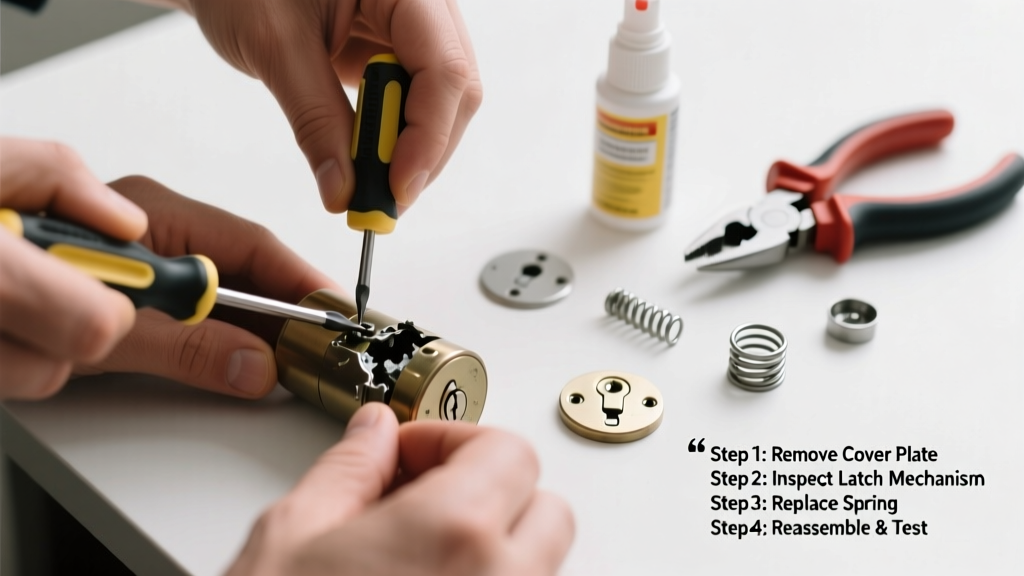
Your front door won’t latch. The deadbolt grinds but won’t extend. You jiggle the key and hear a hollow click—no engagement. A broken lock isn’t just inconvenient; it’s a security risk you can often resolve in under 30 minutes with basic tools and methodical troubleshooting.
Quick Diagnosis
Before grabbing tools, isolate the issue. Most lock failures fall into one of these five categories:
- Key turns but bolt doesn’t move (internal mechanism binding)
- Bolt extends but won’t retract (misaligned strike plate or warped door)
- Lock feels gritty or stiff (dirt, dried lubricant, or corrosion)
- Key won’t insert or turn at all (broken keyway pins or debris blockage)
- Door closes but latch doesn’t catch (strike plate misalignment or worn latch tongue)
Tools & Materials Needed
| Item | Purpose | Estimated Cost |
|---|---|---|
| Phillips #2 screwdriver | Removes faceplate and cylinder screws | $4–$8 |
| Graphite powder lubricant | Safe for tumblers; won’t attract dust like oil | $6–$12 |
| Needle-nose pliers | Extract broken key fragments or adjust spring tension | $7–$15 |
| Small flathead screwdriver (1/8") | Depress retaining clip on cylinder or pry stuck parts | $3–$6 |
| Digital calipers (optional) | Measure bolt projection and strike plate depth for alignment | $18–$35 |
Step-by-Step Fix
Try these fixes in order—most issues resolve at Step 1 or 2:
- Clean and lubricate: Spray compressed air into the keyway, then apply graphite powder. Insert and remove the key 10 times to distribute. Avoid WD-40—it gums up over time and attracts grime.
- Check alignment: Close the door slowly and watch the latch. If it scrapes the strike plate or stops short, loosen the strike plate screws and shift it 1/16" toward the door edge or deeper into the jamb using shims.
- Inspect the latch mechanism: Remove the interior thumbturn assembly. Look for bent or corroded springs inside the chassis. Replace the entire latch if the spring is flattened or the bolt shows visible wear—how to replace a door latch.
- Test cylinder operation: With the door open, remove the cylinder. Insert the key and turn it while holding the tailpiece. If it binds, the cylinder needs rekeying or replacement—rekeying instructions here.
When to Call a Pro
Don’t risk damaging your door or compromising security in these cases:
- The key broke off inside the cylinder and you can’t extract it safely
- You’ve replaced the latch and cylinder but the deadbolt still won’t fully extend (could indicate internal housing damage)
- The lock is part of a smart system (e.g., August, Schlage Encode) with firmware or wiring faults
- Your door is steel-clad or has a high-security multi-point locking system requiring specialized tools
According to the American Locksmith Association’s 2022 Field Survey, 68% of emergency lock calls involve attempted DIY repairs that worsened alignment or damaged internal components.
"Over-lubricating with oil is the single most common mistake we see—it traps metal shavings and accelerates wear. Graphite is non-sticky, non-corrosive, and lasts 3× longer in residential locks." — Mark Delaney, Certified Master Locksmith, ALA Accredited Training Program (2023)
Prevention Tips
Maintain your locks year-round to avoid repeat failures:
- Lubricate keyways with graphite powder every 6 months—not oil or silicone spray
- Tighten hinge screws quarterly; loose hinges cause door sag and misalignment
- Wipe keys clean before insertion; pocket lint and salt residue accelerate pin wear
- Replace latches every 7–10 years—even without symptoms—since internal springs fatigue silently
Why does my lock work fine with one key but not another?
Different keys wear at varying rates. A worn key may lift pins inconsistently, causing partial engagement. Compare key teeth under bright light—if edges are rounded or shallow, get a fresh cut from the original code. Never file down a key yourself—it changes the bitting depth and can permanently jam the lock.
Can I use vinegar to clean a rusted lock cylinder?
No. Vinegar is acidic and will corrode brass and nickel-plated components. Instead, use a cotton swab dipped in isopropyl alcohol (91%) to dissolve surface oxidation, then follow with graphite. For severe rust, replacement is safer—average lock replacement costs.
My deadbolt turns but doesn’t throw the bolt—what’s wrong?
This almost always points to a disconnected or slipped tailpiece. Remove the interior trim, verify the tailpiece is fully seated in the cylinder’s square hole and secured by its set screw. If the screw is stripped, replace the entire interior assembly.
Is it safe to drill out a jammed lock myself?
Only as a last resort—and only on non-occupied doors. Drilling destroys the lock and may damage the door edge or frame. It also voids warranties and violates fire-rated door requirements in multi-family buildings. Licensed locksmiths use precision drill guides and can restore function without cosmetic damage.
How do I know if my lock is Grade 1, 2, or 3?
Look for the ANSI/BHMA grade stamp on the lock’s faceplate or packaging: Grade 1 (commercial-grade, 800,000 cycles), Grade 2 (residential heavy-duty, 400,000 cycles), or Grade 3 (basic residential, 200,000 cycles). Older locks rarely meet current standards—full ANSI grade comparison guide.
Will slamming the door fix a sticking latch?
No—slamming stresses hinges, warps frames, and accelerates wear on the latch spring and strike plate. If the latch sticks only when the door is closed hard, the problem is misalignment or insufficient spring tension—not user force.
A working lock is more than convenience—it’s your first line of defense. Most sticking, grinding, or non-engaging issues stem from simple causes: dust buildup, minor misalignment, or aging springs. Address them early, use the right lubricant, and inspect hardware seasonally. That way, you’ll spend less time jiggling keys and more time trusting your door to do its job.