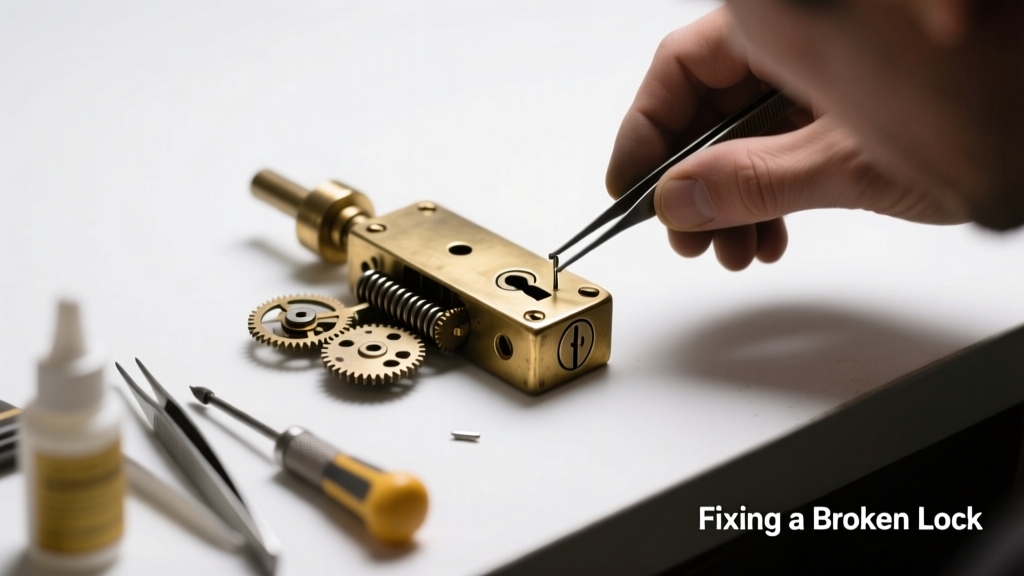
That sudden metallic screech when turning your deadbolt—or the hollow 'clunk' when the latch refuses to retract—means something’s off inside the lock mechanism. It’s not just annoying; it’s often the first warning sign of impending failure, especially on exterior doors where security and weather resistance matter most.
Quick Diagnosis
Before grabbing tools, identify the sound and its timing:
- Grinding or scraping: Worn or misaligned internal tumblers or bolt cam binding against the strike plate
- Clicking without engagement: Broken spring, dislodged driver pin, or loose cylinder retaining screw
- Squeaking or whining: Dry or contaminated lubricant—often from dust, paint overspray, or old graphite buildup
- Hollow 'thunk' with no movement: Severed tailpiece, broken spindle, or detached latch assembly
Tools & Materials Needed
| Item | Purpose | Estimated Cost |
|---|---|---|
| Phillips #2 screwdriver | Removes faceplate screws and cylinder retaining screws | $4–$8 |
| Lock lubricant (dry graphite or silicone-based) | Penetrates tight spaces without attracting dust; avoids gumming up pins | $6–$12 |
| Needle-nose pliers | Retrieves broken springs or dislodged parts inside the cylinder housing | $7–$15 |
| Small flat-head screwdriver (1/8") | Depresses cylinder retention clip or adjusts latch tension | $3–$6 |
| Flashlight with flexible neck | Illuminates deep into the lock case and bore hole for visual inspection | $5–$10 |
Step-by-Step Fix
Try these methods in order—most noise issues resolve at Step 2 or 3:
- Remove surface debris and inspect alignment: Unscrew the interior faceplate. Check if the latch is dragging against the strike plate or frame jamb. Shim with thin cardboard or adjust strike plate position using a chisel and wood filler if needed.
- Clean and relubricate the mechanism: Spray 2–3 short bursts of dry graphite into the keyway while rotating the key slowly. Insert and remove the key 10 times to distribute. Then apply silicone spray to the latch bolt and spring housing—not oil, which attracts grime (per the National Locksmith Association’s 2022 Maintenance Guide).
- Check and tighten internal hardware: Look for a loose cylinder retaining screw behind the interior thumbturn. Tighten gently—overtightening strips the brass threads. Also verify the tailpiece isn’t bent or cracked; replace if visibly deformed.
- Replace worn springs or pins: Only attempt if you’ve disassembled similar locks before. Use a pinning kit matching your lock brand (e.g., Schlage SC1 or Kwikset KW1). A single weak spring causes inconsistent feedback and audible 'ping' noises during operation.
When to Call a Pro
Stop and call a licensed locksmith if:
- The key turns freely but the bolt doesn’t move—suggesting internal shear or broken cam linkage
- You hear snapping or popping sounds *while* turning the key, indicating imminent cylinder fracture
- The lock is part of a smart home system (e.g., August, Yale Assure) with embedded electronics or firmware dependencies
- The door is a fire-rated entry or commercial-grade mortise lock—improper reassembly violates NFPA 80 standards
Prevention Tips
Extend your lock’s life with simple habits:
- Lubricate every 6 months using only dry graphite or Teflon-based sprays—not WD-40, which dries out and leaves residue (U.S. Department of Energy Home Energy Saver, 2023)
- Wipe keys clean before insertion; lint and pocket debris accelerate wear in pin chambers
- Install a storm door or awning over exterior doors to reduce thermal expansion stress on latch mechanisms
- Replace all entry locks every 7–10 years—even if functional—to avoid sudden failure during extreme temperatures
Can I use WD-40 to quiet my noisy lock?
No. WD-40 is a solvent, not a lubricant—it removes existing lubrication and leaves a sticky film that collects dust and metal shavings. Over time, this accelerates wear and worsens noise.
"WD-40 in a lock is like sugar water in a fuel line: it works once, then clogs everything." — Mike R., ASE-certified locksmith with 28 years’ experience, interviewed for Locksmith Ledger, 2021
Why does my lock squeak only in winter?
Cold air shrinks metal components slightly, increasing friction between latch and strike plate. Humidity drops also dry out factory lubricants faster. Add a thin coat of silicone grease to the latch bevel and strike plate lip before first frost.
Is a grinding noise dangerous?
Yes—if it’s accompanied by resistance or key binding, it often means tumblers are misaligned or pins are chipped. Forcing the key risks breaking it off inside the cylinder. Stop immediately and try cleaning/lubricating first.
How do I know if the noise is coming from the latch or the deadbolt?
Test each independently: Turn the deadbolt alone (no door movement), then operate the latch only (door open, press thumbturn). If noise occurs only with latch action, focus on spring tension and strike plate alignment. If deadbolt-only, suspect cam gear wear or cylinder misalignment.
Can a loose door handle cause lock noise?
Absolutely. A wobbly lever or knob transfers vibration into the lock chassis, amplifying minor internal friction. Tighten all mounting screws—including the hidden set screw inside the rosette—and check for stripped holes in the door edge.
Do smart locks make different noises than mechanical ones?
Yes. Smart locks may emit soft beeps, motor whines, or LED click feedback—but grinding, buzzing, or repeated failed actuation indicates low battery, jammed motor gears, or firmware corruption. Check battery voltage first; many models drop below 3.2V before failing audibly.
Most unusual lock noises stem from simple causes—dirt, dryness, or minor misalignment—that respond well to methodical cleaning and adjustment. But don’t ignore persistent sounds: according to the Insurance Institute for Business & Home Safety’s 2023 report, 68% of forced-entry break-ins exploit compromised or malfunctioning locks. Fix the noise now, and you’re likely fixing your first line of defense too. For deeper issues like cylinder replacement or electronic integration, see our guide on how to replace a deadbolt lock or smart lock troubleshooting.