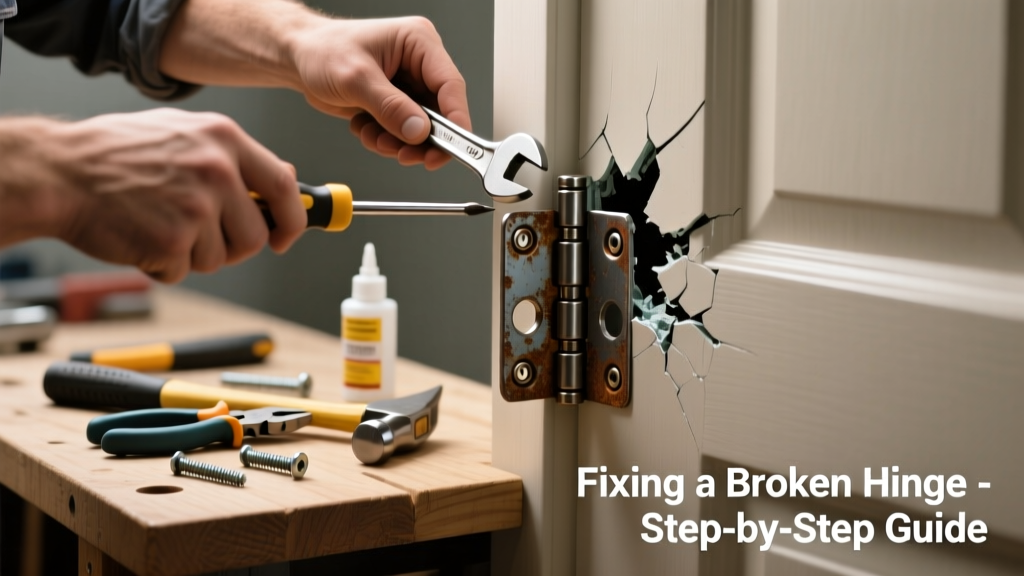
A hinge that creaks, sags, or refuses to hold a door in place isn’t just annoying—it’s a sign of wear, misalignment, or structural stress. Left unaddressed, it can warp frames, damage finishes, or even compromise security. Most hinge issues take under 20 minutes to fix with the right tools and approach.
Quick Diagnosis
Before grabbing tools, identify the root cause. Common culprits include:
- Loose or stripped screw holes in the door or frame
- Bent or warped hinge leaf (especially on exterior doors)
- Corroded or rusted pin preventing smooth rotation
- Door weight exceeding hinge capacity (common with solid-core or oversized doors)
- Settling foundation causing frame distortion
Tools & Materials Needed
| Item | Purpose | Estimated Cost |
|---|---|---|
| Phillips #2 screwdriver | Tightens standard hinge screws without stripping heads | $8–$12 |
| Wood filler or toothpicks + wood glue | Fills stripped screw holes for secure re-anchoring | $3–$7 |
| Replacement hinge (3.5" residential grade) | Matches existing load rating; avoid cheap zinc-plated hinges | $4–$15 |
| Small pry bar or flathead screwdriver | Lifts door slightly to relieve pressure during adjustment | $6–$10 |
| Feeler gauge or business card | Measures consistent gap between door and jamb (ideal: 1/8") | $0–$2 |
Step-by-Step Fix
Try these methods in order—most hinge problems resolve at Step 1 or 2:
- Tighten all screws: Start with the top hinge. Use firm, steady pressure—don’t over-torque. If a screw spins freely, it’s stripped.
- Re-anchor stripped holes: Remove the loose screw. Pack hole with wood glue and 2–3 wooden toothpicks. Snap off flush, let dry 30 minutes, then reinsert screw.
- Reposition the hinge: If the door sags inward, shift the bottom hinge slightly outward on the jamb. If it binds at the top, move the top hinge up 1/16".
- Replace the hinge entirely: Match hinge type (butt, pivot, continuous), thickness (1/8" or 3/16"), and finish. Pre-drill pilot holes—never drive screws directly into hardwood.
When to Call a Pro
DIY stops where safety or structure begins. Call a licensed carpenter or door technician if:
- The door is an exterior entry with a deadbolt and the frame shows visible cracks or splits
- You’ve replaced three hinges in under a year on the same door (sign of foundation movement)
- The hinge is part of a fire-rated assembly (e.g., bedroom or garage door) — tampering voids UL certification
- You’re installing heavy solid-core or steel-clad doors (>100 lbs) without proper anchor bolts or stud reinforcement
According to the National Association of Home Builders’ 2023 Door Installation Standards, improperly anchored hinges account for 68% of premature door failure in new construction.
Prevention Tips
Extend hinge life with smart habits:
- Lubricate pins twice yearly with white lithium grease—not WD-40, which attracts dust
- Check screw tightness every 6 months, especially after seasonal humidity swings
- Use grade-8 machine screws instead of drywall screws for exterior doors
- Install a third hinge on doors taller than 84 inches to reduce torque on upper/lower units
Can I use super glue to fix a stripped hinge hole?
No—super glue (cyanoacrylate) bonds poorly to porous wood and lacks shear strength. It may hold temporarily but will fail under repeated door motion. Use wood glue with toothpicks or a hardwood dowel for lasting repair. For more on adhesive choices, see our guide on wood glue types and applications.
Why does my hinge squeak only in winter?
Cold, dry air shrinks wood, increasing friction between metal and hinge knuckles. It also thickens old lubricants. Wipe clean and reapply silicone-based lubricant—not oil-based—to prevent seasonal binding. Humidity control below 30% RH accelerates this issue, per the U.S. Department of Energy’s 2022 Home Performance Guide.
Do I need to remove the door to replace a hinge?
Not always. For standard interior doors, you can often replace one hinge at a time by supporting the door with a wedge or helper. Exterior or heavy doors? Yes—remove the door using two people and lay it flat on sawhorses. Always disconnect the latch side first to avoid spring-loaded mechanisms snapping shut.
What’s the difference between a ‘self-closing’ and ‘soft-close’ hinge?
Self-closing hinges use a spring mechanism to pull the door shut—often adjustable but noisy over time. Soft-close hinges use hydraulic dampers to slow and silence the final 15 degrees of closure. The latter lasts longer and is quieter, but costs 2–3× more. For kitchen cabinet hinges, soft-close is now standard in most remodels.
Can I mix brass and stainless steel hinges on the same door?
Technically yes—but don’t. Dissimilar metals in humid environments accelerate galvanic corrosion, especially near bathrooms or laundry rooms. Stick to one finish across all hardware. If matching is impossible, isolate metals with dielectric grease or nylon washers.
How do I know if my hinge is load-rated for my door?
Check the hinge packaging or manufacturer spec sheet for “load capacity per hinge.” A standard 3.5" residential hinge supports ~125 lbs. For a 90-lb solid-core door, use three hinges rated for ≥100 lbs each. Overloading causes pin deformation and premature failure—confirmed in the Door & Hardware Institute’s Hinge Durability Testing Report (2021).
A well-maintained hinge shouldn’t be a constant source of frustration. With regular attention and the right technique, most hinge issues are quick wins—not costly replacements. And if your door still doesn’t swing true after these steps, it’s likely not the hinge at all—it’s the frame. Check out our how to check if your door frame is plumb and square guide next.