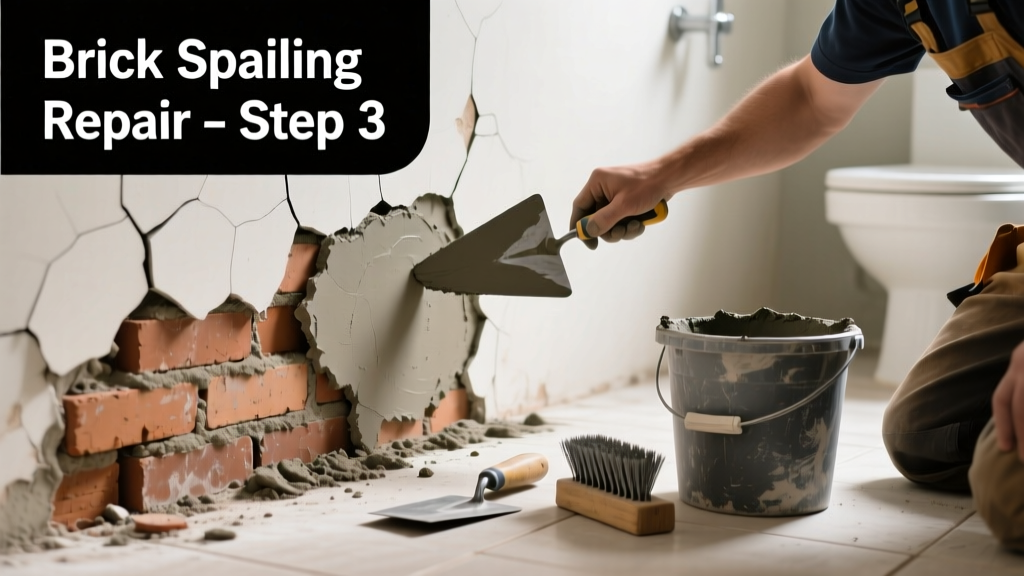
Brick spalling in your bathroom isn’t just unsightly—it’s a red flag for trapped moisture and potential structural compromise. Unlike exterior brick, bathroom brick faces constant steam, splashes, and temperature swings that accelerate deterioration. If you’re seeing flaking, crumbling, or powdering on brick surfaces near your shower, tub, or vanity, act now before water migrates behind the wall.
Quick Diagnosis
Spalling here rarely happens by accident. Pinpoint the root cause first:
- Failed or missing grout or caulk at brick-to-tile or brick-to-fixture transitions
- Non-breathable sealant (e.g., silicone or epoxy) trapping vapor behind brick veneer
- Lack of proper substrate—brick installed directly over drywall or green board instead of cement backer board
- Unvented bathroom fan or no exhaust fan, raising relative humidity above 60% regularly
- Cracked or deteriorated mortar joints allowing water infiltration
Tools & Materials Needed
| Item | Purpose | Estimated Cost |
|---|---|---|
| Wire brush (stiff-bristle) | Removes loose debris and dust without damaging sound brick | $8–$12 |
| Masonry chisel & hammer | Removes severely spalled brick or damaged mortar without cracking adjacent units | $15–$22 |
| Hydrophobic lime-based mortar (Type N) | Allows moisture vapor transmission while bonding securely; avoids salt buildup | $14–$18 per 50-lb bag |
| Vapor-permeable silane/siloxane sealer | Repels liquid water but lets interior moisture escape—critical for wet areas | $22–$34 per quart |
| Angle grinder with diamond cup wheel | Smooths uneven edges after brick removal and cleans joint profiles | $45–$75 (rental: $25/day) |
Step-by-Step Fix
Choose the method based on severity. Always wear N95 mask and safety goggles—brick dust contains crystalline silica.
- Light surface spalling (flaking only): Brush away loose material, clean with white vinegar solution (1:1 with water), then apply vapor-permeable sealer after 48 hours of drying.
- Moderate spalling (1/8"–1/4" depth, localized): Chip out damaged brick using chisel and hammer. Replace with matching reclaimed brick set in Type N lime mortar. Tool joints flush—not recessed—to avoid water pooling.
- Widespread spalling (>3 bricks affected): Remove all compromised brick down to sound substrate. Inspect backer board for soft spots or mold; replace if damp or discolored. Reinstall brick on fresh cement board with 1/8" expansion gaps at floor/wall junctions.
When to Call a Pro
DIY crosses into hazardous territory when:
- More than 10% of the brick surface is affected—this often signals systemic moisture intrusion behind walls
- Spalling occurs within 6 inches of the floor slab, suggesting rising damp or failed waterproofing membrane
- You detect musty odors, discoloration, or spongy drywall behind brick—possible hidden rot or mold requiring abatement
- The brick is part of a load-bearing wall (rare in bathrooms but possible in older row homes)
According to the Brick Industry Association’s 2022 Technical Note 11B, improper repair of spalled brick in high-humidity zones increases long-term failure risk by 300% compared to certified mason intervention.
Prevention Tips
Stop recurrence by addressing the environment—not just the symptom:
- Install a timer-controlled bathroom fan that achieves 8 air changes per hour (minimum 50 CFM for under 100 sq ft)
- Re-caulk all brick-to-fixture seams annually with ASTM C920 silicone sealant rated for continuous immersion
- Avoid sealing brick with acrylic or polyurethane coatings—they trap vapor and worsen spalling
- Run exhaust fan for 20 minutes after every shower, even if it feels dry—humidity lingers longer than you think
Can I use bleach on spalled brick?
No. Bleach degrades mortar binders and accelerates efflorescence. It also reacts with iron oxides in brick clay, causing permanent staining. Use diluted white vinegar instead for organic growth or mild cleaning.
Is this covered by homeowners insurance?
Rarely. Most policies exclude damage from gradual moisture exposure or lack of maintenance. However, if spalling resulted from a sudden plumbing leak (e.g., burst supply line behind wall), file a claim with documentation—including dated photos and plumber’s report.
Can I paint over spalled brick to hide it?
Painting seals the surface and traps moisture underneath, guaranteeing faster, deeper spalling. If appearance is critical, consult a mason about thin-brick veneer replacement or a breathable mineral limewash (see safe bathroom finish options).
How long does repaired brick last in a bathroom?
With proper substrate, vapor-open mortar, and active humidity control, repairs last 15–20 years. Without those, expect repeat spalling in 2–4 years—especially if the bathroom lacks an exhaust fan or has a cracked grout line near the shower curb.
Do I need to remove tile if brick is behind it?
Only if moisture testing (via non-invasive moisture meter) shows >18% RH in the substrate beneath tile. In most modern builds, brick is decorative veneer applied over cement board—not structural backing. But if tile is loose or hollow-sounding, investigate further before assuming brick is the sole issue.
What’s the difference between spalling and efflorescence?
Efflorescence is a white, powdery salt deposit that wipes off easily and indicates moisture moving through masonry—not surface breakdown. Spalling involves actual loss of brick material. Efflorescence often precedes spalling: the U.S. EPA estimates that 14% of household water usage is from leaks, many invisible until salts appear or surfaces begin to crumble.
"Brick in wet interiors demands breathability—not barrier protection. Sealants that block vapor transmission are the #1 preventable cause of spalling in bathroom applications." — Masonry Restoration Guide, National Concrete Masonry Association, 2021
Fixing brick spalling in the bathroom is less about patching and more about restoring balance: between moisture in and moisture out, between aesthetics and function, and between immediate repair and long-term habit change. A properly vented, well-sealed, and thoughtfully maintained brick surface can endure decades—even in steam-heavy spaces. Start with the fan, not the trowel.