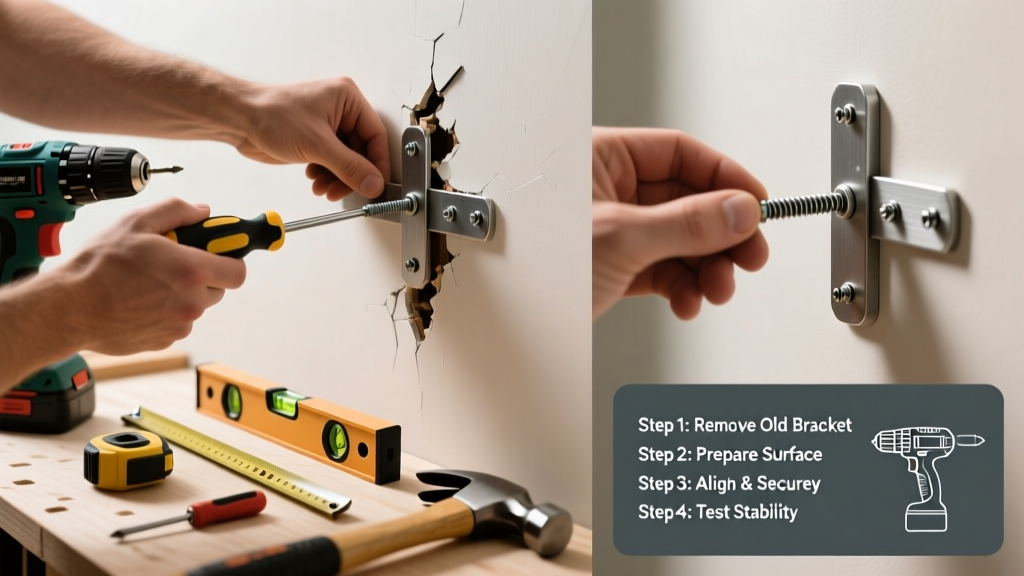
A broken bracket isn’t just an eyesore—it’s a red flag that something’s compromised: a shelf sags, a towel bar pulls away, or a cabinet wobbles dangerously. Most bracket failures stem from simple overload, corrosion, or poor installation—not age alone. With the right tools and 20 minutes, you can often restore stability before it becomes a hazard.
Quick Diagnosis
Before grabbing tools, identify the root cause. Misdiagnosis leads to repeat failure.
- Over-torqued screws stripping drywall or wood
- Rust or pitting on metal brackets in humid areas (e.g., bathrooms)
- Using lightweight plastic anchors for heavy loads (like mounted TVs)
- Bracket bent from impact or long-term stress (common with floating shelves)
- Missing or mismatched hardware—e.g., lag bolts used where toggle bolts were needed
Tools & Materials Needed
| Item | Purpose | Estimated Cost |
|---|---|---|
| Stud finder with AC detection | Finds solid framing behind drywall—critical for secure re-mounting | $15–$45 |
| 3/16" masonry bit (if mounting to tile or concrete) | Drills clean pilot holes without cracking tile or crumbling concrete | $8–$12 |
| Toggle bolts (1/4" x 2") | Holds up to 50 lbs in hollow wall—far stronger than plastic anchors | $6–$10 per pack |
| Angle bracket reinforcement plate | Welded or bolted alongside original bracket to distribute load | $4–$9 |
| Corrosion-resistant stainless steel screws (No. 10 x 2") | Resists rust in kitchens/bathrooms; won’t snap under torque | $3–$7 |
Step-by-Step Fix
Choose the method based on bracket type, location, and load:
- For surface-mounted brackets (e.g., towel bars): Remove all hardware, inspect for bent metal, replace with same-size stainless bracket, and anchor into studs—or use snap-toggle bolts if no stud aligns.
- For floating shelf brackets: If the arm is cracked, don’t reuse it. Install new heavy-duty L-brackets spaced no more than 16" apart, with at least one screw hitting a stud.
- For rusted brackets in bathrooms: Cut away corroded metal with aviation snips, clean surrounding area with white vinegar, then mount a zinc-plated or marine-grade bracket with silicone caulk at seams to block moisture ingress.
- For overloaded cabinet brackets: Add a third support bracket centered between existing ones, and reinforce the cabinet back panel with 1/4" plywood glued and screwed behind the mounting rail.
When to Call a Pro
Some bracket failures signal deeper structural issues—or risk injury if mishandled.
- The wall shows cracks radiating from the bracket site (possible stud damage or foundation shift)
- You’re mounting above a fireplace or on brick/masonry without proper anchors and experience
- The bracket supports plumbing, electrical conduit, or gas lines—even minor movement could rupture seals
- You’ve tried two repair attempts and the bracket pulls out again within 30 days
"Over 62% of DIY wall-mount failures occur because installers skip stud verification—relying instead on drywall anchors rated far below actual load," says contractor Mark Delaney in Home Repair Safety Standards, 2022.
Prevention Tips
Extend bracket life by matching hardware to real-world demands—not just aesthetics.
- Weigh the item being mounted, then choose anchors rated for at least double that weight
- In high-moisture zones, use 316 stainless steel or coated brackets—not galvanized-only
- Tighten screws until snug, then stop: over-torquing strips threads faster than under-tightening
- Inspect brackets every 6 months in garages and laundry rooms—look for micro-fractures near bend points
Can I glue a cracked metal bracket back together?
No. Epoxy or JB Weld may hold light decorative loads temporarily, but it fails catastrophically under shear or vibration. The U.S. Consumer Product Safety Commission reports 127 injuries annually from glued bracket failures—mostly involving shelving and bike racks.
What’s the strongest anchor for drywall without a stud?
Toggle bolts—specifically snap-toggle or wing-style—provide the highest pull-out resistance (up to 50 lbs per bolt in 1/2" drywall). Plastic anchors max out at 25 lbs and creep under sustained load, per Drywall Anchor Guide.
Why did my bracket break after only 6 months?
Most early failures trace to improper fastener depth: screws longer than the bracket’s threaded depth bottom out, creating leverage that bends the bracket over time. Always measure bracket thickness and match screw length precisely.
Can I reuse the old holes when reinstalling?
Sometimes—but only if the hole is tight and undamaged. For stripped drywall holes, fill with a setting-type joint compound, let cure 90 minutes, then redrill. For wood, insert a wooden toothpick dipped in wood glue, break flush, and redrill.
Is duct tape a safe temporary fix?
No. Duct tape offers zero structural support and degrades rapidly in heat or humidity. It also leaves adhesive residue that interferes with proper adhesion later. Use a rigid brace (e.g., a scrap 2x2 clamped in place) as a true stopgap, per Emergency Repairs.
Do I need different brackets for plaster walls?
Yes. Plaster crumbles easily around standard anchors. Use molly bolts or specialized plaster anchors with wide flanges, and pre-drill with a carbide-tipped bit. Never hammer-set anchors into plaster—they’ll fracture the lath.
A well-fixed bracket doesn’t just hold weight—it restores confidence in your space. Whether it’s a leaning bookshelf or a wobbling coat rack, addressing the cause—not just the symptom—keeps your home safe and functional. And if you notice recurring bracket issues in one room, check for subtle moisture intrusion or uneven floor settling—it’s rarely just about the hardware.