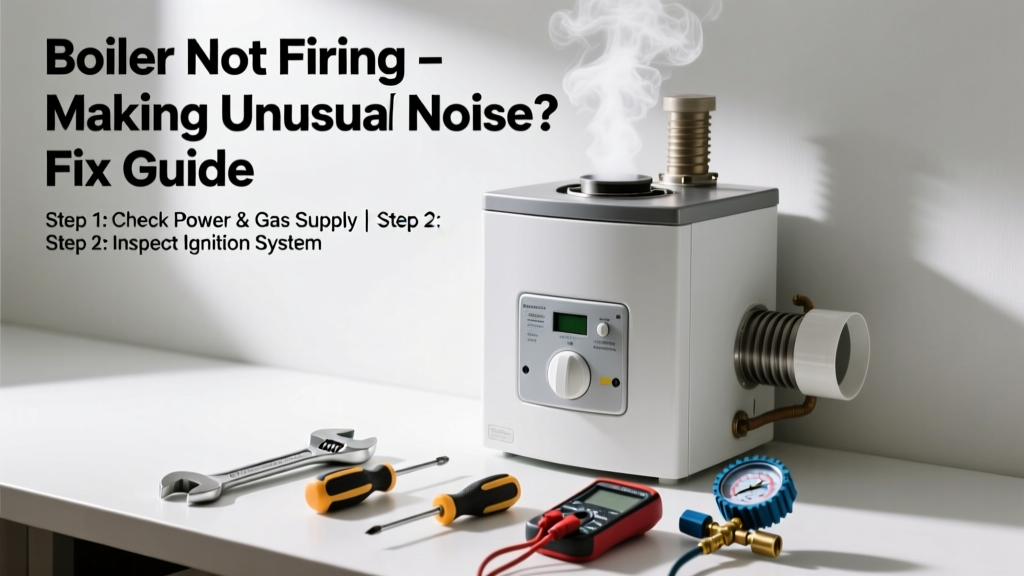
If your boiler isn’t firing but is making clanging, whistling, or gurgling noises, it’s not just annoying—it’s a warning sign. These sounds often point to pressure imbalances, airlocks, failing components, or dangerous gas flow issues. Ignoring them risks system failure, carbon monoxide leaks, or even cracked heat exchangers.
Quick Diagnosis
Start here before grabbing tools. Most noisy non-firing boilers fall into one of these categories:
- Air trapped in the system (causing gurgling or knocking)
- Low water pressure (< 1 bar) preventing ignition
- Faulty gas valve or blocked burner jets (hissing or clicking without flame)
- Limescale buildup in heat exchanger (kettling noise—loud rumbling or banging)
- Failed ignition electrode or thermocouple (repeated sparking but no sustained flame)
Tools & Materials Needed
| Item | Purpose | Estimated Cost |
|---|---|---|
| Combination wrench set | Tightening isolation valves and bleed screws | $18–$35 |
| Pressure gauge (0–3 bar) | Verifying system pressure without relying on boiler display | $22–$40 |
| Bleed key (square-end) | Releasing trapped air from radiators and boiler auto-bleed valve | $3–$8 |
| Soft-bristle brush & pipe cleaner | Cleaning ignition electrode and burner ports | $6–$12 |
| Gas leak detector spray (soapy water) | Checking for micro-leaks at gas connections | $5–$10 |
Step-by-Step Fix
Try these methods in order—most issues resolve in under 20 minutes. Always power off and isolate gas/water supply before starting.
- Bleed the system: Turn off boiler and let cool. Open radiator bleed valves (starting downstairs, working up) until water—not air—comes out. Check boiler pressure afterward; top up to 1.2–1.5 bar using filling loop if needed.
- Clean the ignition electrode: Locate the thin metal rod near the burner. Power off, unscrew, gently clean with emery cloth (not sandpaper), reseat firmly, and check alignment—must be 3–4 mm from burner port.
- Descale the heat exchanger (if kettling): For older combi boilers in hard-water areas, flush with Fernox DS40 or Sentinel X100 descaler per manufacturer instructions. Do not use vinegar—it corrodes copper and aluminum alloys.
- Test gas supply: Use soapy water on gas inlet fittings and regulator. Bubbles indicate leaks. If found, shut off main gas valve and call a Gas Safe engineer immediately.
When to Call a Pro
Stop and call a certified heating engineer if you encounter any of these:
- Smell of gas (rotten egg odor) or hear hissing near gas lines
- Carbon monoxide alarm triggers or symptoms like headaches, nausea, or dizziness
- Boiler displays error codes E118 (gas pressure fault) or EA (flame failure with gas present) on Vaillant or Baxi units
- Water pressure drops >0.5 bar per week—indicates hidden leak or failing expansion vessel
- You’re uncomfortable handling gas connections or electrical terminals (e.g., thermocouple wiring)
According to the Gas Safe Register’s 2023 incident report, 62% of domestic CO poisonings linked to boilers involved DIY repairs on gas controls or venting systems.
"Never bypass a safety lockout—even temporarily. Modern boilers disable ignition for good reason: low flow, overheating, or flue blockage can turn a minor fault into a life-threatening hazard." — John Rafferty, Gas Safe Registered Engineer since 2007
Prevention Tips
Extend boiler life and avoid repeat noise/failure cycles with these habits:
- Flush the system every 3–5 years (more often in hard-water areas like London or Yorkshire)
- Install a magnetic filter (e.g., MagnaClean Pro2) at installation or during service
- Maintain pressure between 1.0–1.5 bar—check monthly, especially after winter
- Schedule annual servicing by a Gas Safe engineer (required for warranty validity on most brands)
- Set thermostat to 60–65°C max—higher temps accelerate limescale and stress components
Why does my boiler make a loud bang when it starts?
This is usually delayed ignition: gas builds up before lighting, then ignites all at once. Causes include dirty burners, weak spark, or incorrect gas pressure. Clean burner ports and verify electrode gap first. If banging persists, gas pressure may need adjustment by a professional—low gas pressure is a common culprit.
Can I reset my boiler myself if it won’t fire?
Yes—but only after ruling out obvious causes. Press and hold the reset button (usually red or labeled ‘R’) for 3–5 seconds. Wait 90 seconds for ignition sequence. If it fails twice, stop. Repeated resets mask underlying faults like flue blockages or pump seizure—and could damage the PCB.
Is gurgling noise dangerous?
Gurgling alone isn’t immediately dangerous, but it signals trapped air or low water flow—both reduce efficiency and increase strain on the pump and heat exchanger. Left unaddressed, it can lead to overheating and premature component failure. Bleed radiators and check for closed valves on the flow/return pipes—cold radiators with hot pipes often trace back to this.
What does a whistling noise mean?
Whistling typically means restricted water flow through a valve or coil—often the diverter valve in combi boilers or a partially closed lockshield valve. Check all radiator valves are fully open. If whistling continues at the boiler itself, the internal plate heat exchanger may be scaling up, especially in units over 5 years old in hard-water zones.
How long should a boiler last after fixing noise issues?
A properly diagnosed and repaired boiler lasts 10–15 years on average—but lifespan drops sharply if root causes like poor water quality or undersized pipework aren’t addressed. According to the UK’s Building Research Establishment (BRE, 2022), boilers with annual maintenance and chemical inhibition last 37% longer than those without.
Can limescale cause both noise AND failure to ignite?
Absolutely. Heavy limescale insulates the heat exchanger, causing localized overheating. This triggers high-limit safety cutouts—stopping ignition to prevent damage. Simultaneously, steam pockets form and collapse violently (kettling), creating banging. Descale and install an inhibitor like Sentinel X100—full descaling procedure includes flushing and refilling with treated water.
Noisy, non-firing boilers rarely fix themselves—and waiting risks bigger bills or unsafe operation. Most early-stage issues respond to methodical troubleshooting, but never gamble with gas, electricity, or pressure. When in doubt, pause, isolate, and consult a qualified technician. Your boiler’s quiet hum isn’t just comfort—it’s proof the system is breathing right.