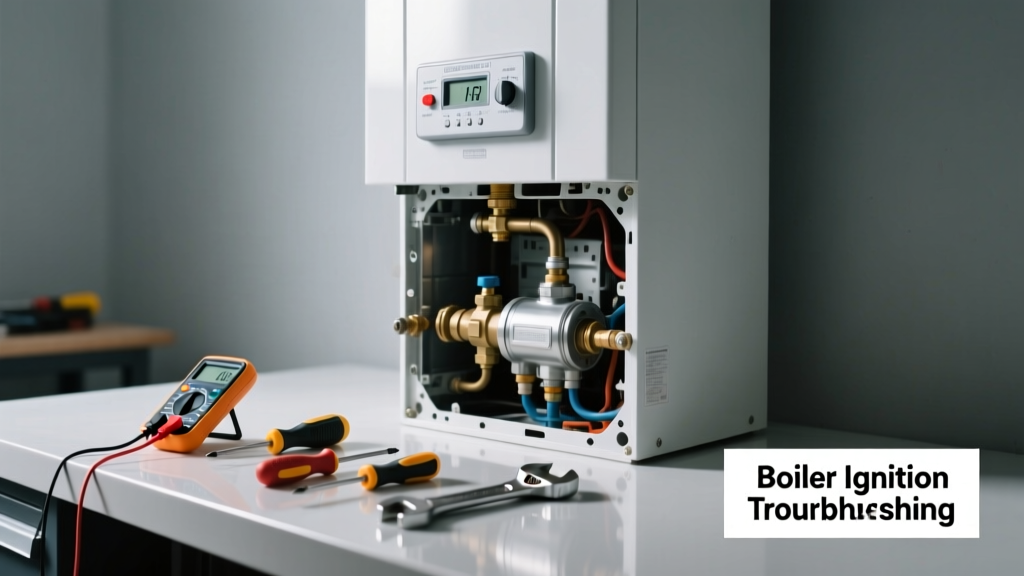
Waking up to icy radiators and no hot water is stressful—especially when your boiler clicks but refuses to fire. Most 'no-fire' issues stem from simple, fixable causes like power loss, low pressure, or a blocked condensate pipe—not a dead heat exchanger. Start here before calling for emergency service.
Quick Diagnosis
Before grabbing tools, eliminate the obvious culprits in under five minutes:
- No power to the boiler (check circuit breaker and fused spur)
- Boiler pressure below 0.8 bar (visible on pressure gauge)
- Condensate pipe frozen (common in sub-zero weather, especially on external walls)
- Thermostat or timer set incorrectly or powered off
- Gas supply shut off at the main valve or meter
Tools & Materials Needed
| Item | Purpose | Estimated Cost |
|---|---|---|
| Multimeter | Test voltage at boiler terminals and gas valve coil | $25–$60 |
| Pressure gauge (if built-in is unreliable) | Verify system pressure independently | $12–$28 |
| Small funnel and warm water | Thaw frozen condensate pipe safely | $3–$8 |
| Adjustable wrench | Tighten loose gas or water connections | $10–$22 |
| Flashlight | Inspect ignition electrode, burner, and flue terminals | $8–$18 |
Step-by-Step Fix
Work through these methods in order—each addresses a distinct failure point. Always isolate power and gas before touching internal components.
- Reset the boiler: Press and hold the reset button (usually red) for 5 seconds. Wait 90 seconds—many modern boilers auto-restart after a lockout due to failed ignition attempts.
- Check and repressurize: If pressure reads below 0.8 bar, use the filling loop to raise it to 1.0–1.5 bar. Open both valves slowly, monitor the gauge, then close both tightly. Over-pressurizing triggers safety cutouts.
- Thaw the condensate pipe: Locate the white plastic pipe exiting the boiler (often runs externally). If ice is visible or the pipe feels solid, pour warm (not boiling) water over the exposed section or wrap with a hot water bottle. Never use a blowtorch or hair dryer—fire risk and pipe damage.
- Clean the ignition electrode: Turn off power and gas. Remove the front panel, locate the thin metal rod near the burner. Gently wipe with fine-grit sandpaper (400+ grit) to remove carbon buildup—do not bend or adjust its position.
When to Call a Pro
Stop immediately if you encounter any of these:
- Gas smell (rotten egg odor) anywhere near the boiler or pipework
- Boiler error codes indicating flame sensor fault (e.g., E118 on Vaillant, D5 on Worcester), which require multimeter testing and calibration
- Repeated ignition failures after cleaning electrodes and checking pressure—suggests failing gas valve or PCB
- No voltage reading at the gas valve terminals during startup (indicates control board or wiring fault)
- Water leaks from heat exchanger or pump housing—corrosion may be advanced
According to the Gas Safe Register’s 2023 incident report, 62% of reported boiler-related carbon monoxide cases involved DIY tampering with gas valves or flue systems by unqualified individuals.
"Never bypass a flame failure lockout—even temporarily. It disables the primary safety that prevents unburnt gas from accumulating in your home." — Gas Safe Register Technical Bulletin, 2022
Prevention Tips
Extend your boiler’s reliability with these habits:
- Bleed radiators annually before winter to maintain balanced flow and reduce strain on the pump
- Have the boiler serviced every 12 months—carbon buildup on electrodes and heat exchangers accelerates without cleaning
- Insulate external condensate pipes with foam lagging rated for -20°C (BS 5422 Class 1)
- Install a smart thermostat with boiler health monitoring (e.g., compatible models for older systems)
- Keep the area around the boiler clear—minimum 30 cm clearance on all sides for ventilation and access
Why does my boiler click but not ignite?
The clicking sound is the spark igniter firing—but no flame means either gas isn’t reaching the burner (valve issue, low pressure, or blockage) or the flame sensor can’t detect ignition (dirty or misaligned). Check gas supply first, then inspect the electrode and sensor.
Can I reset my boiler multiple times in a row?
No. Repeated resets without addressing the root cause can overheat the heat exchanger or trigger permanent lockout modes. Most boilers allow only 3–5 resets within 15 minutes before entering extended cooldown. If it fails twice, pause and diagnose.
Is low water pressure dangerous?
Low pressure itself won’t cause explosion, but it can overheat the heat exchanger and trigger thermal cutouts. More critically, chronic low pressure often signals a leak—find and fix it before refilling, or you’ll repeat the cycle. See our guide on boiler pressure drops overnight.
What does an E133 error mean on my Ideal boiler?
E133 indicates flame loss during operation—common causes include dirty burner ports, weak gas supply, or a failing flame sensor. Clean the sensor with electrical contact cleaner (not abrasive), verify gas pressure is 20 mbar at the valve inlet, and check for drafts disrupting combustion.
How long should a boiler last after fixing ignition issues?
A properly maintained combi boiler lasts 10–15 years. If yours is over 12 years old and needs frequent ignition fixes, component wear (like gas valve solenoids or PCB capacitors) becomes likely. Consider budgeting for replacement—see signs it’s time to replace your boiler.
Can I test the gas valve with a multimeter?
Yes—but only if trained. Set your multimeter to AC voltage and measure across the gas valve terminals during ignition attempt. You should read 24V for ~3 seconds. No voltage = control board or wiring fault; voltage present but no gas = faulty valve. Misdiagnosis risks gas release—leave this to Gas Safe engineers unless certified.
Fixing a non-firing boiler isn’t always about complexity—it’s about methodical elimination. Most homeowners resolve 70% of no-ignition cases in under 20 minutes using just the filling loop and a flashlight. But respect the line between troubleshooting and tampering: when gas, electricity, or combustion are involved, hesitation is safety—and knowing when to step back saves lives more than any tool ever could.