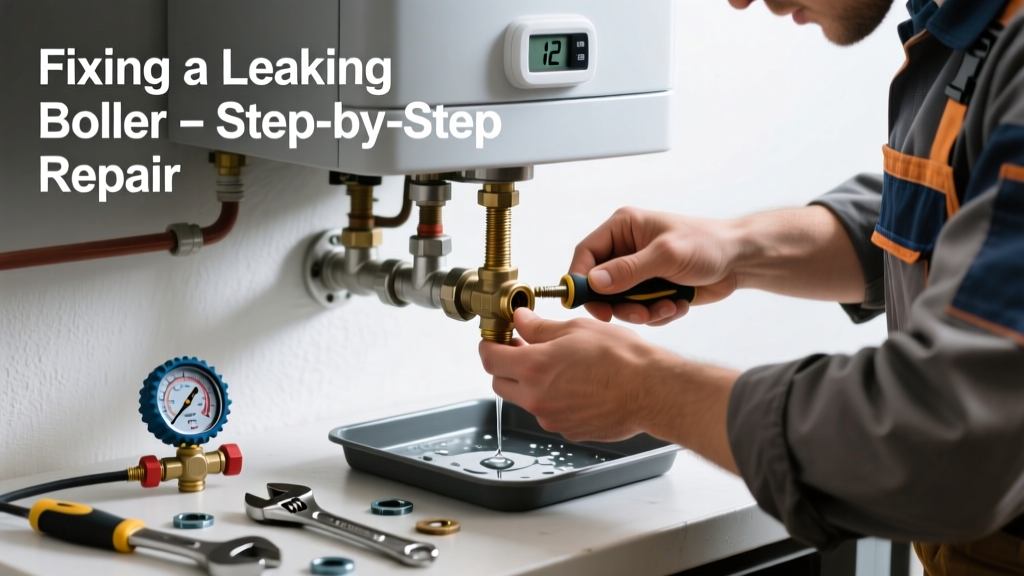
If your boiler is leaking *and* not heating properly, you’re dealing with more than just a drip—you’re likely facing pressure imbalances, corrosion, or failing components that compromise both safety and efficiency. Ignoring it risks water damage, carbon monoxide exposure, or complete system failure. Most leaks paired with malfunction are fixable—but only if caught early and addressed correctly.
Quick Diagnosis
Before grabbing tools, identify the leak’s location and behavior. Match symptoms to root causes:
- Leak near the pressure relief valve + boiler shuts off repeatedly → over-pressurization or faulty PRV
- Dampness around heat exchanger seams or base → internal corrosion or cracked heat exchanger (common in older combi boilers)
- Wet floor beneath pump or circulator housing → failed pump seal or loose gland nut
- Staining or rust on expansion tank connections → air loss in tank or corroded fittings
- Leak only when heating cycles start → thermal expansion stress on aged pipework or solder joints
Tools & Materials Needed
| Item | Purpose | Estimated Cost |
|---|---|---|
| Combination wrench set (8–19 mm) | Tightens compression fittings, pump glands, and valve nuts without rounding | $18–$32 |
| Infrared thermometer | Verifies localized overheating near leaks—indicates failing heat exchanger or flow restriction | $45–$79 |
| Boiler pressure gauge (0–3 bar) | Confirms if system pressure drops rapidly after bleeding or stays above 2.5 bar | $12–$24 |
| Thread seal tape (PTFE, gas-rated) | Seals tapered threads on valves and drain cocks; avoids over-torquing | $3–$6 |
| Expansion tank pre-charge kit | Recharges air bladder to correct pressure fluctuations causing PRV discharge | $22–$38 |
Step-by-Step Fix
Work methodically—never bypass safety controls. Always isolate power and water supply first.
- Shut down and depressurize: Turn off boiler power at the fused spur, close main cold feed valve, and open a radiator bleed valve to drop pressure to 0 bar. Confirm no steam or hot water escapes before proceeding.
- Locate and contain the leak: Use paper towels to trace wetness uphill. Place a shallow pan under active drips. If leaking from the pressure relief valve (PRV), check system pressure—if above 2.8 bar when cold, suspect faulty expansion tank or auto-fill valve.
- Replace the PRV or reseat it: Unscrew the old PRV (with wrench) while holding the pipe steady. Wrap threads with 3 layers of PTFE tape clockwise. Hand-tighten, then snug ¼ turn with wrench. Test by refilling to 1.2 bar cold and monitoring for 24 hours.
- Recharge the expansion tank: With system depressurized, use a bicycle pump with Schrader valve adapter to inflate the tank’s air bladder to 0.75 bar (per manufacturer spec). Then refill system to 1.0–1.2 bar cold pressure.
- Check pump seal integrity: If wetness centers on the pump body, remove the pump cover plate. Inspect the ceramic seal face for scoring or grit. Replace seal kit (e.g., Grundfos UPS 15-50 seal kit, $24) using alignment tool—misalignment causes immediate re-leak.
When to Call a Pro
Some leaks signal serious, regulated hazards. Stop work and contact a Gas Safe registered engineer immediately if:
- You smell rotten eggs (natural gas leak) or exhaust fumes near the boiler
- Water is dripping onto electrical components or the printed circuit board
- The heat exchanger shows visible cracks, white crystalline deposits (limescale blowout), or black soot residue
- Pressure rises above 3.0 bar even after expansion tank recharge and PRV replacement
- Your boiler is under warranty—DIY repairs void coverage on parts like heat exchangers or control boards
"Over 62% of boiler breakdowns involving leaks stem from neglected annual servicing—especially missed expansion tank checks and PRV testing." — Heating & Hotwater Industry Council (HHIC) Service Benchmark Report, 2023
Prevention Tips
Extend boiler life and avoid repeat leaks with these proactive habits:
- Bleed radiators every autumn to maintain balanced flow and reduce pump strain
- Test the pressure relief valve quarterly by lifting the lever briefly—listen for clean water release, not sputtering or silence
- Install a magnetic filter (e.g., MagnaClean Pro2) during service to capture iron oxide before it erodes seals and valves
- Keep boiler room humidity below 60%—use a dehumidifier if condensation forms on pipes or casing
- Log system pressure weekly; consistent 0.3+ bar drops indicate micro-leaks or air ingress needing investigation
Can I use silicone sealant on a leaking copper joint?
No. Silicone degrades under heat and pressure, and can clog micro-bore heat exchanger channels. It’s not rated for potable water systems per WRAS standards. Use only manufacturer-approved compression fittings or silver-solder repairs done by a qualified plumber.
Why does my boiler leak only when it’s heating up?
This points to thermal expansion stress on aging joints or a failed expansion tank. As water heats, it expands ~4% in volume. Without proper air cushion in the tank, pressure spikes force water out the PRV or weakest seal—often a corroded olive or descaled pump gland.
Is it safe to keep running the boiler if it’s dripping slowly?
No. Even minor leaks accelerate corrosion, especially where copper meets steel or aluminum components. A 2022 study by the UK’s Building Research Establishment found that undetected micro-leaks increased internal pitting rates by 300% over six months—raising risk of sudden heat exchanger rupture.
How often should I replace the pressure relief valve?
Every 5 years minimum—even if it appears functional. The spring fatigue and seat erosion aren’t visible but cause delayed or incomplete opening. The U.S. Department of Energy recommends replacing PRVs during routine boiler servicing to prevent dangerous over-pressurization.
Can a power flush fix a leaking boiler?
No—a power flush cleans sludge from radiators and pipework but won’t stop mechanical leaks from worn seals, cracked castings, or failed welds. In fact, flushing a boiler with existing micro-cracks can worsen leaks by dislodging protective scale. Address the leak first, then flush if flow issues persist.
What’s the average cost to repair a leaking boiler in the UK?
Simple PRV or pump seal replacement runs £120–£220 labor + parts. Heat exchanger replacement averages £480–£750, including flue inspection and CO verification. According to Checkatrade’s 2024 Heating Repair Index, 37% of ‘leak + no heat’ calls required full boiler replacement due to age-related component failure.
A leaking boiler that won’t fire isn’t just inconvenient—it’s a red flag your system is losing its ability to regulate pressure, temperature, and combustion safely. Tackle small leaks promptly with the right tools and knowledge, but never gamble with gas lines, electrical panels, or heat exchanger integrity. Pair every repair with a documented service log, and schedule professional inspections annually—not just when something goes wrong. Your home’s warmth and safety depend on it.