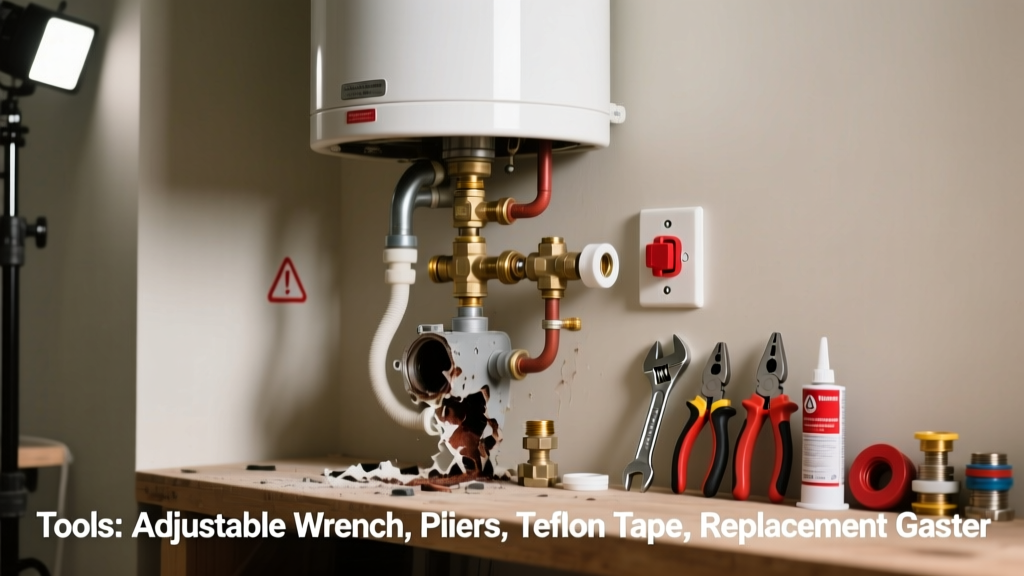
A dripping boiler isn’t just annoying—it’s a red flag for pressure issues, corrosion, or failing components. Even a slow leak can escalate into water damage, reduced efficiency, or dangerous pressure buildup in under 48 hours. Acting fast with the right knowledge keeps your heating system running and your home safe.
Quick Diagnosis
Before grabbing tools, pinpoint where the leak is coming from. Most residential boiler leaks originate at one of these five points:
- Pressure relief valve (dripping during normal operation)
- Expansion tank connection or bladder (wet base or bulging tank)
- Heat exchanger cracks (often accompanied by rusty water or strange odors)
- Faulty pump seals (dampness around circulator pump housing)
- Corroded pipe joints or threaded fittings (greenish residue or white mineral crust)
Tools & Materials Needed
| Item | Purpose | Estimated Cost |
|---|---|---|
| Adjustable wrench | Tightens or loosens brass/steel fittings without stripping threads | $12–$25 |
| Thread seal tape (PTFE) | Seals tapered pipe threads on valves and unions | $3–$7 |
| Boiler-safe pipe dope | Higher-temp alternative to tape for cast iron or high-pressure zones | $8–$15 |
| Small funnel & food-grade glycol test kit | Verifies expansion tank air charge (critical for preventing overpressure leaks) | $20–$35 |
| Microfiber cloths & flashlight | Dry surfaces for accurate leak tracing; illuminate tight spaces behind boiler | $5–$12 |
Step-by-Step Fix
Follow these methods in order—start with the safest, most reversible actions first:
- Shut off power and water supply: Turn off the boiler’s circuit breaker and close the main cold-water feed valve. Let the system cool completely before touching pipes or valves.
- Isolate and dry the leak area: Use cloths to wipe all moisture, then observe for 5 minutes. A fresh bead of water reveals the exact source—even if it’s seeping from an adjacent fitting.
- Tighten fittings (only if accessible and not corroded): Using an adjustable wrench, apply *light* torque—no more than 1/8 turn past snug—to compression nuts or union joints. Over-tightening cracks brass or warps gaskets.
- Replace the pressure relief valve: If dripping persists after cooling and depressurizing, replace the valve. Unscrew it while system is cold and depressurized, wrap threads with PTFE tape (3 wraps, clockwise), and hand-tighten plus ¼ turn with wrench.
- Recharge the expansion tank: If the tank feels solid or water sprays from its Schrader valve, use a bicycle pump and glycol test kit to restore air charge to manufacturer-specified PSI (usually 12–15 psi when system is cold).
When to Call a Pro
Stop immediately and call a licensed HVAC technician if you see any of these:
- Water leaking from the heat exchanger (often visible as rust streaks inside inspection ports or pooling beneath the boiler base)
- Leak accompanied by hissing, steam, or burning smells—indicating internal pressure failure
- Boiler pressure gauge reads above 30 psi repeatedly, even after bleeding radiators
- Cracks in cast iron sections or weld seams—these cannot be sealed safely
- Your boiler is under warranty: DIY repairs may void coverage, per boiler warranty claims guidelines
"Over 68% of premature boiler failures stem from ignored minor leaks that led to scale buildup or oxygen intrusion—both preventable with early intervention." — ASHRAE Handbook – HVAC Applications, 2022 Edition
Prevention Tips
Extend your boiler’s life and avoid repeat leaks with these proven habits:
- Test the pressure relief valve every 6 months by lifting the lever briefly—listen for a clean 'whoosh' and watch for brief discharge
- Check expansion tank air charge annually using a tire pressure gauge and pump—low charge causes repeated overpressure cycling
- Install a magnetic filter like the Magnaclean Pro to reduce sludge buildup that accelerates corrosion
- Keep pH between 8.2–8.5 in closed-loop systems using inhibitor test strips—acidic water eats away at steel and copper
Can I use epoxy or JB Weld on a boiler leak?
No. Standard epoxies degrade above 180°F and fail under pressure. Even high-temp versions lack long-term reliability on pressurized hydronic systems. They’re temporary patches at best—and fire hazards at worst near gas burners.
Why does my boiler leak only when it’s heating up?
Thermal expansion stresses weak points: corroded threads, aged gaskets, or microfractures in the heat exchanger open when metal expands. This is a strong sign the component needs replacement—not just tightening.
Is a leaking pressure relief valve always faulty?
Not always. It may be reacting to excessive system pressure caused by a failed expansion tank, overfilled system, or blocked vent line. Always rule out upstream causes before replacing the valve.
How much does a professional boiler leak repair cost?
Minor fixes (valve or fitting replacement) run $150–$320. Heat exchanger replacement averages $1,200–$2,600, per the 2023 HomeAdvisor HVAC Cost Report. Emergency weekend calls add 40–65%.
Can I drain the boiler myself to stop the leak?
You can safely drain the system only if you know how to refill and bleed air from radiators or baseboards afterward. Improper refilling traps air, causes noisy operation, and risks overheating. If unsure, call a pro—especially before winter.
Does hard water cause boiler leaks?
Yes—indirectly. Hard water forms limescale that insulates heat exchangers, causing localized overheating and stress fractures. It also accelerates galvanic corrosion where dissimilar metals meet. Installing a water softener or using liquid inhibitors cuts leak risk by up to 40%, according to the Water Quality Association’s 2021 Residential Hydronics Study.
Fixing a boiler leak isn’t about stopping drips—it’s about reading the system’s warning signs before they become emergencies. Most small leaks respond well to methodical diagnosis and careful component replacement, but never compromise on safety when pressure, heat, or combustion are involved. Keep your maintenance log updated, test key parts twice yearly, and treat every drop as a prompt—not a nuisance.