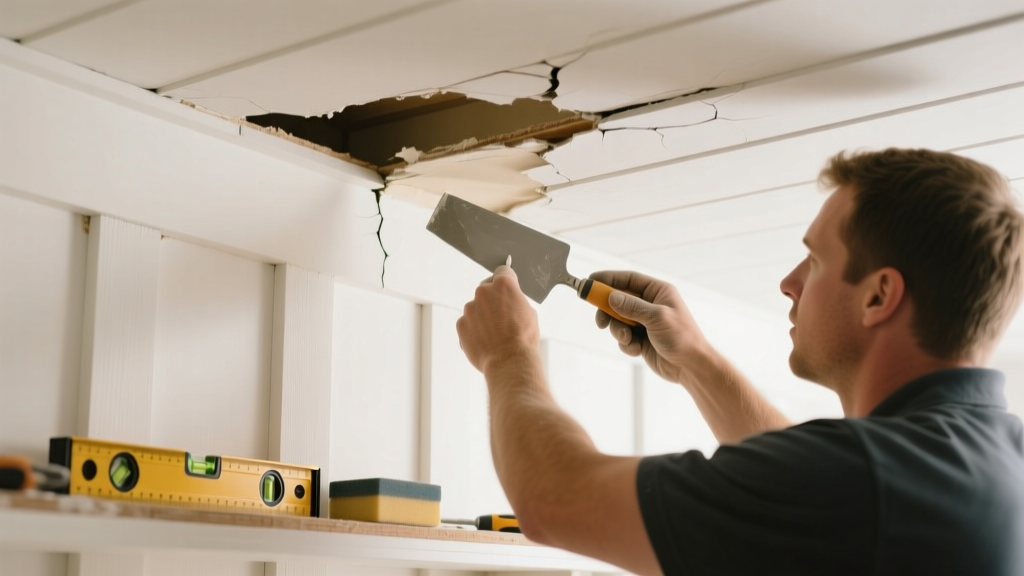
You’re sitting quietly when—*pop*, *creak*, *snap*—a sharp, unsettling noise comes from your board-and-batten wall or ceiling. It’s not just annoying; it can signal shifting framing, moisture damage, or fastener failure. Ignoring it risks worsening gaps, finish damage, or even structural compromise.
Quick Diagnosis
Unusual noises in board-and-batten systems rarely come from the boards themselves—they’re symptoms of underlying movement or stress. Start here:
- Temperature/humidity swings causing wood expansion/contraction (most common cause)
- Loose nails or screws pulling away from studs or furring strips
- Undersized or improperly spaced furring strips flexing under board weight
- Moisture infiltration swelling boards or rotting substrate
- Structural settling in older homes stressing attachment points
Tools & Materials Needed
| Item | Purpose | Estimated Cost |
|---|---|---|
| 16d galvanized ring-shank nails or #8 x 2½" trim screws | Secure boards without splitting; ring shanks resist withdrawal better than smooth nails | $8–$12 |
| Drill/driver with countersink bit | Drive screws flush and prevent surface dimpling on boards | $45–$120 |
| Stud finder with deep-scan mode | Locate framing behind thick battens or layered substrates | $25–$65 |
| Wood filler (interior-grade, paintable) | Fill old nail holes or minor splits before refinishing | $5–$9 |
| Hygrometer + thermometer | Verify indoor RH stays between 30–50%—critical for wood stability | $12–$28 |
Step-by-Step Fix
Address the root cause—not just the sound. Use these methods in order of likelihood and severity:
- Check fastener integrity: Tap each batten lightly with a rubber mallet. If any section feels spongy or moves, remove existing nails/screws and replace with longer, corrosion-resistant fasteners anchored into solid framing—not just furring strips.
- Add blocking or reinforce furring: For ceilings or tall walls, install 1×3 blocking between studs every 24" behind furring strips. Secure with construction adhesive and screws to reduce flex.
- Relieve internal stress: If boards are cupping or bowing, carefully remove one board at a time and sand edges to allow slight expansion gaps (1/16") before reinstalling with staggered fasteners.
- Seal moisture pathways: Inspect exterior sheathing and flashing above windows or rooflines. Repair leaks first—then let affected areas dry fully (use a moisture meter: <5% MC in framing, <12% in boards) before reattaching.
When to Call a Pro
Don’t risk injury or code violations if you observe:
- Cracks wider than 1/8" in adjacent drywall or plaster—could indicate truss uplift or foundation movement
- Visible sagging, bulging, or bowing in the batten system or supporting wall
- Mold growth behind boards or musty odors suggesting chronic moisture intrusion
- Noise coinciding with HVAC cycling or heavy foot traffic upstairs—may point to undersized joists or missing subfloor nailing
According to the Insurance Institute for Business & Home Safety's 2023 report on wood-framed assemblies, 68% of ‘mystery’ interior noises in homes over 25 years old stem from thermal movement combined with inadequate fastening—yet 22% mask more serious framing deficiencies requiring licensed evaluation.
Prevention Tips
Long-term quiet starts with smart installation and monitoring:
- Maintain indoor relative humidity between 30–50% year-round using a dehumidifier or humidifier as needed
- Use kiln-dried, acclimated boards (store indoors 72+ hours before installation)
- Stagger fasteners every 12" along edges and 16" in field—never rely solely on glue
- Install expansion gaps at top/bottom of tall runs (especially near ceilings or floors)
- Inspect annually for loose fasteners, especially after seasonal shifts or storms
Why does my board and batten crack only in winter?
Cold, dry air shrinks wood—especially pine and poplar—causing boards to pull away from fasteners and rub against battens. This friction creates ticking or popping sounds. A hygrometer reading below 25% RH confirms this. Adding whole-house humidification and sealing attic bypasses often resolves it within weeks.
Can I just caulk the cracks and call it done?
No—caulk masks movement but doesn’t stop it. Flexible acrylic caulk may temporarily silence small gaps, but repeated stress will cause it to tear or discolor. Worse, trapping moisture behind caulk accelerates rot in untreated softwoods. Address the cause first, then use paintable elastomeric sealant only on stable, dry joints.
Do I need to remove all boards to fix this?
Rarely. Isolate noisy sections by tapping and listening. Most issues affect 1–3 boards tied to one weak anchor point or moisture pocket. Remove only those, inspect the substrate, repair framing or furring as needed, then reinstall with proper fastener spacing and depth.
Is this a fire hazard?
Not directly—but persistent cracking can indicate compromised wall assembly integrity. If battens are installed over outdated knob-and-tube wiring or insulation covering heat-producing fixtures, movement may expose or abrade wires. Have an electrician inspect if you hear buzzing alongside popping, especially near outlets or switches.
What wood species are least likely to crack and pop?
White oak, cedar, and thermally modified ash show the lowest dimensional change per % RH shift (0.0018–0.0022 in/in/%RH), according to the USDA Forest Products Laboratory’s 2022 Wood Handbook. Avoid unseasoned pine or poplar in high-moisture zones like bathrooms or sunrooms—even with paint, they’ll move unpredictably.
How long should repairs last?
With proper acclimation, fastener placement, and humidity control, well-executed fixes last 15–25 years. However, homes built before 1990 often have undersized furring (1×2 instead of 1×3) or no blocking—so longevity depends on whether you upgrade the substrate, not just refasten. Consider upgrading during remodels—our full installation guide walks through modern best practices.
Board-and-batten noise isn’t random—it’s wood talking. Listen closely, check the conditions, and fix the structure—not just the surface. A few targeted fasteners, consistent humidity, and annual checks keep your walls quiet and your peace of mind intact. For deeper issues like uneven floor joists affecting wall movement, see our guide on squeaky floor repair—many root causes overlap. And if you’re planning a new installation, always reference wood shrinkage charts before selecting species and dimensions.