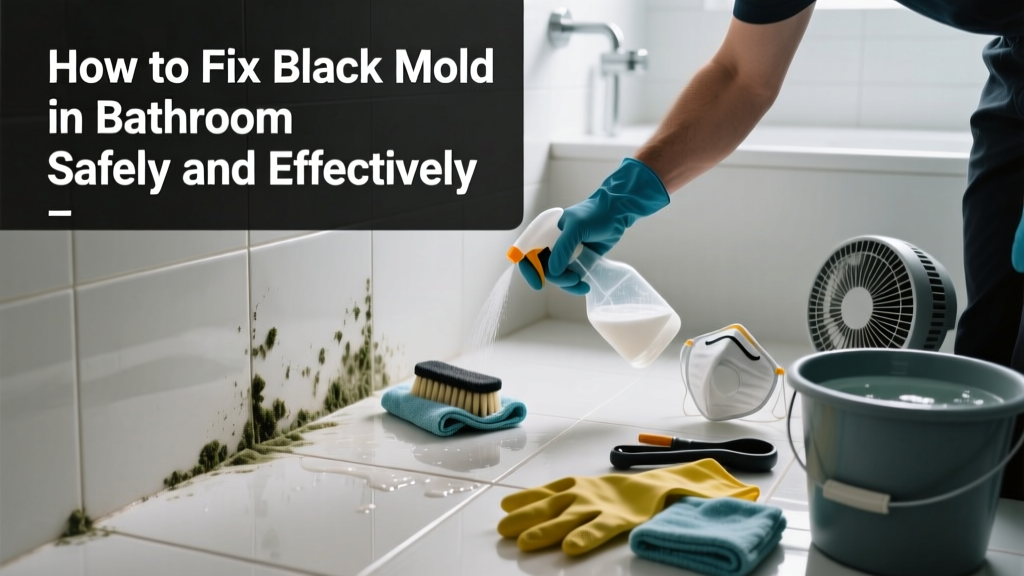
Black mold in your bathroom isn’t just unsightly—it’s a health hazard that can trigger allergies, asthma, and respiratory irritation. If you spot fuzzy, dark greenish-black patches near grout, caulk, or behind the shower curtain, act fast before spores spread through air circulation or porous surfaces.
Quick Diagnosis
Most bathroom black mold stems from persistent moisture—not poor hygiene. Here are the top culprits:
- Poor ventilation: Exhaust fan runs less than 20 minutes post-shower or isn’t ducted outdoors
- Leaky faucets or showerheads dripping for days without repair
- Cracked or missing caulk around tubs, sinks, or tiles allowing water to seep behind surfaces
- Non-permeable backer board (e.g., drywall instead of cement board) behind tile in wet zones
- Humidity consistently above 60%—measured with a hygrometer
Tools & Materials Needed
| Item | Purpose | Estimated Cost |
|---|---|---|
| N95 respirator mask | Blocks inhalation of airborne mold spores during cleanup | $12–$25 |
| White vinegar (undiluted) | Natural fungicide effective on non-porous surfaces; EPA-registered for mold control | $3–$6 |
| Microfiber cloths & stiff nylon brush | Clean grout lines without scratching tile or spreading spores | $8–$15 |
| 100% silicone caulk + caulk gun | Seals gaps where water intrudes; mold-resistant formula prevents regrowth | $10–$18 |
| Exhaust fan timer switch | Ensures fan runs minimum 20 minutes after shower—critical for moisture control | $22–$38 |
Step-by-Step Fix
For surface-level mold on tile, grout, or glass (under 10 sq ft), follow this sequence:
- Isolate the area: Close the bathroom door, turn off HVAC, and cover nearby vents with plastic sheeting taped down.
- Scrub with vinegar: Spray undiluted white vinegar directly onto moldy grout or tile. Let sit 10 minutes, then scrub with stiff nylon brush and microfiber cloth. Rinse with clean water and dry thoroughly with towel.
- Re-caulk: Remove all old caulk using a caulk removal tool or utility knife. Clean seam with vinegar, let dry completely, then apply mold-resistant 100% silicone caulk in one smooth bead.
- Test humidity: Run exhaust fan during and 20 minutes after next 3 showers. Use a hygrometer to confirm indoor RH stays below 55%.
When to Call a Pro
DIY is unsafe or ineffective if any of these apply:
- Mold covers more than 10 square feet (EPA guidelines require professional remediation)
- You see mold growing behind drywall, under flooring, or inside walls (signified by musty odor with no visible source)
- There’s evidence of chronic water intrusion—like warped subflooring, soft drywall, or recurring leaks behind tile
- Anyone in the household has compromised immunity, asthma, or chronic lung disease
According to the Insurance Institute for Business & Home Safety's 2023 report, 72% of bathroom mold cases linked to hidden water damage were misdiagnosed as 'surface-only' by homeowners attempting DIY cleanup.
Prevention Tips
Stop mold before it starts—these aren’t suggestions, they’re non-negotiable habits:
- Install a exhaust fan timer switch so fans run at least 20 minutes after every shower
- Wipe down shower walls and doors with a squeegee daily—cuts surface moisture by 80% (per ASHRAE 2022 Indoor Air Quality Handbook)
- Replace caulk every 2 years, even if it looks intact—silicone degrades and shrinks over time
- Run a dehumidifier if bathroom humidity regularly exceeds 55%, especially in basements or humid climates
- Check under sinks quarterly for slow drips—leaks as small as 1 drip per second waste 3,000 gallons/year (U.S. EPA WaterSense, 2023)
Can I use bleach on this?
No—bleach only kills surface mold on non-porous materials and doesn’t penetrate grout or caulk where roots embed. It also releases volatile organic compounds (VOCs) that worsen indoor air quality. The CDC explicitly advises against bleach for routine mold cleanup in homes.
Is black mold always toxic?
No. Not all black-colored mold is Stachybotrys chartarum—the so-called 'toxic black mold.' Most bathroom black mold is Cladosporium or Aspergillus, which cause allergic reactions but aren’t toxigenic. Still, any mold growth indoors warrants removal.
How long does vinegar take to kill mold?
Undiluted white vinegar requires 10–15 minutes of dwell time on non-porous surfaces to deactivate mold spores. For porous materials like drywall or wood, vinegar won’t penetrate deeply enough—you’ll need replacement, not cleaning.
Do I need to replace moldy grout?
Not always. If grout is intact (no crumbling or powdering), thorough vinegar scrubbing followed by sealing with a mold-inhibiting grout sealer works. But if grout is cracked or disintegrating, remove and re-grout—see our full grout replacement guide.
Will painting over mold fix it?
No. Painting hides mold but traps moisture underneath, accelerating decay and spore release. Painted-over mold almost always returns within weeks—and now it’s embedded in the paint film, making removal harder.
Can a dehumidifier alone stop bathroom mold?
Only if used correctly. A portable dehumidifier helps—but only if placed inside the bathroom *during* and immediately after showers, not just overnight. For lasting control, pair it with proper exhaust ventilation and leak repair.
Fixing black mold isn’t about erasing a stain—it’s about correcting the moisture imbalance that created it. Replace worn caulk, upgrade your fan runtime, and test humidity weekly. That’s how you break the cycle—not with stronger chemicals, but smarter systems. And if you spot mold returning in the same spot twice, don’t scrub again: investigate the pipe, slope, or seal behind it. That’s where the real fix lives.