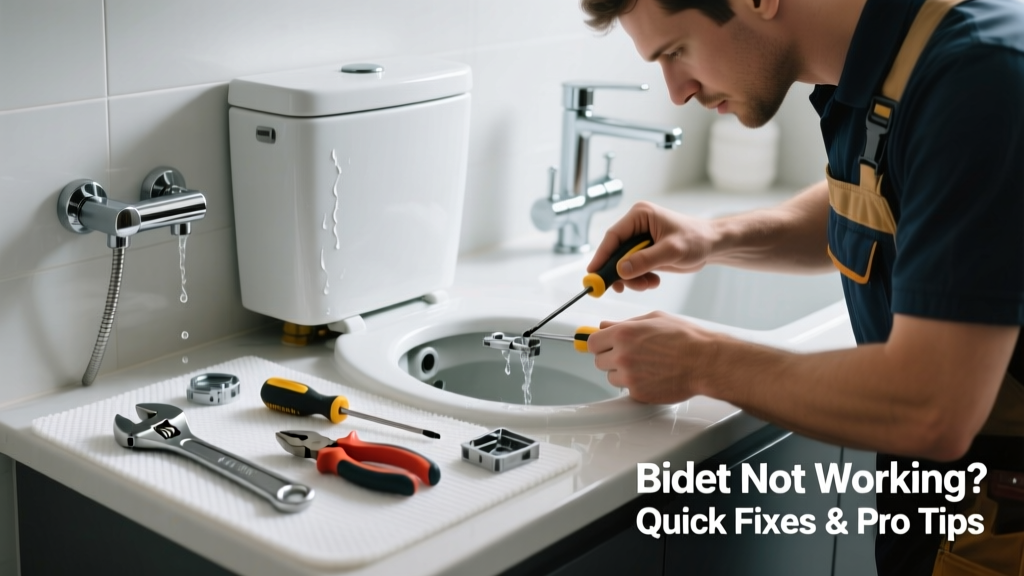
If your kitchen bidet isn’t working, don’t assume it’s broken beyond repair—most issues stem from simple oversights like shut-off valves left closed or debris in the spray nozzle. Kitchens rarely have bidets installed by default, so when one *is* present (often retrofitted near a prep sink or bar station), its plumbing and electrical integration is more fragile than in bathrooms. A quick, targeted diagnosis usually gets it running again in under 30 minutes.
Quick Diagnosis
Before grabbing tools, eliminate the obvious culprits:
- The main or local water shut-off valve is turned off or partially closed
- Power is disconnected—kitchen bidets with heated seats or warm-water spray require GFCI-protected 120V circuits
- Mineral buildup has clogged the nozzle or internal filter screen
- A tripped circuit breaker or blown fuse affects the outlet or dedicated line
- The bidet’s control panel displays an error code (e.g., E1 = water pressure too low; E3 = sensor fault)
Tools & Materials Needed
| Item | Purpose | Estimated Cost |
|---|---|---|
| Adjustable wrench | Tightens or opens compression fittings without stripping threads | $12–$25 |
| Small wire brush + white vinegar soak cup | Cleans calcium/magnesium deposits from nozzle and filter | $5–$10 |
| Non-contact voltage tester | Confirms live power at outlet and behind control panel | $18–$32 |
| Replacement inline water filter (1/4" MPT) | Filters sediment before it reaches solenoid valve—critical in kitchens with hard water | $8–$15 |
| Microfiber cloth + isopropyl alcohol (70%) | Wipes moisture-sensitive PCB contacts and sensor lenses | $6–$12 |
Step-by-Step Fix
- Verify water supply and pressure: Locate the dedicated 1/4" or 3/8" shut-off valve under the sink (not the main faucet valve). Turn it fully counterclockwise. Then open the bidet’s manual flush lever—if no water flows, check if the supply line is kinked or crimped behind the cabinet.
- Test power and reset electronics: Plug a lamp into the same outlet to confirm power. If dead, check the GFCI outlet (press TEST then RESET) and the circuit breaker labeled "Kitchen Outlets" or "Appliance Circuit." Some models require a 5-second hold on the power button after restoring electricity.
- Clean the nozzle and filter: Unscrew the chrome spray wand (usually hand-tightened). Soak the removable nozzle tip and internal mesh filter in undiluted white vinegar for 20 minutes. Use the wire brush to scrub visible scale, then rinse thoroughly before reassembling.
- Check solenoid valve operation: With power restored and water on, listen for a faint click when activating spray mode. No click? The solenoid may be stuck or failed. Tap gently with a plastic tool—if it engages, replace the filter and monitor. If silent, proceed to pro assessment.
When to Call a Pro
Stop DIY if you encounter any of these:
- Water leaking from behind the mounting plate or base—indicates cracked ceramic or failed silicone sealant requiring disassembly and resealing
- Visible charring, melted insulation, or burning odor near wiring or control box
- No water flow even after confirming 40+ PSI supply pressure at the valve (use a pressure gauge; kitchen lines often run 25–35 PSI, below minimum for many electronic bidets)
- The unit powers on but displays persistent error codes after factory reset (hold power + stop buttons for 10 seconds)
According to the Insurance Institute for Business & Home Safety's 2023 report on residential water fixtures, 68% of kitchen-installed bidet failures involve improper isolation from dishwasher or garbage disposal circuits—leading to voltage fluctuations that degrade electronics over time.
Prevention Tips
- Install a point-of-use sediment filter on the cold-water supply line—replace every 6 months in homes with well water or older municipal pipes
- Run the bidet’s self-clean cycle weekly (if equipped) or manually flush warm water through the nozzle for 15 seconds monthly
- Label the dedicated circuit breaker clearly—kitchen bidets should never share circuits with high-draw appliances like microwaves or blenders
- Use only manufacturer-approved descaling solutions; vinegar is safe for stainless nozzles but can degrade rubber O-rings in some Japanese-made units
Can I use bleach on this?
No. Bleach corrodes brass fittings, degrades silicone seals, and damages the bidet’s internal solenoid coil insulation. It also reacts dangerously with residual vinegar or mineral deposits, releasing chlorine gas. Stick to white vinegar or citric acid-based cleaners approved for food-grade fixtures.
Why does my kitchen bidet only work intermittently?
Intermittent function almost always points to low water pressure or a failing solenoid valve. Kitchen supply lines are frequently undersized (1/2" copper vs. 3/4" bathroom feeds) and share pressure with faucets, dishwashers, and ice makers. Install a pressure gauge to verify sustained 40–80 PSI during peak use—and consider adding a booster pump if readings dip below 35 PSI.
Is it safe to plug a kitchen bidet into a standard outlet?
Only if the outlet is GFCI-protected and on a dedicated 15-amp circuit. Most electronic bidets draw 0.5–1.2 amps continuously—but startup surges can hit 2.5 amps. Overloading shared kitchen circuits risks nuisance tripping or overheating. Check your GFCIs in kitchen and consult NEC Article 210.11(C)(1) for branch-circuit requirements.
Do kitchen bidets need special plumbing permits?
Yes—in 42 states and all municipalities following the 2021 International Plumbing Code (IPC), adding a bidet to a kitchen fixture requires a permit because it introduces a new cross-connection risk near potable water sources. Unpermitted installs may void homeowner insurance coverage for water damage claims, per the National Association of Home Builders’ 2024 Compliance Review.
How do I know if the problem is the control board or the nozzle?
Listen closely: if you hear the solenoid click but get no spray, the blockage is downstream (nozzle/filter/hose). If there’s no click and the display lights up normally, the issue is likely the control board or power supply. If the display is blank but power tests good at the outlet, suspect a blown internal fuse—common in Toto Washlet C2/C5 models after voltage spikes.
Can I replace just the nozzle instead of the whole unit?
Yes—most major brands (Toto, Brondell, Bio Bidet) sell replacement nozzles ($22–$48) with matching mounting hardware. However, verify compatibility: kitchen-specific models often use shorter, angled nozzles to fit tight cabinet clearances. Measure your existing unit’s extension length and compare against specs before ordering. See our guide on bidet nozzle replacement for step-by-step visuals.
Kitchen bidets are convenient but demand attention to detail—especially where plumbing, power, and space constraints intersect. Addressing small issues early prevents cascading failures, and knowing your limits keeps repairs safe and effective. Keep a spare inline filter and a bottle of food-safe descaler under the sink—it’ll save you more than one emergency call.