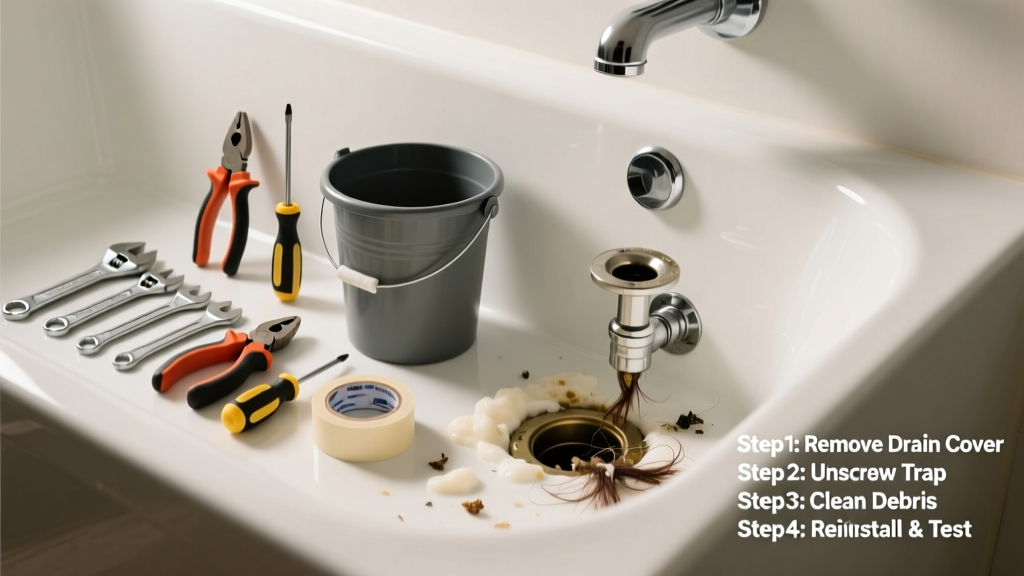
That gurgle followed by stagnant water in your tub isn’t just annoying—it’s a warning sign. A slow or completely blocked drain can lead to mold growth, water damage under the tub, and even overflow during showers. Most bathtub drainage issues stem from simple, accessible clogs—not broken pipes.
Quick Diagnosis
Before grabbing tools, identify the likely culprit:
- Hair and soap scum buildup in the stopper mechanism or overflow plate
- A clog 1–3 feet down the drain pipe (most common)
- Mineral deposits narrowing the drain tube (especially in hard water areas)
- Dislodged or corroded linkage between trip-lever and stopper
- Blocked vent stack causing airlock (less common but possible)
Tools & Materials Needed
| Item | Purpose | Estimated Cost |
|---|---|---|
| Needle-nose pliers | Remove stopper assembly and retrieve hair clumps | $8–$15 |
| Zip-it drain cleaning tool | Hook and pull out deep hair clogs without chemicals | $3–$6 |
| Plunger (cup-style, not flange) | Create pressure seal on flat tub surface for suction | $5–$12 |
| White vinegar + baking soda | Natural reaction to dissolve organic buildup and deodorize | $4–$7 |
| Adjustable wrench | Loosen overflow plate screws and drain flange nuts | $10–$22 |
Step-by-Step Fix
Try these methods in order—start simple, escalate only if needed:
- Remove the stopper and clean manually: Unscrew the overflow plate, detach the linkage rod, lift out the stopper, and pull out visible hair with pliers or fingers.
- Use a Zip-it tool: Insert fully, push past the stopper opening, then slowly pull back while twisting—repeat until resistance lessens and debris emerges.
- Plunge with water covering the overflow: Fill tub with 2–3 inches of water, cover overflow opening with a wet rag, and plunge vigorously for 20–30 seconds.
- Vinegar-and-baking-soda flush: Pour ½ cup baking soda, wait 5 minutes, add 1 cup white vinegar, cover drain for 10 minutes, then flush with boiling water.
When to Call a Pro
Stop DIY efforts if you encounter any of these:
- Water backs up into the shower or adjacent sink—suggests a main line clog
- Drain emits foul, sewage-like odor (not just mildew) after cleaning
- You hear gurgling from other fixtures when running water
- The tub drains fine one day and fails completely the next with no obvious cause
- You’ve tried all methods twice and water still pools after 5 minutes
According to the Insurance Institute for Business & Home Safety's 2023 report, 62% of plumbing-related water damage claims involve delayed response to slow drains—so act early, but know your limits.
Prevention Tips
Keep your tub flowing freely year-round:
- Install a fine-mesh drain cover like the O-Cedar Drain Strainer and clean it weekly
- Once monthly, pour ¼ cup white vinegar down the drain and let sit overnight before flushing
- Avoid pouring oils, lotions, or bath bombs directly down the drain—they accelerate scum buildup
- After each use, run hot water for 30 seconds to rinse residue from pipes
Can I use bleach on this?
No—bleach reacts poorly with built-up hair and soap scum, creating toxic fumes and potentially corroding metal components. It also does little to break down organic clogs. Stick to mechanical removal or vinegar/baking soda.
Why does my tub drain only when the stopper is removed?
This points to a faulty stopper mechanism—likely a bent or disconnected linkage rod, or a warped stopper that doesn’t seat properly. Check alignment and replace worn parts using a universal trip-lever kit.
Is a snake safe for tub drains?
A hand-cranked auger (snake) *can* work—but only if it’s ¼-inch diameter or smaller. Larger snakes risk scratching chrome finishes or damaging PVC traps. For tubs, the Zip-it tool is safer and more effective for hair-based clogs.
What if water drains slowly but never stops?
That’s often a partial blockage combined with poor venting. Try clearing the roof vent stack (check for bird nests or ice) or test airflow by removing the overflow plate and listening for a ‘whoosh’ when plunging.
How do I know if the P-trap is clogged?
If plunging and Zip-it attempts fail, and you smell sewer gas near the tub, the P-trap may hold debris. Place a bucket underneath, loosen the slip nuts with an adjustable wrench, and carefully remove the trap—clean it over the bucket, then reassemble with fresh plumber’s tape on threads.
Will boiling water unclog my tub?
Only if the clog is recent and grease- or soap-based—not hair. Boiling water alone rarely penetrates deep hair masses and can warp PVC pipes if used repeatedly. Pair it with vinegar/baking soda for better results.
A working bathtub drain shouldn’t require heroic effort—it should be silent, steady, and reliable. With regular maintenance and the right tools, most clogs are preventable and easily cleared. If yours still hesitates after trying these steps, don’t force it: a licensed plumber can inspect with a camera scope and spot hidden corrosion or misaligned fittings before they become costly leaks.