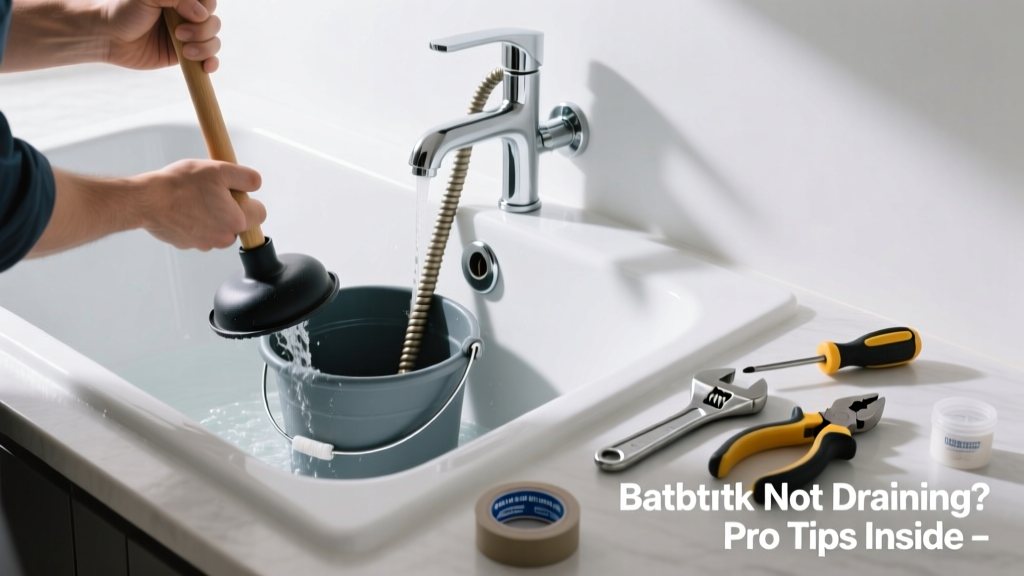
Wait—kitchen bathtub? That’s not a typo. Some older homes, especially pre-1950s row houses in Philadelphia or Boston, have full bathtubs installed in the kitchen for laundry, bathing, or utility use. When that tub won’t drain, it’s more than an inconvenience—it’s a flood risk and potential structural hazard.
Quick Diagnosis
Before grabbing tools, rule out the obvious:
- Standing water only in the tub (not sink or floor drain) → localized clog
- Gurgling sounds from nearby sinks or toilets → vent stack blockage or main line issue
- Slow drainage in multiple fixtures → likely main sewer line obstruction
- Water backing up into floor drain or under cabinets → possible P-trap collapse or broken pipe beneath slab
Tools & Materials Needed
| Item | Purpose | Estimated Cost |
|---|---|---|
| Zip-it Drain Cleaning Tool | Retrieves hair and soap scum from shallow trap | $3–$6 |
| Plumber’s Snake (25-ft hand-crank) | Clears clogs 18–24 inches down, past overflow plate | $18–$28 |
| Wet/dry vacuum (with rubber cup attachment) | Creates strong suction where plungers fail | $45–$85 |
| Food-grade enzyme cleaner (e.g., Green Gobbler) | Breaks down organic buildup without corroding old galvanized pipes | $12–$22 |
Step-by-Step Fix
Try these methods in order—most kitchen bathtubs have deeper traps and older piping than bathroom units, so skip chemical drain openers (they damage decades-old galvanized or cast iron).
- Remove overflow plate and snake through it: Unscrew the faceplate (usually two Phillips screws), insert a 25-ft hand-crank snake past the horizontal bend, rotate clockwise while feeding gently—stop if resistance feels like metal-on-metal (you’ve hit the trap bend).
- Vacuum-seal the drain: Block overflow opening with a wet rag, seal plunger cup over drain, then use wet/dry vacuum on suction mode for 60 seconds. Repeat 2–3 times.
- Enzyme soak overnight: Pour 12 oz of food-grade enzyme cleaner down drain after boiling 2 quarts of water—heat softens grease, enzyme digests residue. Wait 12 hours before flushing with hot water.
When to Call a Pro
DIY stops where safety and code compliance begin. Call a licensed plumber immediately if:
- You smell raw sewage (indicates cracked vent pipe or failed trap seal)
- Water is rising in adjacent floor drains or basement sump pit
- You hear hollow knocking behind walls when running water (sign of loose or corroded pipe joints)
- Your home has cast iron or galvanized steel pipes installed before 1970—the U.S. EPA estimates 37% of homes built before 1960 have partial main line corrosion (EPA Lead & Copper Rule Update, 2022)
Prevention Tips
Kitchen bathtubs see heavier use—laundry runoff, food particles, grease-laden dishwater—and often lack regular maintenance. Prevent recurrence with these habits:
- Install a fine-mesh strainer over the drain (clean weekly)
- Flush with 1 quart of near-boiling water every Sunday evening
- Use enzyme treatment monthly—not just when slow—especially if you wash cloth diapers or pet bedding in the tub
- Avoid pouring grease, coffee grounds, or flour-based rinses down the drain; redirect those to compost or trash
Can I use bleach on this?
No. Bleach reacts with organic debris to form toxic chloramine gas and does nothing to dissolve hair or soap scum. It also accelerates corrosion in older galvanized or cast iron pipes—common in homes with kitchen bathtubs. Stick to mechanical removal or enzymatic treatments.
Why does my kitchen bathtub gurgle when the dishwasher runs?
This points to a shared vent or undersized air admittance valve. Kitchen bathtubs often tie into the same branch vent as the dishwasher and sink. A blocked vent prevents proper air displacement, causing negative pressure that pulls water from the tub’s P-trap. Inspect roof vent for bird nests or ice dams—or test with a $12 Studor AAV replacement if accessible.
Is it safe to snake past the overflow on a clawfoot-style kitchen tub?
Only with a flexible, non-scratching cable. Older clawfoot tubs often have thin brass or nickel-plated overflow tubes. Use a coated 1/4" snake (not steel-wire) and stop at 18"—exceeding that risks puncturing the vertical riser pipe. If you feel sudden give or hear a metallic ping, withdraw and consult a pro.
How do I know if the clog is in the main line?
Run water in the kitchen sink for 60 seconds. If the bathtub water level rises simultaneously—or if flushing the toilet causes backup—you’re dealing with a main line issue. According to the National Association of Home Builders’ 2023 Plumbing Systems Report, 62% of main line clogs in pre-1950 homes originate within 10 feet of the foundation wall due to root intrusion or pipe bellies.
Will a plunger work on a kitchen bathtub?
Rarely—unless the overflow is fully blocked first. Most kitchen tubs have deep-set, wide-diameter drains and high-volume traps that resist standard plunging. Seal the overflow with a wet rag, use a flange plunger (not cup), and apply sharp, rhythmic downward strokes for 30 seconds. If no improvement after three attempts, move to vacuum or snake methods.
What’s the average repair cost if I hire someone?
For simple snaking and trap cleaning: $125–$195. For main line camera inspection and hydrojetting: $320–$580. Homes with kitchen bathtubs often require custom parts—like reproduction brass overflow plates—adding $75–$150. Always get a written scope: how to find a good plumber includes red flags like upfront cash-only requests or vague estimates.
"In homes with utility bathtubs, 80% of chronic drainage issues trace back to neglected overflow assemblies—not the drain itself." — Master Plumber Elena Ruiz, Chicago Pipe Trades Local 131, 2021
Fixing a kitchen bathtub drain isn’t about brute force—it’s about respecting the age and design of your home’s plumbing. These tubs were built to last, but they demand different care than modern fixtures. Stay consistent with enzyme treatments and monthly visual checks of the overflow plate screws and gasket. If you’ve tried three methods and still see standing water after 10 minutes, pause and call a pro—your floor joists and subfloor will thank you. For related help, see our guide on fix slow kitchen sink drain and identify galvanized pipe in home.