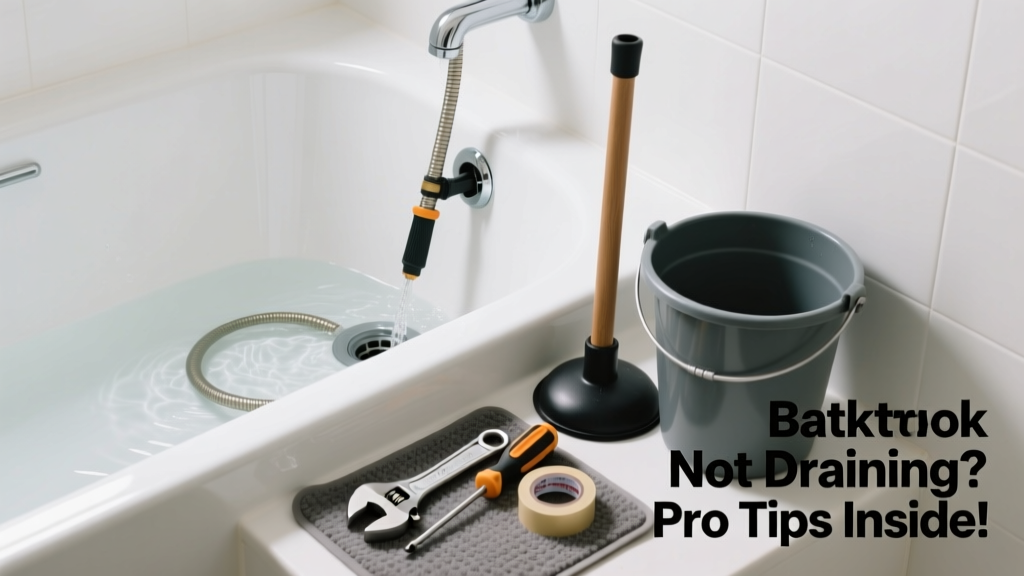
That gurgle-and-gulp sound as water pools around your ankles? A non-draining bathtub isn’t just annoying—it’s a sign of buildup, blockage, or mechanical failure hiding just below the surface. Most bathroom tub clogs happen within the first 18 inches of pipe and can be cleared in under 30 minutes with the right approach.
Quick Diagnosis
Before grabbing tools, identify the likely culprit:
- Slow drainage only when hair catcher is in place → debris trapped in stopper assembly
- Water backs up into shower when tub drains → shared drain line with shower, likely clog past overflow plate
- Gurgling from nearby sink or toilet → vent blockage or main line issue
- Drain works fine after removing overflow plate → clog inside trip-lever mechanism or overflow tube
- No water movement at all, even with plunger → hard clog (soap scum + hair) or collapsed pipe section
Tools & Materials Needed
| Item | Purpose | Estimated Cost |
|---|---|---|
| Needle-nose pliers | Remove linkage rod and disassemble pop-up stopper | $8–$15 |
| Zip-it drain cleaning tool | Hook and extract hair from overflow and drain pipes | $3–$6 |
| Plumber's snake (1/4" x 25 ft) | Reach past P-trap into branch line where most clogs form | $12–$22 |
| White vinegar & baking soda | Natural reaction breaks down organic buildup without corroding pipes | $4–$7 |
| Rubber gloves & eye protection | Hygiene and safety during manual cleanout | $5–$9 |
Step-by-Step Fix
Try these methods in order—most tubs clear with Method 1 or 2:
- Remove and clean the stopper assembly: Unscrew the overflow plate (usually two screws), pull out the linkage rod, then lift out the stopper. Soak parts in vinegar, scrub with an old toothbrush, and reassemble.
- Use a Zip-it tool through the overflow opening: Insert fully, twist gently while pulling back—repeat until resistance lessens. This catches hair coils missed by plungers.
- Snake the drain past the P-trap: Feed a 1/4" auger into the drain (not overflow) until you hit resistance. Rotate clockwise while applying light pressure. Pull out debris; flush with hot water.
- Vinegar-baking soda flush: Pour 1/2 cup baking soda followed by 1 cup white vinegar down the drain. Cover for 10 minutes, then flush with 4 cups boiling water. Do not use if you recently applied chemical drain cleaner.
When to Call a Pro
Stop DIY efforts if you encounter any of these:
- Snaking produces no debris and water still won’t move after multiple attempts
- You hear scraping or grinding sounds when snaking—possible pipe damage
- Multiple fixtures (toilet, sink, shower) drain slowly at once—likely main sewer line blockage
- Water backs up into floor drain or basement—sign of serious lateral line issue
- You suspect cast iron or galvanized steel pipes older than 1970 (prone to corrosion collapse)
According to the Insurance Institute for Business & Home Safety's 2023 report, 68% of residential drain emergencies involving tubs and showers stem from neglected stopper mechanisms—not main line failures—making early intervention highly effective.
Prevention Tips
- Install a fine-mesh hair catcher like the O-Cedar TubShroom and clean it weekly
- Once monthly, pour 1 quart of near-boiling water down the drain after showering
- Avoid pouring oils, lotions, or bath bombs directly down the drain—they solidify and trap hair
- Every 3 months, disassemble and soak the stopper linkage in vinegar to prevent mineral lockup
- Consider replacing outdated lift-and-turn or push-pull stoppers with magnetic or toe-touch models—fewer moving parts to jam
Can I use bleach on this?
No. Bleach does not dissolve hair or soap scum—it reacts poorly with metal pipes and can create toxic fumes if mixed with other cleaners. It also degrades rubber gaskets in stopper assemblies over time. Stick to enzymatic or vinegar-based treatments instead.
Why does my tub drain only when the showerhead is off?
This points to a shared drain line between tub and shower with insufficient slope or partial blockage downstream. Water from the shower pressurizes the line, forcing air pockets to shift and temporarily allowing flow. A plumber’s camera inspection often reveals a belly (sag) in the 2-inch branch line.
Is a plunger effective for bathtub drains?
Rarely—standard cup plungers lack seal depth for tub overflow openings, and the trip-lever mechanism prevents full suction. Use a flat-faced “sink plunger” with a flange extended, or better yet, skip plunging entirely and go straight to Zip-it or snake methods.
What if I broke the overflow plate screw?
Over-tightened Phillips screws in plastic or corroded brass plates commonly strip. Remove the broken screw with a screw extractor kit or drill out the head carefully. Replace with stainless steel #6 x 3/8" pan-head screws and apply anti-seize compound before reassembly.
How deep should I snake the drain?
For standard bathroom tubs, feed the auger 18–24 inches beyond the drain opening. Most clogs sit just past the P-trap (12–16" in) or at the junction with the 2" branch line. Going deeper risks damaging the trap or scratching pipe walls—especially in PVC.
Can hard water cause slow drainage?
Yes—hard water minerals combine with soap to form insoluble curds that coat pipe walls and catch hair. In areas with >10 grains per gallon (GPG) hardness, these deposits build up 3x faster. Installing a point-of-use water softener for the bathroom or using liquid castile soap reduces this significantly.
A slow-draining tub rarely means disaster—it usually means a few minutes of focused attention will restore full function. The key is acting before hair and soap scum fuse into a cement-like mass. If you’ve cleared it once, keep a Zip-it tool in your bathroom cabinet—not the garage—and check the stopper every time you clean the mirror. For persistent issues, review our guide on replacing a bathtub drain assembly or explore signs your bathroom pipes need replacement.