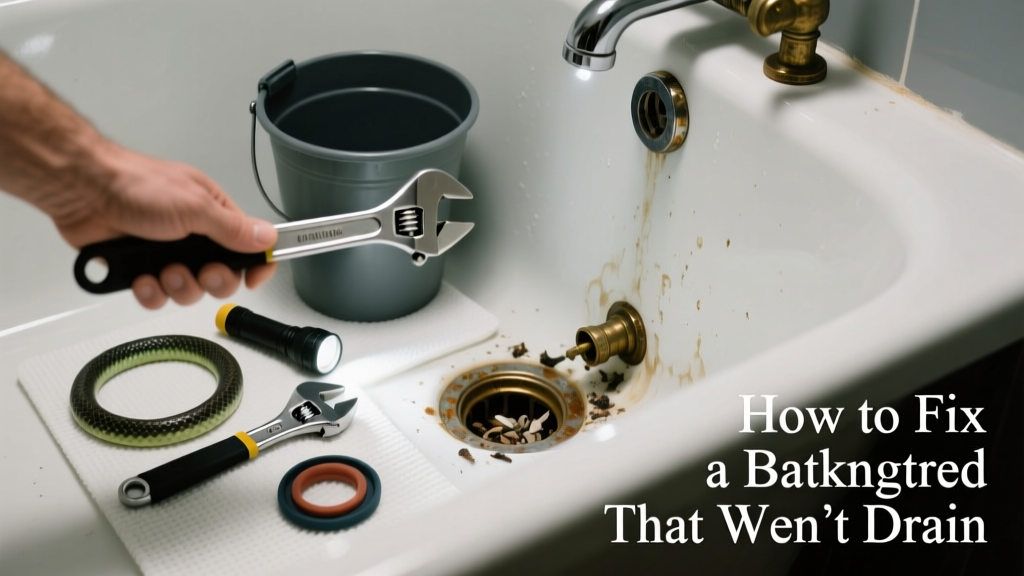
That gurgle followed by a stagnant pool of soapy water is more than annoying—it’s a red flag. A slow or stopped bathtub drain often points to a simple clog just below the surface, but ignoring it can lead to overflow, mold growth behind walls, or even structural water damage over time.
Quick Diagnosis
Before grabbing tools, identify the likely culprit. Most bathtub drainage failures fall into one of these categories:
- Hair and soap scum buildup in the stopper mechanism or overflow plate
- A clog 2–4 inches down the drain pipe (the most common location)
- Mineral deposits narrowing the drain line (especially in hard water areas)
- A blocked vent stack causing negative pressure that stalls drainage
- Corroded or collapsed galvanized pipes (common in homes built before 1980)
Tools & Materials Needed
| Item | Purpose | Estimated Cost |
|---|---|---|
| Needle-nose pliers | Remove pop-up stopper linkage or retrieve hair from overflow plate | $8–$15 |
| Zip-it drain cleaning tool | Grab hair clogs without chemicals or disassembly | $3–$6 |
| Plunger (cup-style, not flange) | Create suction on flat tub surface—use wet rag to seal overflow opening | $5–$12 |
| Baking soda + white vinegar | Natural reaction breaks down organic debris; safer than caustic drain cleaners | $4–$7 |
| Wet/dry vacuum (optional) | Strong suction for deeper clogs when other methods fail | $30–$80 (rental: $15/day) |
Step-by-Step Fix
Start with the least invasive method and progress only if needed:
- Remove the stopper assembly: Unscrew the overflow plate cover (usually two screws), pull out the linkage rod, then lift the stopper. Soak parts in vinegar to dissolve mineral scale.
- Use a Zip-it tool: Insert fully, push past the stopper hole, then slowly pull back while twisting. You’ll feel resistance—pull out hair and gunk. Repeat 2–3 times.
- Plunge with overflow sealed: Cover the overflow opening tightly with a wet rag. Fill tub with 2–3 inches of water. Plunge vertically—not side-to-side—for 20–30 seconds.
- Try baking soda and vinegar: Pour ½ cup baking soda, wait 5 minutes, then add 1 cup white vinegar. Cover drain for 10 minutes, then flush with boiling water (not if PVC pipes—use hot tap water instead).
When to Call a Pro
DIY stops being safe or effective when you encounter:
- Water backing up into the shower or adjacent sink—suggests a main line blockage
- Clogged drains throughout the house simultaneously
- Musty odor near walls or floors, indicating hidden water intrusion or mold
- Visible corrosion, rust stains, or leaks at pipe joints under the tub
- Drain remains slow after trying all methods twice—could indicate a broken or offset trap
According to the Insurance Institute for Business & Home Safety's 2023 report, 62% of plumbing-related water damage claims involved undiagnosed or improperly cleared drain obstructions that worsened over time.
Prevention Tips
Keep your tub flowing freely year-round with these habits:
- Install a fine-mesh drain cover like this stainless steel model to catch hair before it enters the pipe
- Rinse the drain weekly with ½ cup vinegar and hot water to dissolve early buildup
- Disassemble and clean the stopper mechanism every 3 months—especially if you use bath oils or Epsom salts
- Avoid pouring grease, lotion, or thick shampoos directly down the drain
- Consider installing a roof vent inspection cap to spot bird nests or ice blockages before they stall airflow
Can I use bleach on this?
No. Bleach doesn’t break down hair or soap scum—it reacts poorly with organic debris and can corrode metal parts and degrade PVC seals. It also produces toxic fumes when mixed with ammonia (found in some cleaners) or acids like vinegar. Stick to mechanical removal or enzymatic cleaners labeled for tub drains.
Why does my tub drain only when the shower runs?
This usually means your vent stack is partially blocked. The shower’s higher flow rate creates enough pressure to temporarily force water past the restriction, but the tub’s slower flow can’t overcome it. Check your roof vent for leaves, snow, or a stuck animal screen—and clear it with a garden hose or plumber’s snake.
Will a chemical drain cleaner fix it?
Not reliably—and it’s risky. Caustic lye-based cleaners (like Drano Max Gel) can damage older brass or zinc-coated pipes and may harden hair into a concrete-like mass further down the line. The U.S. EPA estimates that 14% of household water usage is from leaks caused by pipe degradation—including corrosion accelerated by repeated chemical use.
What if water backs up into the toilet?
That’s a serious sign of a main sewer line clog or septic system failure. Stop using all drains immediately. Don’t flush the toilet or run the dishwasher. Call a licensed plumber right away—this isn’t a DIY situation.
Can I snake the drain myself?
Yes—but only with a hand-cranked ¼-inch cable (not a power auger). Feed gently past the P-trap (you’ll feel resistance at ~18–24 inches). If you hit solid resistance before 3 feet, stop: you’re likely hitting the trap bend or a solder joint. Forcing it can crack cast iron or dislodge PVC glue joints.
Is slow draining always a clog?
No. In homes with older galvanized steel pipes, internal rust buildup reduces diameter over decades—even without visible clogs. If all drains are sluggish and you’ve ruled out stoppers and vents, pipe replacement may be necessary. A camera inspection by a pro can confirm.
Fixing a slow bathtub drain isn’t about brute force—it’s about precision, patience, and knowing when persistence crosses into risk. Most clogs yield within 20 minutes using the Zip-it and plunger combo. But if water sits longer than 5 minutes after a full bath, don’t wait for it to get worse. Catch it early, protect your pipes, and keep your bathroom dry and functional.