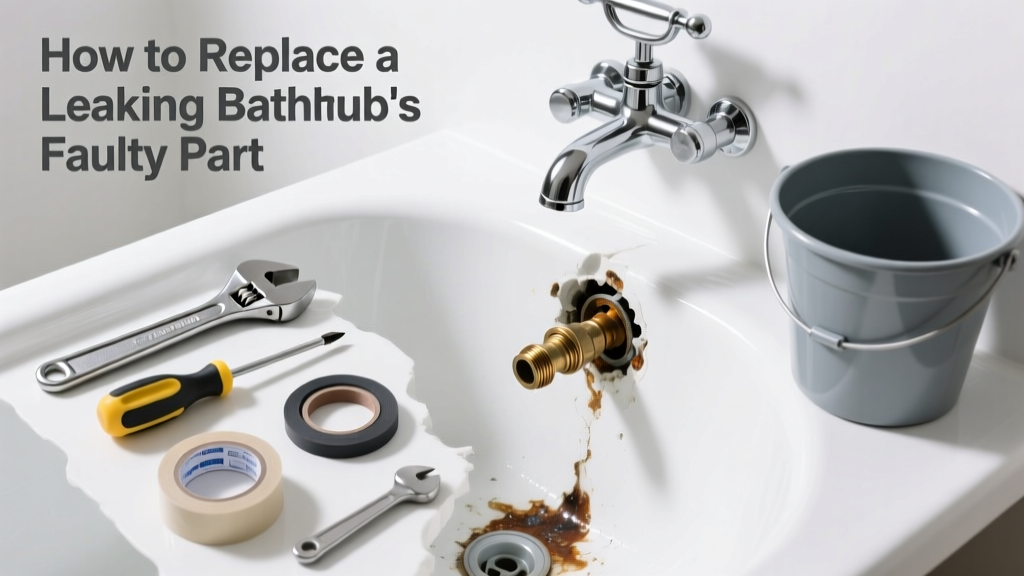
If your bathtub leaks only when water is running—or pools near the drain, overflow, or faucet—it’s rarely the tub itself failing. More often, it’s one small, replaceable component wearing out: a worn washer, cracked gasket, or corroded valve seat. Fixing that specific part beats replacing the entire tub—and costs under $25 if caught early.
Quick Diagnosis
Start here before grabbing tools. Most bathtub leaks trace to one of these four points:
- Faucet handle base: Dripping when turned off points to a faulty cartridge or rubber washer (common in Moen and Delta single-handle units).
- Drain flange: Water seeping around the drain cover during filling signals a failed putty seal or stripped threads.
- Overflow plate: Wet drywall behind the tub? Check for cracked silicone or missing gasket between the plate and pipe.
- Spout diverter: Leaking when shower mode is engaged usually means a worn rubber seal inside the spout’s diverter valve.
Tools & Materials Needed
| Item | Purpose | Estimated Cost |
|---|---|---|
| Basin wrench | Reaches tight nuts behind faucet and drain assemblies without scratching chrome | $12–$18 |
| Adjustable wrench (10-inch) | Tightens/loosens overflow plate nuts and drain trip-lever rods | $8–$15 |
| Plumber’s grease (silicone-based) | Lubricates rubber seals and prevents future sticking/cracking | $4–$7 |
| Replacement parts kit (e.g., Danco Universal Faucet Repair Kit) | Covers washers, O-rings, cartridges for most common brands | $14–$22 |
| Utility knife + putty knife | Cuts old caulk and removes hardened plumber’s putty from drain flange | $3–$6 |
Step-by-Step Fix
Follow the method matching your leak location. Don’t skip step 1—shutting off water prevents flooding.
- Shut off supply lines: Locate shut-off valves under the sink or in the basement. Turn both hot and cold valves clockwise until snug. Open faucet to relieve pressure.
- Replace faucet stem/cartridge: Remove handle screw (often hidden under a decorative cap), pull handle, unscrew retaining nut, then pull out cartridge. Match old part at hardware store or use a universal kit. Install new cartridge with fresh plumber’s grease on O-rings.
- Reseal drain flange: Unscrew overflow plate first (prevents twisting pipes). Loosen locknut under tub with basin wrench. Lift flange, scrape off old putty, apply fresh plumber’s putty (¼-inch rope), reseat flange, tighten nut evenly—don’t overtighten.
- Fix overflow gasket leak: Remove screws holding overflow plate. Peel off old silicone and gasket. Clean surface with rubbing alcohol. Press new foam gasket into place, then reattach plate with fresh silicone bead behind edges.
When to Call a Pro
Some leaks look simple but hide deeper issues. Call a licensed plumber if you encounter any of these:
- Leak persists after replacing all visible parts—suggests cracked pipe behind wall or subfloor damage.
- You detect mold growth or soft drywall behind the tub; moisture may have compromised structural framing.
- Your home uses galvanized steel supply lines installed before 1980—their corrosion risk makes replacement unsafe without professional assessment.
- The tub’s acrylic or fiberglass shell shows hairline cracks near the drain or overflow—these require epoxy repair or full replacement, not just part swaps.
According to the Insurance Institute for Business & Home Safety's 2023 report, undetected bathtub leaks contribute to nearly 12% of insured water damage claims in bathrooms—most preventable with timely part replacement.
Prevention Tips
Maintaining your bathtub’s components extends their life by 3–5 years. Do these every 6 months:
- Wipe down faucet aerators and clean mineral buildup with white vinegar soak (15 minutes).
- Check overflow plate screws for looseness—tighten gently with a Phillips head.
- Inspect drain flange for wobble; if it moves, reseal immediately before grout or caulk fails.
- Turn handles gently—forcing them accelerates cartridge wear, especially on older compression-style faucets.
Can I reuse the old plumber’s putty on the drain flange?
No. Old putty dries out, shrinks, and loses adhesion. Always use fresh putty—plumber’s putty remains pliable for decades and won’t harden like caulk. Reusing old putty is the #1 cause of repeat drain leaks.
Do I need to remove the entire faucet to replace the cartridge?
No—you only need to remove the handle and retaining nut. The valve body stays mounted to the wall. Removing the whole assembly risks damaging supply line connections and tile backer board.
What if my tub has a push-pull drain instead of a trip lever?
Push-pull drains use a different mechanism: a threaded lift rod connects directly to a stopper inside the drain body. If leaking, disassemble the drain body (under the tub) and replace the rubber stopper gasket—not the flange. See our how to fix push-pull bathtub drain guide for details.
Is Teflon tape okay for bathtub supply line threads?
Yes—but only on metal-to-metal threaded joints (e.g., supply line to shutoff valve). Never use it on plastic supply lines or compression fittings. For those, use a thin layer of pipe dope rated for potable water instead.
How long should a replacement cartridge last?
With moderate use (2–3 baths/day), quality brass or ceramic cartridges last 5–8 years. Cheaper plastic versions degrade faster—especially in hard water areas. If you notice dripping after 2 years, test water hardness; consider installing a water softener installation guide to extend part life.
Can I replace just the showerhead diverter without changing the whole spout?
Yes—if your spout is a slip-fit or screw-on model (not soldered). Many modern spouts have removable diverter caps held by a tiny set screw. Use a 1.5mm Allen key, pop off the cap, swap the rubber diverter seal, and reassemble. No need to cut pipes or break tile.
A well-maintained bathtub shouldn’t leak—and when it does, pinpointing the right part saves hundreds over full fixture replacement. Most leaks are solved in under 90 minutes with basic tools and the correct gasket or cartridge. Keep spare washers and O-rings in your bathroom toolbox—they cost less than a coffee and prevent next month’s emergency call.