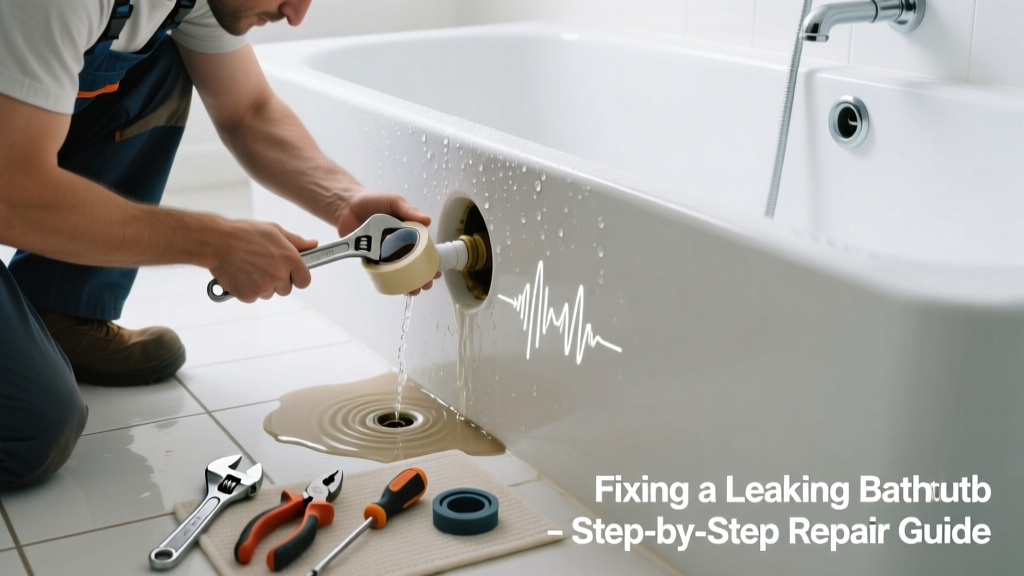
If your bathtub leaks *and* makes strange noises—like clanging, hissing, or rhythmic thumping—it’s not just an annoyance; it’s a red flag pointing to pressure imbalances, loose hardware, or failing seals. These sounds often mean water is escaping where it shouldn’t, accelerating corrosion or weakening subfloor integrity. Ignoring them can lead to mold growth or structural damage in as little as 48 hours.
Quick Diagnosis
Start here before grabbing tools. Unusual noise paired with leakage usually traces to one (or more) of these causes:
- Loose or corroded faucet valve stems causing water hammer or vibration
- Worn-out tub spout diverter allowing backflow and air pockets
- Cracked or degraded silicone caulk around the tub rim letting water seep behind walls
- Collapsed or kinked supply lines vibrating under pressure
- Failed drain assembly gasket causing gurgling and slow leaks beneath the tub
Tools & Materials Needed
| Item | Purpose | Estimated Cost |
|---|---|---|
| Adjustable wrench | Tightens supply line connections and faucet nuts without stripping threads | $12–$25 |
| Plumber’s grease | Lubricates rubber washers and O-rings to prevent squeaking and improve seal longevity | $4–$8 |
| 100% silicone caulk (mold-resistant) | Re-seals tub-to-wall joints; prevents moisture migration and future gurgling from trapped air | $6–$11 |
| Compression sleeve kit (¼” and ⅜”) | Replaces worn supply line fittings that vibrate and leak at shutoff valves | $9–$15 |
| Digital pressure gauge (0–120 psi) | Measures home water pressure—if over 80 psi, it’s likely causing water hammer and pipe noise | $22–$38 |
Step-by-Step Fix
Apply these methods in order—most issues resolve after Step 2 or 3:
- Check water pressure first. Attach the digital pressure gauge to an outdoor spigot or laundry faucet. If reading exceeds 80 psi, install a pressure-reducing valve (PRV). According to the U.S. EPA’s 2022 WaterSense report, homes with >80 psi experience 3x more fixture-related leaks and noise complaints.
- Replace the tub spout diverter. Shut off water, unscrew the spout (often hidden behind a set screw), and swap the internal rubber diverter with a brass-reinforced model. This stops hissing and dripping at the showerhead when filling the tub.
- Repack faucet valve stems. Remove handle escutcheons, extract stem assemblies, replace rubber washers and seats, then coat threads with plumber’s grease. Loose stems cause metallic clanking during flow changes.
- Re-caulk the tub perimeter. Cut away old silicone with a utility knife, clean thoroughly with denatured alcohol, then apply a continuous ¼” bead of mold-resistant silicone—especially at the tub-to-wall and tub-to-floor corners where gurgling often originates.
When to Call a Pro
Stop and call a licensed plumber if you encounter any of these:
- Water stains spreading across the ceiling below the bathroom—indicates prolonged leakage behind walls or under flooring
- Leak persists after replacing all visible seals and adjusting pressure—suggests a cracked cast-iron tub or failed ABS drain line inside the wall cavity
- You hear loud, intermittent banging *only when other fixtures run*—a sign of failing main shutoff valve or whole-house water hammer arrestor failure
- Water pressure drops significantly when multiple fixtures are open—points to galvanized pipe corrosion or undersized supply lines requiring repiping
Prevention Tips
Maintain your system proactively to avoid repeat issues:
- Test water pressure every 6 months—replace PRVs every 10 years (per ASSE International Standard 1003-2021)
- Re-caulk tub edges annually—silicone degrades fastest in high-humidity zones
- Install water hammer arrestors on both hot and cold supply lines if your home has quick-closing solenoid valves (e.g., smart faucets or washing machines)
- Run hot water through the tub drain for 30 seconds weekly to prevent soap-scum buildup that traps air and causes gurgling
Can I use bleach to clean the drain and stop gurgling?
No. Bleach corrodes metal drain components and reacts poorly with residual soap scum, creating chlorine gas in confined spaces. Instead, use ½ cup baking soda followed by ½ cup white vinegar—let foam for 15 minutes, then flush with boiling water. This safely breaks down organic buildup without damaging pipes.
Why does the leak only happen when I turn the water off?
This classic symptom points to water hammer—a pressure surge caused by sudden flow stoppage. It stresses joints, loosens connections, and forces water past compromised seals. A properly installed water hammer arrestor absorbs that shock. If yours is missing or failed, the noise and micro-leaks will return within weeks.
Is the noise coming from the wall or the tub itself?
Place your palm flat against the wall behind the tub while someone turns the water on/off. If vibration transfers clearly to your hand, the issue is in the wall—likely a loose supply line bracket or failing shutoff valve. If the sound is localized near the faucet handles or spout, focus on valve stems or the diverter assembly.
How long should silicone caulk last before needing replacement?
In bathrooms, high-quality mold-resistant silicone lasts 5–7 years—but in humid climates or poorly ventilated spaces, it may degrade in as little as 3 years. Check annually for cracking, pulling away from surfaces, or dark discoloration (a sign of microbial growth underneath).
Will tightening the drain flange stop the gurgling?
Sometimes—but only if the flange is visibly loose. Over-tightening compresses the rubber gasket unevenly and creates new gaps. Use a basin wrench to snug it to 15–20 ft-lbs torque, then test with food coloring in standing water. If color bleeds under the flange, replace the entire drain assembly—including the tub shoe and overflow plate gaskets.
Can a leaking tub cause floor squeaks?
Absolutely. Chronic moisture under the tub weakens subfloor plywood and softens joist hangers. The U.S. Department of Housing and Urban Development notes that 22% of reported bathroom floor squeaks originate from undetected tub or shower pan leaks (HUD Repair Manual, 2023). Address leaks before they compromise structural framing.
"Water hammer isn't just noisy—it's destructive. Every unmitigated surge adds cumulative stress equivalent to 500+ PSI spikes on pipe joints." — ASME B31.9: Building Services Piping Code, 2022 Edition
Fixing a noisy, leaking bathtub isn’t about silencing the sound—it’s about finding where energy and water are escaping together. Once you match the noise pattern to its mechanical source, most repairs take under two hours and cost less than $50. Keep your pressure in check, reseal thoughtfully, and inspect quarterly—your tub, your floor, and your water bill will all thank you.