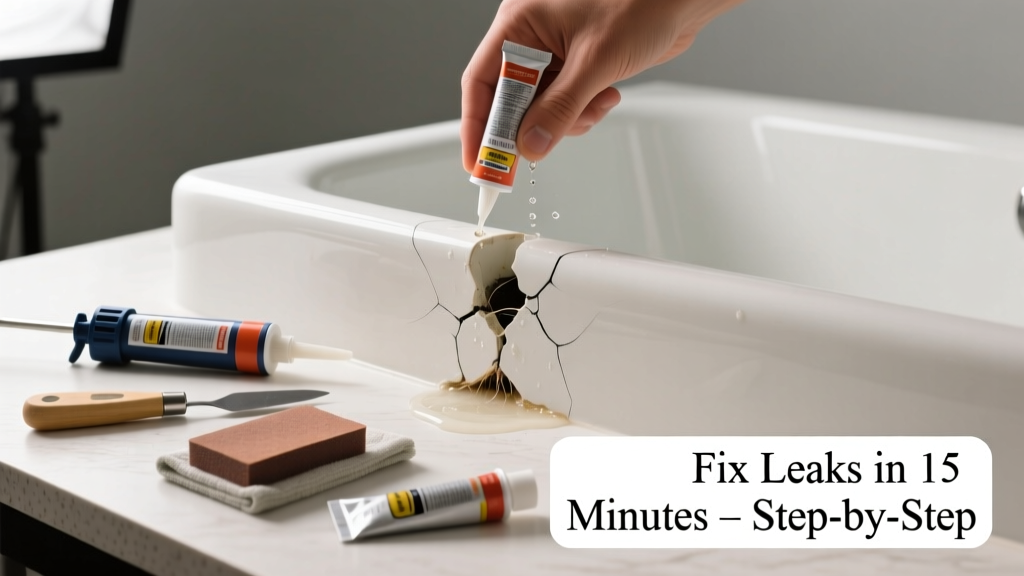
A slow drip under your bathtub isn’t just annoying—it can rot subflooring, warp joists, and invite mold in as little as 48 hours. Most leaks are fixable in under two hours with basic tools, but misdiagnosis leads to repeated failures. Start here to pinpoint the source before water damage spreads.
Quick Diagnosis
Leak location determines the fix. Check these common sources first:
- Grout or caulk failure around the tub’s perimeter (most frequent cause)
- Loose or corroded faucet handles, spout, or shower arm connections
- Cracked overflow plate gasket or improperly seated drain flange
- Failed rubber gasket under the tub’s drain assembly (requires underside access)
- Pinhole corrosion in older galvanized steel supply lines (rare but serious)
Tools & Materials Needed
| Item | Purpose | Estimated Cost |
|---|---|---|
| Adjustable wrench | Tightens supply lines and drain assemblies without stripping fittings | $12–$25 |
| 100% silicone caulk (mold-resistant) | Seals gaps at tub-to-wall joints; lasts 10+ years when applied correctly | $4–$9 |
| Caulk removal tool or utility knife | Cleans old caulk without gouging tile or acrylic | $3–$8 |
| Plumber’s putty | Creates watertight seal under overflow plates and drain flanges | $2–$5 |
| Flashlight + mirror | Inspects hard-to-see areas under tub or behind walls | $5–$15 |
Step-by-Step Fix
Apply only the method matching your diagnosis:
- Recaulk the tub perimeter: Remove all old caulk with a removal tool, clean with isopropyl alcohol, apply 1/4" bead of silicone caulk using steady pressure, and smooth with a damp finger. Let cure 24 hours before use.
- Tighten faucet and spout connections: Shut off water at the shutoff valves, loosen escutcheon plate, check compression nuts on spout and handle stems—tighten snugly (don’t over-torque). Replace worn rubber washers if dripping persists.
- Replace overflow gasket: Unscrew overflow plate, remove old putty and gasket, roll fresh plumber’s putty into a 1/4" rope, press onto back of new gasket, reassemble and tighten evenly.
- Fix drain assembly leak: From below (crawl space or basement), inspect the P-trap and drain pipe connections. Tighten slip-nut joints with two wrenches—one holding the fitting, one turning the nut. Replace cracked PVC or corroded metal parts.
When to Call a Pro
Stop and call a licensed plumber if you encounter any of these:
- Water stains spreading beyond the tub area into adjacent rooms or ceilings
- Signs of slab leakage (damp concrete floor near tub, musty odor with no visible source)
- Galvanized steel supply lines showing white rust or flaking (corrosion risk)
- No access to the tub’s underside and leak originates from the drain assembly
- Leak returns within 72 hours after a proper recaulk or gasket replacement
According to the Insurance Institute for Business & Home Safety's 2023 report, 68% of undetected bathtub leaks cause structural damage within 3 weeks—especially when hidden behind walls or under floors.
Prevention Tips
Maintain your tub’s integrity with these habits:
- Inspect caulk lines every 6 months; reapply at first sign of cracking or discoloration
- Wipe down tub edges after each use to prevent soap scum buildup that degrades sealants
- Test shutoff valves annually by turning them off/on—stuck valves delay emergency response
- Install a water leak detector like Flo by Moen under the tub for early alerts
Can I use bleach to clean mold before recaulking?
Yes—but only after removing all visible mold with a stiff brush and drying thoroughly. Mix 1 part bleach to 10 parts water, apply for 10 minutes, rinse, then let dry 48 hours before applying new caulk. Never mix bleach with ammonia or vinegar.
Why does my tub leak only when the shower runs?
This points to the diverter valve or shower arm connection. When water pressure shifts to the showerhead, weak seals at the spout diverter or behind the wall-mounted arm can open small gaps. Test by capping the showerhead and running the tub—leak stops? Focus on the diverter.
Is it safe to use epoxy or tape as a temporary fix?
No. Epoxy may bond temporarily but fails under thermal cycling and water pressure. Duct or Teflon tape on threaded joints masks underlying corrosion and risks sudden failure. The U.S. EPA estimates that 14% of household water usage is from leaks—temporary patches waste water and hide real problems.
How long should new caulk last?
High-quality 100% silicone caulk lasts 10–15 years if applied correctly on clean, dry surfaces. Latex-based alternatives degrade in 2–3 years, especially in high-humidity bathrooms. Always choose ASTM C920-compliant silicone labeled “mildew resistant.”
Do I need to replace the entire drain assembly if the pop-up stopper leaks?
Not usually. First try replacing just the rubber stopper seal or cleaning mineral buildup from the lift rod mechanism. If the drain body itself is cracked or cross-threaded, then full replacement is necessary—and often requires removing the tub’s trim ring or accessing from below.
Can a leaking tub lower my home’s resale value?
Absolutely. Appraisers and inspectors flag active leaks as safety and structural concerns. A 2022 National Association of Realtors® report found homes with documented plumbing issues sold for 3.2% less on average—and buyers frequently request $1,200–$2,500 repair credits. Fix it before listing.
Most bathtub leaks aren’t emergencies—but they’re never trivial. Every hour of delay multiplies repair costs and health risks. You’ve got the steps, tools, and judgment to act now. If you’ve tackled the caulk or gasket and still hear that drip, don’t ignore it. Grab your flashlight, double-check your work, or reach out to a trusted local plumber—you’ll sleep easier knowing your bathroom is tight, dry, and ready for another decade of reliable use. For related help, see our guide on shower leaking and bathroom vent fan installation.