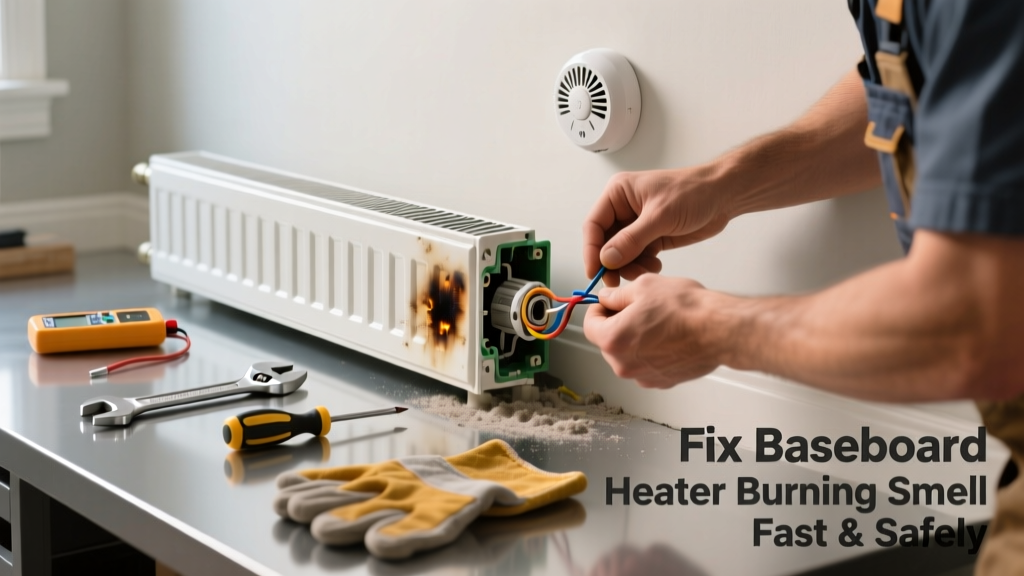
That acrid, dusty-burning odor from your baseboard heater isn’t just annoying—it’s a red flag. Most often, it’s harmless dust burning off after seasonal startup, but sometimes it signals wiring damage or overheating components. Ignoring it risks fire, reduced efficiency, or premature unit failure.
Quick Diagnosis
Before grabbing tools, identify the likely cause:
- Dust and debris baked onto heating elements (most common—smell fades after 1–3 heat cycles)
- Plastic, curtains, or furniture too close to the unit (melting or scorching)
- Electrical arcing or failing thermostat (sharp ozone or fishy smell, intermittent operation)
- Insulation or drywall contact with hot housing (burnt insulation odor)
- Corroded or loose wiring inside the unit (bitter, metallic scent)
Tools & Materials Needed
| Item | Purpose | Estimated Cost |
|---|---|---|
| Non-contact voltage tester | Verifies power is off before opening unit—critical safety step | $18–$25 |
| Soft-bristle brush & vacuum with crevice tool | Removes dust buildup without damaging fins or wiring | $0–$35 (if you own one) |
| Isopropyl alcohol (91%) & lint-free cloths | Cleans residue and grime from accessible surfaces safely | $8–$12 |
| Replacement thermostat (if faulty) | Fixes inconsistent cycling that causes overheating and burning odors | $22–$45 |
| Heat-resistant silicone sealant | Seals gaps where insulation or drywall contacts hot metal housing | $10–$16 |
Step-by-Step Fix
- Power down completely: Turn off the circuit breaker—not just the wall switch—and verify with a non-contact voltage tester at the heater’s terminals.
- Vacuum and brush thoroughly: Use the crevice tool along the bottom slot and top grille; gently brush fins from back to front to dislodge embedded dust. Don’t force bent fins.
- Clean accessible surfaces: Dampen a lint-free cloth with isopropyl alcohol and wipe exterior housing, end caps, and visible fin surfaces. Never spray liquid directly into the unit.
- Check clearance and obstructions: Measure distance from heater to walls, curtains, rugs, and furniture—minimum 12 inches on all sides per NFPA 70E guidelines.
- Inspect for physical damage: Look for melted plastic, charring, cracked insulation, or discolored wires. If found, stop and call a licensed electrician immediately.
When to Call a Pro
DIY ends here if you notice any of these:
- Smell persists beyond 3 full heating cycles (more than 48 hours of normal use)
- Tripped breaker or GFCI outlet resets repeatedly
- Visible scorch marks, bubbling paint, or warped metal housing
- Flickering lights elsewhere in the room when the heater runs
- Thermostat fails calibration tests (e.g., heater runs continuously even when room is 10°F above setpoint)
According to the U.S. Fire Administration’s Home Structure Fires Report (2022), space heaters—including baseboard units—account for 12% of home heating-related fires, with improper maintenance cited in 37% of those incidents.
Prevention Tips
- Vacuum baseboard heaters twice yearly: once before heating season and again mid-winter
- Install a programmable line-voltage thermostat to avoid constant high-output cycling
- Use only UL-listed furniture with open legs—never solid-base dressers or bookshelves near units
- Label each heater’s circuit breaker clearly so you can shut it off fast during cleaning or inspection
- Replace older units (15+ years) with newer models featuring thermal cutoff switches and improved airflow design
Can I use bleach on the heater to remove odor?
No—bleach corrodes aluminum fins and copper wiring, and its fumes react dangerously with heated metal. Stick to isopropyl alcohol or mild dish soap diluted in water for external wiping only. Never apply cleaners inside the unit.
Why does the smell only happen when I first turn it on each fall?
This is almost always accumulated summer dust burning off the heating elements—a normal, temporary occurrence. It should dissipate within 30–90 minutes of continuous operation. If it returns daily, deeper cleaning or thermostat issues are likely.
Is the burning smell dangerous if it’s faint and goes away quickly?
A faint, short-lived smell (under 15 minutes) after long disuse is usually low-risk—but never ignore it entirely. The baseboard heater maintenance checklist helps you spot early warning signs before they escalate.
Can a dirty air filter cause this smell?
Baseboard heaters don’t use air filters—they’re convection-only units. But if you have a central HVAC system running simultaneously, a clogged furnace filter can reduce whole-house airflow, causing localized overheating near baseboards. Check your furnace filter replacement schedule as part of routine winter prep.
Will turning the heater down lower reduce the burning smell?
Lowering the thermostat doesn’t prevent dust ignition—it just delays it. The heating element still reaches ~150–200°F regardless of room temp setting. Effective prevention requires physical cleaning, not temperature adjustment.
How do I know if my baseboard heater’s thermostat is failing?
Signs include erratic cycling (on/off every 2–3 minutes), inability to hold set temperature (+/- 5°F variance), or no response when adjusting the dial. Test it with a multimeter: a functional thermostat shows continuity only when heated to its rated trip point. For help, see our how to test baseboard thermostat guide.
Baseboard heaters are simple, but their silence shouldn’t lull you into complacency. That first whiff of burning is your system’s alarm—not background noise. Treat it like a check-engine light: investigate promptly, act decisively, and prioritize safety over speed. A few minutes of careful inspection today could prevent a costly repair—or worse—tomorrow.