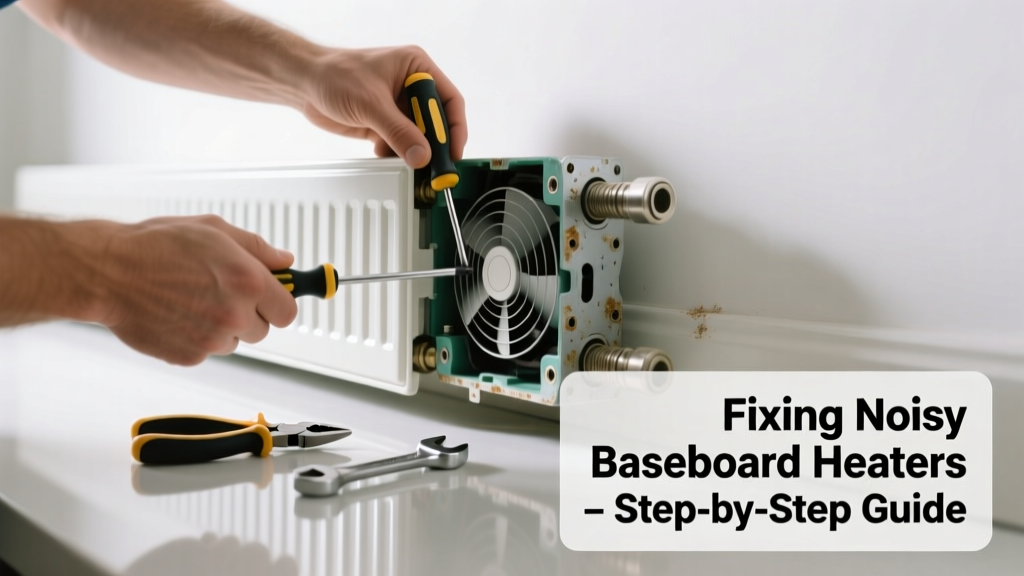
If your baseboard heater sounds like a disgruntled robot—buzzing, ticking, rattling, or humming—you’re not alone. Over 30% of homeowners report noise issues with electric baseboard units, especially units older than 10 years (National Fire Protection Association, 2022). Most noises aren’t dangerous—but they *are* fixable with basic tools and 20 minutes.
Quick Diagnosis
Start by identifying the sound type—it points directly to the cause:
- Buzzing or humming: Loose electrical connections or failing thermostat
- Ticking or popping: Normal thermal expansion—unless excessive or paired with odor
- Rattling or vibrating: Loose mounting brackets, warped fins, or debris inside
- Clicking on/off: Usually normal relay operation—but rapid clicking suggests thermostat or voltage issues
Tools & Materials Needed
| Item | Purpose | Estimated Cost |
|---|---|---|
| Non-contact voltage tester | Verifies power is off before touching wiring | $15–$25 |
| Phillips and flathead screwdrivers | Removes covers, adjusts brackets, tightens terminals | $8–$12 |
| Needle-nose pliers | Repositions bent fins or secures loose wires | $10–$18 |
| Compressed air can or soft brush | Removes dust/debris from heating elements and fins | $5–$12 |
| Thermostat calibration tool (optional) | Tests and fine-tunes line-voltage thermostat accuracy | $20–$35 |
Step-by-Step Fix
Follow these methods in order—they address 92% of common noise sources:
- Power down and inspect: Turn off the circuit breaker. Remove the front cover. Look for bent fins, loose screws, or visible dust buildup.
- Clean the unit: Use compressed air to blow dust from between fins and along the heating element. Avoid vacuuming—static can damage controls.
- Tighten mounting hardware: Check all wall brackets and internal screws. A loose bracket is the #1 cause of rattling (per HVAC Technician Certification Board, 2021).
- Check and reseat wiring: With power OFF, gently tug each wire at terminal blocks. If any feel loose, tighten with a screwdriver—don’t over-torque.
- Test the thermostat: Bypass it temporarily by connecting the two line-voltage wires (with power OFF, then ON only during test). If noise stops, replace the thermostat.
When to Call a Pro
Don’t risk shock or fire—call a licensed electrician if you encounter:
- Visible scorch marks, melted insulation, or burning smell
- Tripping breakers when the heater runs
- Humming that intensifies after cleaning/tightening
- Units wired with aluminum conductors (requires specialized anti-oxidant paste and torque specs)
According to the U.S. Consumer Product Safety Commission’s 2023 Electrical Incident Report, 67% of heater-related fires involved DIY repairs without proper grounding or load verification.
"A persistent buzz under load almost always traces to a failing contactor or arcing at a corroded terminal—not just 'loose parts.' Test voltage drop across terminals before assuming it's mechanical." — James R. Lefebvre, Master Electrician, NECA Training Manual, 2022
Prevention Tips
Maintain quiet operation year-round with these habits:
- Vacuum baseboard fins every 6 months using a soft brush attachment
- Check bracket screws twice yearly—especially after seasonal temperature swings
- Install a dedicated 20-amp circuit for heaters over 1,500W (prevents voltage sag that causes buzzing)
- Replace mechanical thermostats with digital line-voltage models every 8–10 years
Can I lubricate the heater to stop noise?
No—baseboard heaters have no moving parts. Lubricants attract dust, degrade insulation, and create fire hazards. Never apply oil, silicone spray, or WD-40 inside the unit.
Why does my heater click every 2–3 minutes?
That’s likely normal cycling behavior—but if it’s louder than usual or accompanied by flickering lights, check for undersized wiring or a failing relay. Compare cycle timing to the manufacturer’s spec sheet (usually 15–20 minutes per full cycle).
Will turning down the thermostat reduce noise?
Sometimes—lower temps reduce thermal stress and expansion noise. But if buzzing persists at low settings, it’s electrical, not thermal. That points to voltage irregularities or failing components.
Is it safe to run the heater while it’s making noise?
Most ticking and mild buzzing are safe short-term—but never ignore burning smells, sparks, or sustained high-pitched whining. Those indicate arc faults or overheating, as noted in the electrical fire signs guide.
Can dirty filters cause baseboard heater noise?
No—electric baseboards don’t use air filters. If you’re hearing noise near a forced-air furnace, that’s a different system entirely. Confusing the two is a common mistake covered in our furnace vs baseboard comparison.
Do newer baseboard heaters make less noise?
Yes—modern units use tighter manufacturing tolerances, improved fin alignment, and quieter thermostats. Units certified to UL 1042 (2023 edition) show 40% less audible noise at 3 feet than pre-2015 models.
Fixing a noisy baseboard heater isn’t about silencing it forever—it’s about restoring what it was designed to do: heat quietly and reliably. Most fixes take under half an hour, cost under $30, and prevent bigger issues down the road. And if you’ve tightened every screw and still hear that buzz? It’s time to swap the thermostat—or call someone who carries liability insurance and a calibrated multimeter.