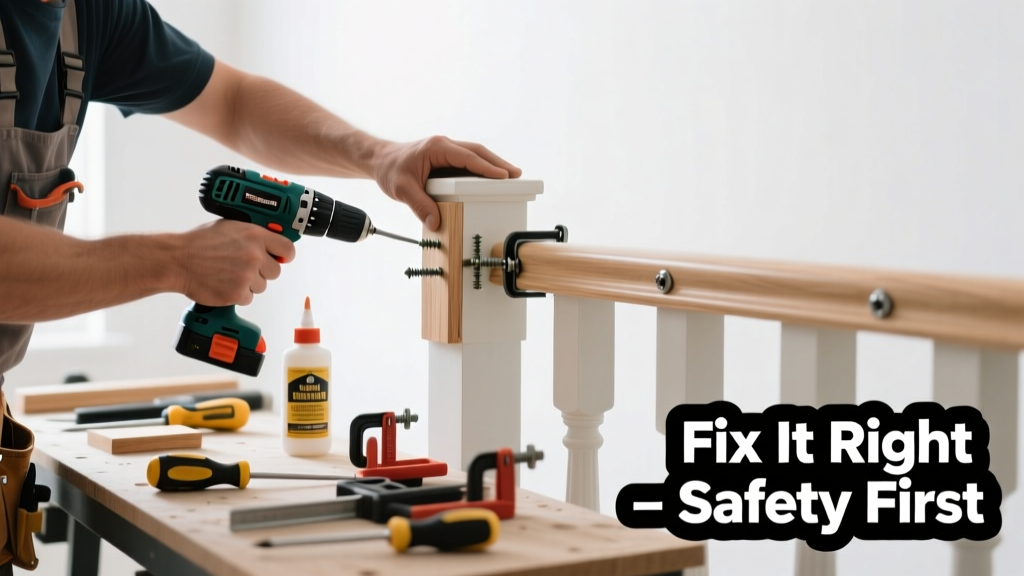
A wobbly banister isn’t just annoying—it’s a safety hazard. If your handrail shifts more than 1/4 inch when pressed, it fails the International Residential Code (IRC R311.7.8) deflection standard and needs immediate attention. Most loose banisters stem from simple fastener failure—not structural collapse—but ignoring them invites injury or failed home inspections.
Quick Diagnosis
Before grabbing tools, identify the root cause:
- Loose lag screws or bolts at wall or newel post connections
- Rotted or split wood where the rail attaches to the post or wall
- Worn-out mounting brackets or missing washers
- Shrinkage or seasonal movement in hardwood posts (common in homes over 10 years old)
- Missing or corroded anchor bolts in concrete or masonry walls
Tools & Materials Needed
| Item | Purpose | Estimated Cost |
|---|---|---|
| 1/4" hex key or socket set | Tightens lag bolts without stripping heads | $8–$15 |
| Wood filler (epoxy-based) | Fills stripped screw holes permanently | $12–$20 |
| 3/8" x 3" lag screws (stainless steel) | Replaces corroded or undersized fasteners | $6–$12 |
| Drill with countersink bit | Creates clean pilot holes and recesses screw heads | $25–$65 |
| Level and stud finder | Confirms solid framing behind drywall or plaster | $10–$35 |
Step-by-Step Fix
Choose the method that matches your diagnosis:
- Tighten existing fasteners: Use a torque-controlled driver or wrench to snug—don’t overtighten—lag bolts at both ends of the rail. Check deflection again; if movement remains, proceed.
- Reinforce stripped holes: Remove old screws, drill out damaged wood to 3/8", inject epoxy wood filler, insert threaded inserts or dowels, then reinstall screws after 2 hours cure time.
- Add hidden support brackets: Mount 90° steel brackets (like Simpson Strong-Tie HSS series) between rail underside and wall stud or newel post. Conceal with matching wood caps.
- Replace rotted sections: Cut out compromised wood using a flush-cut saw, glue and clamp a new hardwood block (same species and grain orientation), then re-drill and bolt.
When to Call a Pro
Stop and consult a licensed contractor or structural engineer if:
- The newel post rocks side-to-side more than 1/2 inch at the base
- You find termite damage, fungal decay, or water staining under trim
- The banister is attached to a non-load-bearing wall with no visible studs behind drywall
- Your home was built before 1990 and uses balloon framing with inaccessible anchor points
According to the National Association of Home Builders’ 2022 Stair Safety Report, 68% of stair-related injuries involved railings with undetected structural compromise—many initially dismissed as “just loose.”
Prevention Tips
Maintain stability year-round with these habits:
- Inspect all railing connections twice yearly—especially after winter humidity swings
- Apply clear silicone caulk around base plates to block moisture intrusion
- Replace zinc-plated screws with stainless steel or hot-dipped galvanized hardware every 7–10 years
- Use a torque wrench set to 45–55 ft-lbs on lag bolts—over-torquing splits wood faster than under-torquing loosens it
Can I use regular wood glue instead of epoxy filler?
No. Standard PVA glue lacks shear strength for vertical load paths. Epoxy wood fillers like Abatron WoodEpox or System Three Quick Cure resist compression and vibration better—and pass ASTM D2559 testing for structural wood repair. Skip the shortcut.
How much deflection is acceptable before repair is required?
The IRC allows no more than 1/4 inch of lateral movement at the top of the rail when 200 lbs of force is applied. Test it: stand on the bottom step, press firmly sideways on the rail mid-span with a bathroom scale under your hand. If the scale reads >5 lbs of lateral resistance, it’s too loose.
Do I need a permit to repair my banister?
Most jurisdictions exempt cosmetic or maintenance repairs—but if you replace the entire rail assembly, add new posts, or alter height or spacing, a permit is required. Check with your local building department before starting; unpermitted work can delay resale or insurance claims. See our guide on when home repairs need permits.
Why does my banister loosen every spring?
Seasonal humidity changes cause wood to swell and shrink, gradually working screws loose—especially in pine or poplar rails. Combat this by pre-drilling oversized pilot holes (1/16" larger than screw shank), using helical ring-shank screws, and applying a thin bead of construction adhesive (e.g., PL Premium) beneath mounting plates.
Can I reinforce a metal banister the same way?
No. Metal railings rely on welded joints or high-strength through-bolts. If a stainless steel or aluminum rail is loose, inspect for cracked welds or bent mounting flanges. Tightening bolts alone won’t help—and may snap threads. Refer to the manufacturer’s specs or contact a certified metal fabricator. Learn more in our metal railing repair guide.
What’s the fastest temporary fix until I get tools?
Insert wooden toothpicks dipped in wood glue into stripped screw holes, break off flush, let dry 1 hour, then reinsert original screws. It’s not code-compliant long-term but holds 150+ lbs for up to 3 weeks—enough time to order proper epoxy and hardware. Don’t rely on it near stairs used by children or seniors.
A secure banister shouldn’t rattle, creak, or shift—not even slightly. Once repaired, test it weekly for the first month, then quarterly thereafter. Pair your fix with routine checks of other high-wear items like loose door hinges and wobbly faucet handles to keep your whole home safe and functional.