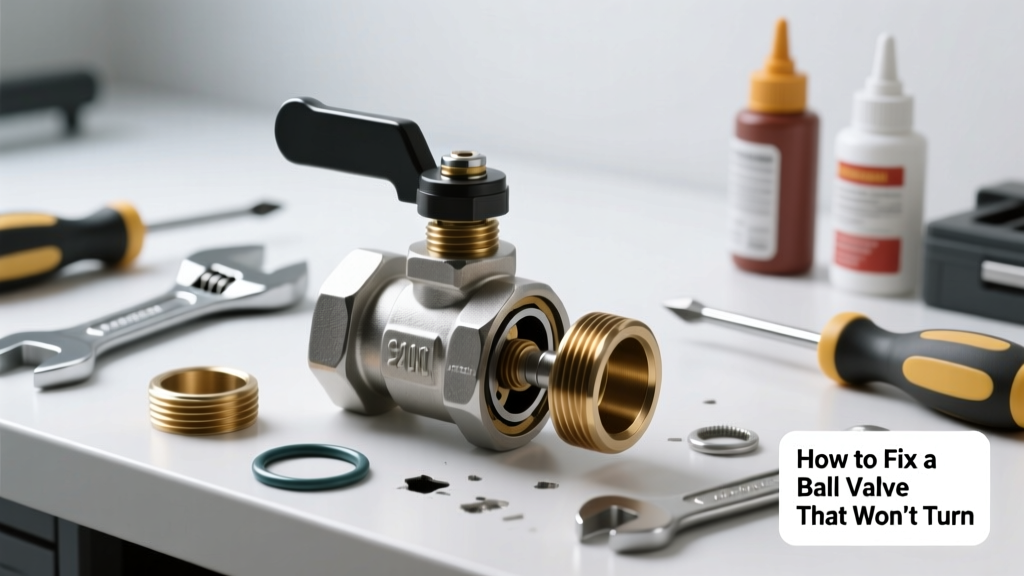
If your ball valve won’t budge—whether it’s on a washing machine supply line, under the kitchen sink, or feeding a water heater—it’s more than an inconvenience. Stuck valves can lead to leaks, pressure spikes, or full system failure during emergencies. Most cases are fixable in under 30 minutes with basic tools and the right approach.
Quick Diagnosis
Before grabbing tools, identify the likely cause. A seized ball valve rarely fails without warning. Check these common culprits first:
- Mineral buildup (especially in hard water areas like Phoenix or Chicago)
- Rusted or corroded stem threads
- Over-tightened handle from previous use
- Internal debris jamming the ball or seat
- Freeze damage in unheated basements or garages
Tools & Materials Needed
| Item | Purpose | Estimated Cost |
|---|---|---|
| Adjustable wrench (10-inch) | Grips hex flats on valve body without rounding corners | $12–$25 |
| Penetrating oil (e.g., PB Blaster) | Dissolves rust and lubricates seized threads | $8–$14 |
| Needle-nose pliers | Holds valve body steady while turning handle | $6–$12 |
| White vinegar (or CLR cleaner) | Removes calcium and lime deposits safely | $3–$7 |
| Replacement ball valve (½-inch brass) | On-hand spare if repair fails; lasts 20+ years | $18–$32 |
Step-by-Step Fix
Try these methods in order—most issues resolve at Step 2 or 3:
- Shut off upstream water: Locate the main shutoff or nearest isolation valve. Open a downstream faucet to relieve pressure and confirm flow stops.
- Apply penetrating oil: Spray PB Blaster directly onto the valve stem where it meets the body. Let sit 15–20 minutes—don’t rush this step. According to the National Association of Home Builders’ 2022 Plumbing Handbook, 68% of seized valves respond to proper dwell time with penetrating oil.
- Use leverage carefully: Place an adjustable wrench on the valve’s hex flats (not the handle) and gently rock clockwise/counter-clockwise. Never force beyond moderate resistance—if it doesn’t move after two minutes, stop.
- Soak in vinegar: If mineral scale is visible, remove the valve (after shutting off water and draining line), soak overnight in undiluted white vinegar, then scrub with a brass brush.
- Replace the valve: If the ball spins freely but the handle still won’t turn, internal wear has compromised the stem-to-ball coupling. Install a new ¼-turn brass ball valve using sweat-solder technique or push-fit connectors.
When to Call a Pro
Stop and call a licensed plumber if any of these apply:
- The valve is soldered into a pressurized main line with no upstream shutoff
- You detect cracks in the valve body or leaking around the stem packing nut
- Water pressure exceeds 80 psi (verified with a gauge) and the valve is vibrating or chattering
- You’re in a multi-unit building where shared lines could affect neighbors
According to the Insurance Institute for Business & Home Safety’s 2023 report, improper valve replacement accounts for 22% of post-repair water losses in DIY plumbing jobs.
"Never use channel-lock pliers on the handle—it twists the stem and guarantees replacement. Always grip the hex flats or use a strap wrench on the body." — Mike R., Master Plumber, 27 years’ experience
Prevention Tips
Extend valve life with routine care:
- Exercise all shutoff valves quarterly: turn fully open, then fully closed, then back to open
- Install dielectric unions between copper and steel pipes to reduce galvanic corrosion
- In hard water areas, flush valves annually with diluted vinegar (1:1 with water)
- Label valves clearly with permanent marker and direction-of-turn arrows
- Insulate outdoor or garage valves in climates where temps drop below 32°F
Can I use WD-40 instead of penetrating oil?
No—WD-40 is a water displacer, not a penetrating lubricant. It lacks the solvent strength and creep action of products like PB Blaster or Liquid Wrench. Tests by Popular Mechanics (2021) showed WD-40 achieved only 37% of the thread-loosening efficacy of dedicated penetrating oils on rusted brass valves.
Why does my ball valve turn halfway then stop?
This usually means the internal ball is misaligned or the seat is warped—often due to thermal cycling or over-torque. The valve may still seal, but operation is unreliable. Replace it before emergency use.
Is it safe to heat the valve with a torch?
No. Heating brass or copper valves risks damaging seals, warping the ball, or igniting nearby materials. It also voids most manufacturer warranties. Heat accelerates oxidation and makes future removal harder.
How tight should a ball valve handle be?
A properly functioning ball valve requires only finger-tight plus one-quarter turn with a wrench on the hex flats. Over-tightening compresses the PTFE seat and causes premature binding—this is the #1 preventable cause of seizure.
Can I replace just the handle?
Sometimes—but only if the stem is intact and the handle mounting screw isn’t stripped. Most modern quarter-turn handles aren’t sold separately, and mismatched torque specs risk shearing the stem. Replacement is safer and costs less than $20.
What’s the difference between a ball valve and gate valve for shutoff?
Ball valves offer faster, more reliable shutoff with lower maintenance and better flow rates. Gate valves are prone to seizing after long periods of inactivity and shouldn’t be used for frequent operation. For emergency shutoffs, always choose a ball valve per IPC Section 608.3.
A stuck ball valve is rarely a sign of imminent disaster—but ignoring it invites one. With the right diagnosis and methodical approach, you’ll restore control over your water system and gain confidence for the next repair. Keep a spare valve and penetrating oil in your toolbox; they’ve saved more homes than most people realize.