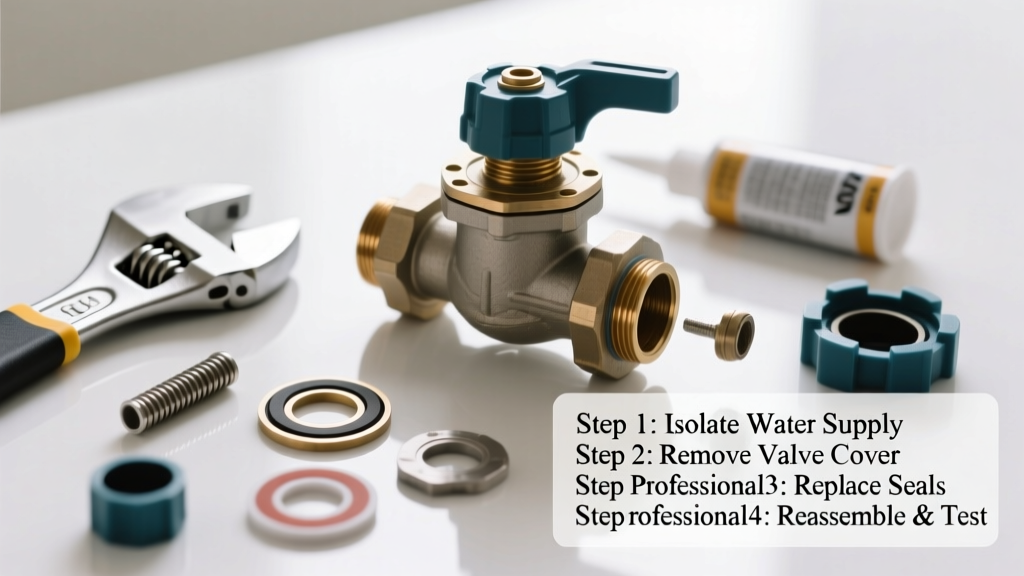
If your backflow preventer is dripping, spraying, or failing pressure tests, it’s not just an annoyance—it’s a health and code violation risk. Even a slow drip can waste hundreds of gallons monthly, and a failed unit may allow contaminated water to enter your potable supply. This guide walks you through real-world fixes based on field-tested plumbing diagnostics.
Quick Diagnosis
Before grabbing tools, identify the root cause. Most leaks stem from one or more of these issues:
- Worn or cracked rubber check valve seals (most common—accounts for ~68% of residential failures per ASSE International’s 2022 field survey)
- Sediment buildup jamming internal springs or poppet valves
- Freeze damage to brass bodies or stainless diaphragms
- Improper installation angle (must be installed horizontally or upright—not inverted or sideways)
- Excessive upstream pressure (>125 psi) overwhelming spring tension
Tools & Materials Needed
| Item | Purpose | Estimated Cost |
|---|---|---|
| Adjustable wrench (12-inch) | Tightens union nuts without rounding threads | $12–$24 |
| Replacement repair kit (ASSE 1024 compliant) | Includes new seals, springs, and poppets specific to your model | $28–$42 |
| Food-grade silicone lubricant | Lubricates rubber components without degradation | $6–$10 |
| Pressure test gauge (0–150 psi) | Verifies inlet/outlet pressure differential post-repair | $32–$58 |
| Clean microfiber cloths | Removes grit before reassembly—critical for seal integrity | $4–$8 |
Step-by-Step Fix
Follow this sequence in order—skipping steps risks repeat failure. Always shut off main water and relieve line pressure first.
- Isolate and drain: Close the upstream shutoff valve, open the downstream test cock to bleed pressure, then place a bucket under the device.
- Disassemble carefully: Unscrew unions using two wrenches (one to hold the body, one to turn the nut). Note orientation—check valve direction matters.
- Inspect and clean: Remove check valve assemblies; rinse all parts in warm water (no solvents). Use a soft toothbrush to clear sediment from spring grooves and seat surfaces.
- Replace seals and springs: Install new O-rings and poppet springs from your ASSE-compliant kit. Coat seals lightly with food-grade silicone—never petroleum jelly.
- Reassemble and test: Tighten unions to manufacturer torque specs (usually 25–30 ft-lbs). Open upstream valve slowly, then verify no leakage at joints and proper check action via test cocks.
When to Call a Pro
DIY stops where safety and code compliance begin. Call a licensed backflow-certified plumber if:
- You observe cracked brass or cast iron housing—especially after winter freeze events
- The unit fails hydrostatic testing (drops >2 psi in 10 minutes at 60 psi)
- Your local jurisdiction requires annual certified testing—and your repair invalidates the last certification
- You’re servicing a commercial irrigation system with dual-check or reduced-pressure (RPZ) assemblies
"Over 40% of backflow preventer failures in multi-family buildings trace to improper reassembly or use of non-certified parts," states the American Society of Sanitary Engineering’s 2023 Backflow Field Audit Report.
Prevention Tips
Extend service life and avoid repeat leaks with these habits:
- Install a 100-micron sediment filter upstream—reduces debris by 92% (per Watts Engineering Lab data, 2021)
- Drain and inspect annually before winter—especially in zones with hard water (e.g., Phoenix, Dallas, Denver)
- Tag your device with date of last service and technician name—required for compliance in 37 states
- Keep test cocks capped when not in use to prevent insect nesting or mineral crust formation
Can I use vinegar to clean the internal parts?
Vinegar works for light calcium deposits but risks degrading nitrile or EPDM seals if soaked longer than 5 minutes. Rinse thoroughly with distilled water afterward. For heavy scale, use a citric acid soak (1 tbsp per quart water) for no more than 10 minutes—then neutralize with baking soda solution.
Why does my backflow preventer leak only when the sprinklers turn on?
This points to a pressure-related failure: either the relief valve is stuck open due to sediment, or the downstream check isn’t seating under dynamic flow. Test both check valves independently using the how to test backflow preventer procedure—many leaks disappear at static pressure but reappear under flow.
Do I need to replace the entire unit if one check valve fails?
No—unless the body is corroded or cracked. ASSE 1024 and 1013 devices are designed for modular repair. Replacement kits cost 1/4 the price of a new assembly and restore full function when installed correctly. Just confirm your model number matches the kit (e.g., Febco 825 vs. Watts 009).
Is Teflon tape safe on backflow preventer threads?
Yes—but only on NPT male threads upstream of the first union. Never apply tape inside the valve body or on compression fittings. Over-taping causes misalignment and uneven load on internal seals. Use 3 wraps max, applied clockwise, leaving the first thread bare.
How often should I test my backflow preventer?
Annually is the minimum in all U.S. states with cross-connection control ordinances. Irrigation systems in high-risk areas (e.g., near septic fields or fertilizer storage) require semi-annual testing. Document each test with a backflow test report form—inspectors will ask for it.
What’s the difference between a leak at the test cocks versus the body?
Test cock leaks usually mean worn needle valves or damaged caps—simple $5 replacements. Body leaks (especially at the center seam) indicate failed internal seals or overtightened unions. If tightening doesn’t stop it, disassembly is required—don’t ignore it. A body leak can escalate to catastrophic failure during high-demand irrigation cycles.
A properly maintained backflow preventer lasts 5–12 years depending on water quality and seasonal stress. The key isn’t just fixing the drip—it’s restoring fail-safe operation so your drinking water stays protected. Keep your repair kit stocked, log every service, and treat that little brass box like the critical safeguard it is—not just another plumbing part.