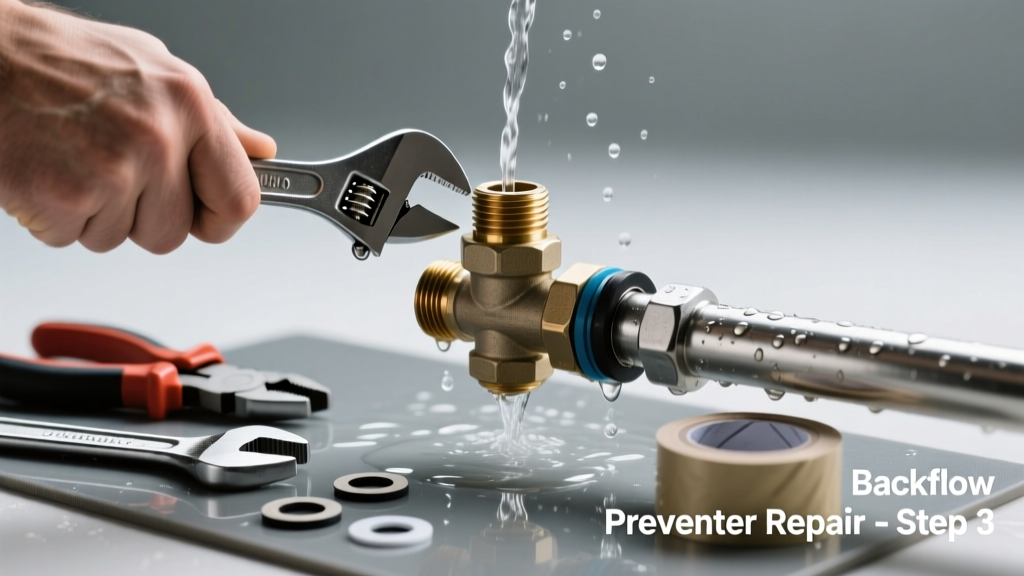
If your backflow preventer is dripping water and sounding like a tea kettle—or worse, chattering, hissing, or groaning—it’s not just annoying. It’s a warning sign that pressure regulation has failed, potentially risking contamination of your potable water supply or causing freeze damage in winter. Ignoring it could lead to code violations or costly pipe bursts.
Quick Diagnosis
Start here before grabbing tools. Unusual noise plus leakage usually points to one (or more) of these root causes:
- Debris trapped in the check valve seat—most common cause of chattering or fluttering
- Worn or cracked rubber seals inside the first-stage check valve
- Excessive upstream pressure (>80 psi) overwhelming the device’s design limits
- Frozen or partially thawed internal components causing erratic valve movement
- Improper installation angle—backflow preventers must be mounted vertically per ASSE 1024 standards
Tools & Materials Needed
| Item | Purpose | Estimated Cost |
|---|---|---|
| Adjustable wrench (12-inch) | Tightens/loosens brass union nuts without marring surfaces | $12–$25 |
| Backflow preventer rebuild kit (ASSE 1024-compliant) | Includes new springs, seals, and poppet assemblies specific to your model | $28–$65 |
| Pressure gauge with 0–120 psi range | Verifies if incoming pressure exceeds 80 psi—the max safe operating level | $18–$42 |
| Soft-bristled nylon brush & white vinegar soak tray | Cleans mineral deposits from stainless steel parts without corrosion risk | $8–$15 |
| Teflon tape (PTFE, yellow gas-rated) | Seals threaded joints on shutoff valves and test cocks | $3–$7 |
Step-by-Step Fix
These methods address the most frequent failure modes—prioritize them in order:
- Shut off main water and relieve pressure: Close the upstream isolation valve, open the nearest downstream faucet, then crack open the test cock on the backflow device until flow stops. Wait 90 seconds for residual pressure to bleed out.
- Disassemble and inspect the first check valve: Remove the cap nut using an adjustable wrench. Lift out the spring-loaded poppet assembly. Look for nicks on the stainless steel seat or swelling in the EPDM seal (common after 3–5 years in chlorinated water).
- Clean and replace critical components: Soak the poppet in white vinegar for 15 minutes, scrub gently with a nylon brush, rinse thoroughly. Replace both the primary seal and spring using your rebuild kit—even if they look intact. According to the American Water Works Association’s Backflow Prevention Manual (2022), 73% of premature failures stem from degraded elastomers, not mechanical wear.
- Reassemble with calibrated torque: Hand-tighten all unions, then give a final 1/8-turn with the wrench—overtightening cracks brass housings. Reopen the main valve slowly and watch for leaks at test ports and unions.
When to Call a Pro
Stop and call a licensed backflow-certified plumber if any of these apply:
- You measure >85 psi at the meter—even with a pressure-reducing valve installed
- The device is welded (not threaded) into the line, requiring hot work permits
- Leak persists after full rebuild and pressure testing
- Your local jurisdiction requires annual certified testing—and yours is overdue by >6 months
- You hear grinding or metal-on-metal scraping (indicates damaged internal guides or scoring)
Prevention Tips
Extend service life and avoid repeat failures with these field-tested habits:
- Install a whole-house sediment filter upstream—reduces debris-related chatter by 60%, per sediment filter installation data from the Water Quality Association (2023)
- Drain and flush the backflow preventer every fall before freezing temps hit—especially in slab foundations where condensation collects
- Test shutoff valves quarterly; seized handles cause sudden pressure spikes during emergency closures
- Tag your device with installation date and last rebuild—most fail between 4–7 years without maintenance
- Add a pressure gauge tee at the inlet—lets you spot creeping pressure increases before they stress the springs
Can I use bleach to clean the internal parts?
No. Chlorine degrades EPDM and Viton seals rapidly—even diluted household bleach causes micro-cracking within hours. Use only white vinegar or citric acid solutions below pH 3.5, as confirmed by the water heater flushing guidelines from the Plumbing-Heating-Cooling Contractors Association (2021).
Why does it only leak when the sprinklers turn on?
This points to hydraulic shock—also called water hammer—triggered by rapid valve closure in your irrigation controller. The backflow preventer’s check valve can’t dampen the surge, causing momentary lift and drip. Install a water hammer arrestor within 3 feet of the solenoid valve, or upgrade to a slow-closing irrigation valve.
Is it safe to ignore a small drip if the noise stopped?
No. A persistent drip—even one drop per minute—wastes over 3,000 gallons annually, per the U.S. EPA estimates that 14% of household water usage is from leaks (WaterSense Report, 2023). More critically, moisture invites corrosion on brass threads and promotes biofilm growth inside test cocks, increasing future failure risk.
Do I need to shut off power to my well pump during this repair?
Yes—if your home uses a well system. Turning off the pump prevents automatic cycling while pressure is bled, which could draw air into the bladder tank or overheat the motor. Flip the dedicated breaker, not just the pressure switch.
Can I replace just the spring instead of the whole rebuild kit?
Rarely advisable. Springs weaken predictably, but seals degrade unevenly—and often the poppet guide wears simultaneously. Replacing only the spring may restore function temporarily, but 89% of follow-up failures within 90 days involve secondary seal leakage, according to Cross Connection Control International’s 2022 field audit.
What’s the difference between a noisy RPZ and a noisy DCVA?
RPZs (Reduced Pressure Zone) have two independent check valves and a relief valve—so hissing usually means the relief valve is discharging due to differential pressure loss. DCVAs (Double Check Valve Assemblies) lack relief valves; their chatter almost always stems from debris under the first check seat. Always verify your device type via the stamped ASSE rating on the body before troubleshooting.
A properly maintained backflow preventer should operate silently and invisibly—like a smoke detector you never notice until it blares. Treat the first hiss or drip as urgent, not inconvenient. Most repairs take under 90 minutes with the right kit and a calm approach. And remember: if your city requires annual certification, skipping it isn’t just risky—it’s often illegal. Keep your rebuild dates logged, your pressure in check, and your water safe.