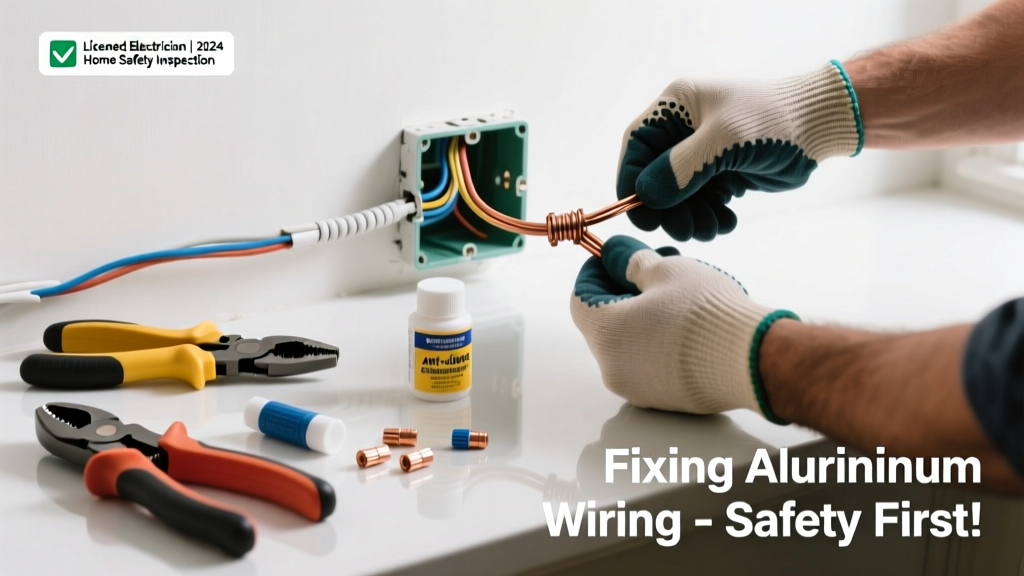
Aluminum wiring installed in homes between 1965 and 1973 is a known fire risk—especially at outlets, switches, and light fixtures—due to oxidation, thermal expansion, and loose connections. If you’re seeing warm faceplates, flickering lights, or a burning odor near outlets, don’t ignore it. This isn’t just an annoyance—it’s a documented safety hazard.
Quick Diagnosis
Start by identifying these telltale signs:
- Discolored, warped, or warm outlet or switch cover plates
- Flickering or dimming lights when large appliances cycle on
- Burning smell near electrical boxes (not dust or ozone)
- Visible corrosion or whitish powder around wire connections
- Circuit breakers tripping unexpectedly on circuits with aluminum wiring
Tools & Materials Needed
| Item | Purpose | Estimated Cost |
|---|---|---|
| CO/ALR-rated receptacles & switches | Specifically designed for aluminum-to-copper compatibility; required by NEC for retrofits | $3–$8 each |
| Aluminum-rated wire connector (e.g., Ideal No. 65) | Prevents galvanic corrosion and maintains secure mechanical bond | $4–$7 per pack |
| Digital multimeter with continuity test | Verifies open circuits, ground faults, and voltage drop across connections | $25–$60 |
| Wire brush (stainless steel) | Removes oxide layer without embedding abrasive particles into soft aluminum | $2–$5 |
| Anti-oxidant compound (e.g., Burndy Penetrox A-2) | Prevents re-oxidation and improves conductivity at termination points | $12–$18 per tube |
Step-by-Step Fix
Never work on live circuits. Turn off power at the main panel and verify with a non-contact voltage tester before touching any wires.
- Replace outlets and switches with CO/ALR-rated devices—never standard CU-only models. Tighten terminals to manufacturer-specified torque (typically 12–14 in-lbs).
- Apply antioxidant compound to stripped aluminum wire ends before connecting. Use only UL-listed compounds formulated for aluminum—never petroleum jelly or dielectric grease.
- Use proper connectors: For pigtailing, twist aluminum and copper wires together with an AL-CU rated connector (e.g., Ideal Twister Purple), then secure with antioxidant. Never use standard wire nuts.
- Inspect all junction boxes for overcrowding or damaged insulation. Aluminum wiring is more prone to nicking during handling—replace any wire with cracked or brittle insulation.
When to Call a Pro
DIY aluminum wiring repair is appropriate only for simple device replacements on accessible branch circuits. Stop and call a licensed electrician immediately if:
- You find aluminum wiring feeding your main service panel or subpanel
- Wires show signs of melting, charring, or severe oxidation beyond surface discoloration
- The home has single-strand aluminum wiring older than 1972 (pre-“AA-1350” alloy)
- You’re uncomfortable verifying grounding integrity or measuring voltage drop under load
According to the U.S. Consumer Product Safety Commission’s 2021 update, homes with uncorrected aluminum branch circuit wiring are 55 times more likely to have one or more fire hazards at outlets and switches than homes with copper wiring.
Prevention Tips
Once repairs are complete, extend their lifespan with these practices:
- Label all repaired outlets and switches with “AL WIRES – CO/ALR DEVICE” using permanent marker or UL-listed labels
- Retest connections every 3 years with a thermal imaging camera or infrared thermometer (look for >10°F rise above ambient)
- Avoid overloading circuits—aluminum wiring has higher resistance than copper; limit loads to 80% of rated capacity
- Install AFCI breakers on affected circuits to detect arcing faults before they ignite
Is aluminum wiring illegal in new construction?
No—but it’s prohibited for branch circuits in residential dwellings under the National Electrical Code (NEC) since 1972. The NEC permits aluminum for service entrance cables and feeders when using AA-8000 series alloy and proper terminations. Modern AA-8000 aluminum is far more stable than the older AA-1350 used in the 1960s.
Can I just replace aluminum wire with copper throughout my house?
Technically yes—but it’s rarely cost-effective or practical. Rewiring an entire home averages $8–$12 per square foot and requires drywall repair, flooring disruption, and permitting. Most insurers and inspectors accept properly remediated aluminum wiring as safe, especially when using COPALUM crimps or AlumiConn connectors.
Do insurance companies require aluminum wiring remediation?
Many do—especially in states like California, Florida, and Texas. According to a 2022 Insurance Information Institute survey, 68% of major insurers either require remediation or charge 15–30% higher premiums for homes with uncorrected aluminum branch circuit wiring.
What’s the difference between CO/ALR and AL-CU rated devices?
CO/ALR (Copper-Aluminum-Readily) devices are rated for direct connection of aluminum and copper wires to the same terminal screw—common in outlets and switches. AL-CU connectors (like wire nuts or crimps) are rated for splicing aluminum to copper wires *together*. Using CO/ALR devices does not eliminate the need for antioxidant or proper torque.
How long do aluminum wiring repairs last?
Properly executed CO/ALR replacements with antioxidant and correct torque typically last 25–40 years. COPALUM crimp systems—installed only by certified technicians—carry a lifetime warranty from the manufacturer and are recognized by the CPSC as a permanent solution.
Are LED bulbs safer with aluminum wiring?
Yes—indirectly. LEDs draw less current and generate less heat at fixtures, reducing thermal stress on aging connections. But they won’t fix loose or oxidized terminals. Always pair LED upgrades with verified, code-compliant wiring repairs—not as a substitute.
Aluminum wiring doesn’t have to mean constant worry—if you address it methodically and respect its unique behavior. Prioritize safety over speed: torque matters more than tightness, antioxidant matters more than ‘clean enough,’ and verification matters more than assumption. For deeper system issues, upgrading your electrical panel or adding AFCI protection can add layers of safety that complement your aluminum wiring repairs. When in doubt, consult someone with verified credentials and aluminum-specific experience.