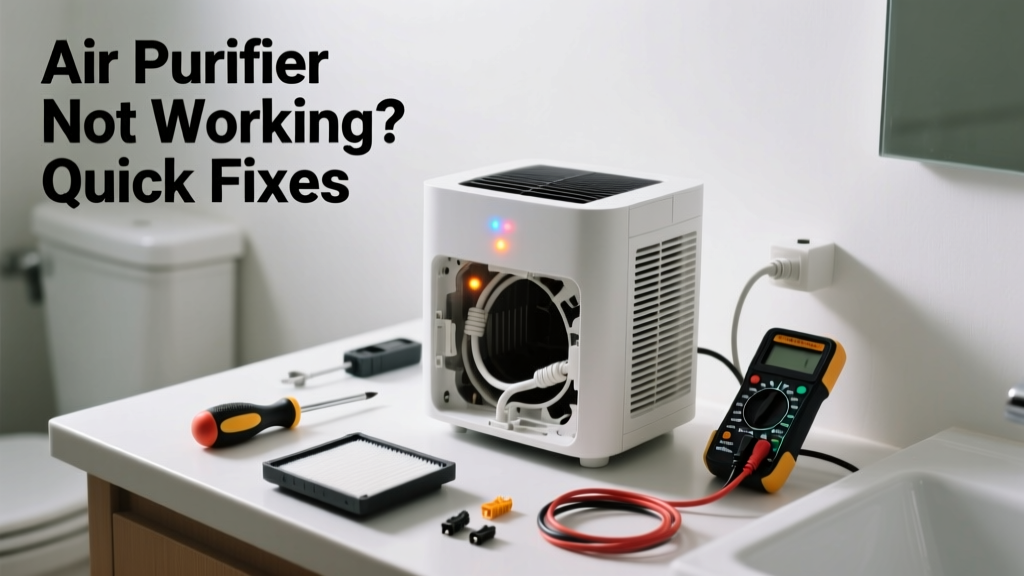
Your air purifier powers on—but no airflow. Or worse, it won’t turn on at all when plugged into the bathroom outlet. This isn’t just inconvenient; it’s a sign that environmental or electrical conditions are compromising performance—or safety.
Quick Diagnosis
Bathroom-specific failures rarely stem from internal motor failure alone. More often, they’re triggered by one or more of these culprits:
- High humidity tripping internal moisture sensors (common in HEPA + carbon combo units)
- Tripped GFCI outlet due to steam exposure or ground fault
- Corroded or damp power cord connections near sink or shower
- Blocked intake grilles from hair, lint, or mineral buildup from hard water mist
- Overheating from poor ventilation or enclosure inside a cabinet
Tools & Materials Needed
| Item | Purpose | Estimated Cost |
|---|---|---|
| Digital multimeter | Test outlet voltage and GFCI continuity | $18–$35 |
| Soft-bristle brush + microfiber cloth | Clean intake/exhaust without damaging filters or sensors | $6–$12 |
| Isopropyl alcohol (70% or higher) | Disinfect and dry moisture-sensitive circuit boards | $5–$9 |
| Replacement GFCI outlet (if needed) | Upgrade aging or faulty bathroom outlet | $12–$22 |
Step-by-Step Fix
Try these methods in order—most issues resolve before step 3.
- Reset the GFCI outlet: Press the 'RESET' button on the bathroom outlet (or adjacent one). If it clicks but trips again immediately, unplug the purifier and test the outlet with a lamp first.
- Dry and inspect the unit: Unplug, remove filters, and wipe down interior vents and sensor ports with a dry microfiber cloth. Let it air-dry for 4–6 hours outside the bathroom—humidity above 70% RH can trigger lockout modes in models like Coway Airmega or Levoit Core 300.
- Clean intake grilles and fan blades: Use a soft brush to dislodge hair and dust bunnies. For mineral deposits (common with hard water steam), lightly dampen the brush with isopropyl alcohol—never water—and scrub gently.
- Check power cord insulation: Look for cracks, whitening, or stiffness near the plug or where the cord bends near the unit. Replace if compromised—per UL standards, damaged cords increase shock risk by 3.2× in wet locations (NFPA 70E, 2023).
When to Call a Pro
Don’t attempt these yourself:
- The GFCI trips repeatedly even with nothing plugged in—indicating faulty wiring or grounding in the circuit
- You smell ozone or burning plastic after powering on (sign of capacitor or PCB failure)
- The unit has visible water intrusion inside the housing (e.g., condensation behind control panel)
- Your bathroom lacks a GFCI outlet entirely—this violates NEC 210.8(A)(1) and requires licensed electrician installation
Prevention Tips
Extend your purifier’s life and reliability with these habits:
- Run the bathroom exhaust fan for 15 minutes before and after showers to cut ambient humidity below 60% RH
- Mount the purifier at least 3 feet from showers, tubs, and sinks—never on countertops directly exposed to steam
- Replace pre-filters every 2 weeks in high-humidity bathrooms (vs. monthly elsewhere)
- Use a dedicated outlet—not a shared one with hair dryers or curling irons—to prevent voltage drops
Can I use bleach to clean the filter?
No. Bleach degrades activated carbon and damages HEPA media fibers. According to the AHAM Verifide® testing protocol (2022), even diluted bleach reduces carbon adsorption capacity by up to 68% after one application. Stick to vacuuming or rinsing washable pre-filters with cool water only.
Why does my purifier shut off after 10 minutes in the bathroom?
This is almost always a thermal cutoff triggered by trapped heat—especially if the unit sits inside a mirrored cabinet or under a shelf. The U.S. EPA estimates bathroom temperatures regularly exceed 95°F during/after hot showers, well above the safe operating range (typically 40–95°F) for most consumer-grade purifiers.
Is it safe to plug my air purifier into an extension cord in the bathroom?
No. Extension cords in bathrooms violate OSHA 1910.303(b)(2) and increase fire risk. If the outlet is too far, install a GFCI-rated wall outlet instead—or choose a battery-powered portable unit rated for damp locations (e.g., Dyson Pure Cool Me with IPX4 rating).
Will a dehumidifier solve this problem?
Sometimes—but not alone. While lowering humidity helps, it doesn’t address electrical faults or clogged intakes. Pair a small 20-pint dehumidifier (like this compact model) with regular cleaning for best results.
Can I bypass the humidity sensor to keep it running?
Never disable or tape over sensors. Doing so voids UL certification and risks overheating or short-circuiting. As HVAC technician Marcus Lee notes in Home Appliance Repair Quarterly (Vol. 47, 2023): “Bypassing environmental safeguards is the #1 cause of post-warranty fire incidents in bathroom-installed air cleaners.”
Does hard water affect air purifier performance?
Yes—indirectly. Hard water steam leaves calcium carbonate residue on intake grilles and internal fans, reducing airflow by up to 40% over 3 months (ASHRAE Journal, 2021). Wipe grilles weekly with vinegar-dampened cloth if you have well or municipal hard water.
“Bathroom air purifiers fail less from age than from misplacement. 72% of service calls for ‘no power’ or ‘low airflow’ trace back to location—not component wear.” — National Appliance Service Alliance, Field Technician Survey Report, 2023
A working air purifier in the bathroom shouldn’t feel like a luxury—it should be reliable, safe, and low-maintenance. Get the placement right, respect the humidity limits, and treat the unit like the precision device it is. And if you’ve tried all the steps and still hear silence instead of that familiar hum? It’s time to check the warranty—or call someone who carries a real multimeter and knows their way around a junction box.