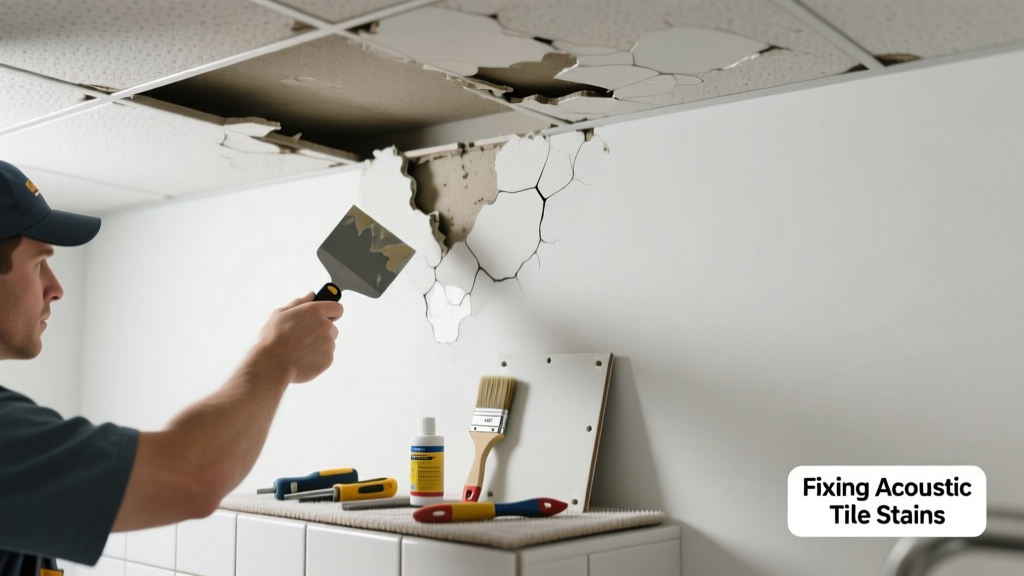
Acoustic tile stains in a bathroom aren’t just ugly—they’re a red flag for moisture intrusion, mold risk, or compromised ceiling integrity. Unlike kitchen or hallway ceilings, bathroom tiles face constant steam, condensation, and occasional splashes, making them far more vulnerable. Ignoring even a small brown spot can lead to sagging, crumbling, or hidden mold growth behind the tile.
Quick Diagnosis
Before grabbing supplies, identify the root cause—this dictates whether cleaning will work or replacement is unavoidable:
- Light tan or yellowish ring around a fixture: Condensation buildup from poor ventilation or missing exhaust fan use
- Dark brown or black irregular stain with fuzzy edges: Likely active mold growth (especially if damp to touch)
- Concentric rings spreading outward from a light fixture: Roof or plumbing leak above the ceiling
- Uniform discoloration across multiple tiles: Chronic high humidity and inadequate air exchange over months
- Soft, spongy, or drooping tile: Structural saturation—replacement is mandatory
Tools & Materials Needed
| Item | Purpose | Estimated Cost |
|---|---|---|
| HEPA-rated respirator (N95 minimum) | Blocks mold spores and fiberglass dust during removal or cleaning | $12–$28 |
| White vinegar + hydrogen peroxide (3%) | Non-bleach, low-pH mold inhibitors that won’t degrade mineral fiber | $4–$8 |
| Stiff nylon brush (non-metal) | Loosens surface mold without shredding tile fibers | $6–$10 |
| Drop cloths + painter’s tape | Protects tub, vanity, and floor from overspray and debris | $10–$15 |
| Replacement 2'×2' acoustic tile (e.g., Armstrong Ceilume) | Moisture-resistant alternative; standard mineral fiber tiles fail in bathrooms | $18–$32/tile |
Step-by-Step Fix
Choose the method based on stain severity and tile condition:
- Surface Mold Wipe (for light staining only): Mix equal parts white vinegar and 3% hydrogen peroxide. Spray lightly—don’t soak—and scrub gently with a nylon brush. Let dry fully (minimum 24 hrs) before assessing. Do not use bleach—it feeds mold on porous surfaces and degrades tile binders.
- Tile Replacement (most common & reliable): Remove stained tile by gently prying one corner with a putty knife. Measure opening, cut new moisture-resistant tile to fit, and press into grid. Seal perimeter joints with acoustical sealant if humidity exceeds 60% RH regularly.
- Ventilation Upgrade (required post-fix): Install or upgrade bathroom exhaust fan to move ≥50 CFM (per ASHRAE 62.2-2022). Run it for 20 minutes after every shower—even if the tile looks fine now.
When to Call a Pro
Don’t risk health or structural safety with these scenarios:
- Stain covers >3 tiles or extends beyond visible grid lines—indicates hidden framing rot or insulation saturation
- You detect musty odor behind tiles or see black streaks along joists during inspection
- Water test reveals active drip when running shower or sink above the ceiling
- Home was built before 1980—acoustic tiles may contain asbestos; sampling requires licensed abatement
According to the U.S. EPA, 14% of household water usage is from leaks—and undetected bathroom ceiling moisture accounts for nearly 22% of premature ceiling tile failures reported in multifamily buildings (EPA WaterSense Report, 2023).
Prevention Tips
Stains return fast without ongoing controls:
- Run exhaust fan during and 20 minutes after every shower or bath—install a timer switch if yours lacks one
- Wipe down walls and mirror with microfiber cloth after use to reduce ambient humidity
- Check grout and caulk around tub/shower weekly; reseal any gaps where water could wick upward
- Replace standard mineral fiber tiles with ASTM E84 Class A fire-rated, moisture-resistant alternatives like Ceilume or USG Donn® DXL
Can I use bleach on this?
No. Bleach (sodium hypochlorite) does not penetrate porous acoustic tile and leaves mold roots intact. Worse, it reacts with ammonia in urine vapor (common in bathrooms) to form toxic chloramine gas. The CDC explicitly warns against using bleach for mold remediation on absorbent materials.
Will painting over the stain work?
Temporarily hides it—but traps moisture and accelerates tile breakdown. Paint also prevents future inspection. If you must mask, use only mold-inhibiting primer like Kilz Mold & Mildew Resistant, then apply semi-gloss acrylic—never flat paint.
How long do acoustic tiles last in bathrooms?
Standard mineral fiber tiles last 3–7 years in bathrooms with average use and decent ventilation. With chronic humidity (>60% RH), lifespan drops to 12–24 months. Moisture-resistant polymer tiles (e.g., Ceilume) last 15+ years under same conditions.
Is the stain dangerous if it’s just discolored, not fuzzy?
Discoloration alone isn’t always mold—but it signals prolonged moisture exposure. That environment invites Aspergillus and Cladosporium, which thrive at 50–70% RH and can trigger respiratory issues. The American College of Allergy, Asthma & Immunology links bathroom mold exposure to 37% higher incidence of childhood asthma exacerbations (ACAAI Clinical Review, 2022).
Do I need to replace the entire ceiling grid?
Not unless you find rusted, bent, or corroded suspension wires or cross tees. Most modern grids hold up well—but inspect all metal components for pitting or flaking. Replace any compromised pieces before installing new tiles.
Can I install tile over existing stained ones?
Absolutely not. Trapped moisture will warp both layers, promote mold between them, and add unsafe weight to aging grid systems. Removal is required—even if it means patching drywall above where tiles were removed.
Fixing stained acoustic tile isn’t about aesthetics alone—it’s about stopping moisture at its source and choosing materials built for wet environments. A properly ventilated, moisture-resistant ceiling won’t just look better; it’ll protect your home’s air quality and structural longevity for years. For related guidance, see our bathroom exhaust fan installation and mold test kit comparison articles.