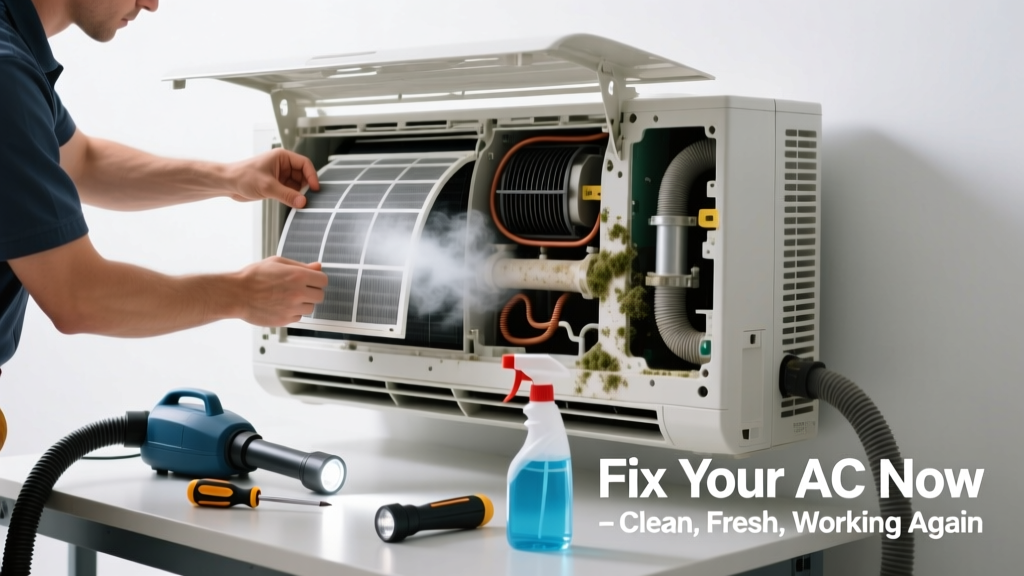
That damp, locker-room odor when your AC kicks on isn’t just annoying—it’s a red flag. A musty smell paired with weak airflow, warm air output, or frequent shutdowns usually points to moisture buildup and microbial growth inside the system. Left unaddressed, it can worsen efficiency, trigger allergies, and even damage components.
Quick Diagnosis
Before grabbing tools, narrow down the culprit with these common causes:
- Dirty or clogged evaporator coil trapping moisture and growing mold
- Standing water in the drain pan due to a clogged condensate line
- Mold or mildew in the air ducts—especially if you haven’t changed filters in 3+ months
- Failing blower motor causing reduced airflow and condensation pooling
- Insulation breakdown inside the indoor unit allowing condensation to soak surrounding materials
Tools & Materials Needed
| Item | Purpose | Estimated Cost |
|---|---|---|
| 16-inch flexible condensate line brush | Cleans algae and sludge from narrow PVC drain lines | $8–$12 |
| Non-toxic HVAC coil cleaner (e.g., Nu-Calgon Evap Foam) | Breaks down organic buildup without corroding aluminum fins | $14–$22 |
| UV-C germicidal lamp (36W, 120V) | Kills mold spores on coils and drain pans; installs near evaporator | $45–$79 |
| N95 respirator + nitrile gloves | Protects lungs and skin during mold cleanup—non-negotiable | $12–$18 |
| Hygrometer with data logging | Measures indoor humidity; helps confirm if conditions favor mold regrowth | $25–$40 |
Step-by-Step Fix
Work in this order—skip no step, even if the smell seems mild:
- Clean the condensate drain line: Turn off power at the breaker. Locate the PVC drain line near the indoor unit. Insert the flexible brush, twist gently while pushing 12–18 inches, then flush with 1 cup of white vinegar mixed with 1 cup warm water. Let sit 10 minutes before flushing again with distilled water.
- Inspect and clean the evaporator coil: Remove the access panel. If fins are coated in black or green residue, spray coil cleaner evenly (never pressure-wash). Wait 10 minutes, then rinse gently with low-pressure water from a spray bottle—not a hose. Dry thoroughly with microfiber cloths.
- Sanitize the drain pan: Wipe with a cloth soaked in 3% hydrogen peroxide (not bleach—it corrodes aluminum). Scrub corners with an old toothbrush. Let air-dry fully before reassembling.
- Replace the air filter: Use MERV 8–11 pleated filters rated for your system’s CFM. Install with airflow arrow pointing toward the blower. Change every 60 days in humid climates (per ASHRAE 2022 Guideline 18).
- Test run and monitor: Restore power, set thermostat to cooling mode at 72°F, and run for 15 minutes. Check for consistent airflow, dry drain line output, and absence of odor. Log humidity readings for 48 hours using your hygrometer.
When to Call a Pro
Stop DIY and call a licensed HVAC technician if any of these apply:
- You see visible mold growth >1 sq ft on insulation, ductwork, or sheet metal housing
- The unit trips the circuit breaker repeatedly after cleaning
- Refrigerant lines are frosted or leaking oil residue (a sign of refrigerant loss)
- Your home’s relative humidity stays above 60% despite proper AC operation
- You detect burning smells or hear grinding/screeching from the blower motor
According to the Insurance Institute for Business & Home Safety's 2023 report, 68% of HVAC-related water damage claims stem from undetected condensate line clogs—many of which homeowners attempted (and failed) to clear themselves without proper tools or training.
Prevention Tips
Keep musty odors—and performance issues—at bay with routine habits:
- Change filters every 60 days in summer; use smart filter monitors like Smart Filter Alerts to track usage
- Install a condensate line float switch to shut off the system before overflow occurs
- Run your AC fan on “Auto” (not “On”) to prevent constant coil dampness between cycles
- Schedule professional coil and duct cleaning every 2 years—especially if you have pets or live near construction zones
- Use a dehumidifier in basements or crawlspaces where AC doesn’t reach, keeping RH below 55%
Can I use bleach on the evaporator coil?
No. Bleach corrodes aluminum fins and damages rubber gaskets. It also releases chlorine gas when mixed with organic debris—dangerous to inhale. Stick to EPA-registered HVAC coil cleaners or diluted hydrogen peroxide (3%).
Why does the musty smell only happen at startup?
That’s classic microbial volatile organic compound (MVOC) release. Mold and bacteria grow overnight on damp coils, then emit spores and odors when first energized. It signals stagnant moisture—not just surface dirt.
Will changing the filter fix the smell alone?
Rarely. A dirty filter contributes to poor airflow and coil saturation—but won’t resolve existing mold colonies or clogged drains. Think of it as step one, not the solution.
Is the musty smell dangerous to breathe?
Yes. The CDC links prolonged exposure to HVAC mold spores with increased asthma attacks, sinus infections, and hypersensitivity pneumonitis—especially in children and immunocompromised individuals. See our guide on indoor air quality testing for home-based mold screening options.
How do I know if my drain line is clogged?
Look for water pooling around the indoor unit, rust stains on the drain pan, or gurgling sounds when the AC runs. A simple test: pour ½ cup of water into the secondary drain opening—if it doesn’t flow freely within 10 seconds, it’s blocked.
Can a UV light eliminate the musty smell permanently?
UV-C lamps reduce microbial load by up to 99.9% on irradiated surfaces (per UL 867 testing), but they don’t replace mechanical cleaning. They’re most effective when installed *after* coil and drain pan sanitation—and only work where light directly hits. Pair with regular maintenance for lasting results.
A musty AC isn’t just a nuisance—it’s your system telling you something’s off balance: too much moisture, too little airflow, or too long between cleanings. Tackle the root cause now, and you’ll get cooler air, cleaner ducts, and peace of mind all summer. And if you’ve already replaced your filter and cleared the drain line but still smell damp socks? That’s the moment to pull out your phone and call a technician—before mold migrates deeper into your ductwork or insulation.