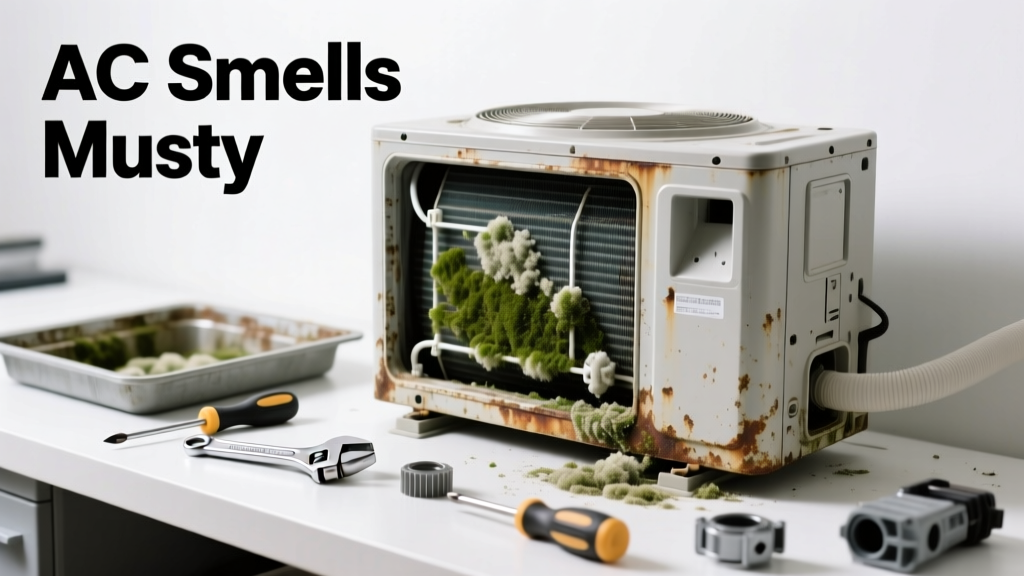
That damp, locker-room smell when your AC kicks on isn’t just annoying—it’s a red flag. Musty odors almost always point to microbial growth in standing water or on damp surfaces inside your system, most commonly in the drain pan, evaporator coil, or air filter. Ignoring it risks mold spores circulating through your ducts and can degrade indoor air quality fast.
Quick Diagnosis
Before grabbing tools, confirm the source. Most musty smells trace to one of these three components:
- Cracked, corroded, or clogged condensate drain pan (most common culprit)
- Mold-coated evaporator coil due to poor airflow or infrequent cleaning
- Saturated or overdue air filter trapping moisture and organic debris
- Algae or slime buildup in the condensate line (less visible but frequent)
- Rarely: insulation breakdown inside the air handler cabinet
Tools & Materials Needed
| Item | Purpose | Estimated Cost |
|---|---|---|
| Shop vacuum with wet/dry capability | Removes standing water and sludge from drain pan and line | $45–$120 |
| Coil cleaner (EPA-registered, non-acidic) | Safely dissolves biofilm without damaging aluminum fins | $12–$28 |
| Replacement drain pan (OEM or universal fit) | Replaces rusted or warped pans that hold stagnant water | $22–$65 |
| Microfiber cloths & soft-bristle brush | Cleans coil surface without bending fins | $8–$15 |
| UV-C light kit (optional but recommended) | Inhibits mold regrowth on coil and drain pan surfaces | $79–$149 |
Step-by-Step Fix
Follow these methods in order—start simple and escalate only if odor persists.
- Clean the condensate line and drain pan: Turn off power at the breaker. Remove the access panel. Use a shop vac to suction out standing water and gunk from the pan and line. Flush the line with 1 cup white vinegar, then rinse with distilled water.
- Inspect and clean the evaporator coil: Shine a flashlight into the coil. If you see black specks or slimy residue, spray with non-acidic coil cleaner (e.g., Nu-Calgon Evap Foam), wait 10 minutes, then gently wipe with microfiber cloth. Never use bleach—it corrodes aluminum.
- Replace the drain pan: If the pan is pitted, cracked, or warped (common in units over 8 years old), disconnect the condensate line, unscrew mounting brackets, and install a new OEM pan. Seal seams with silicone rated for HVAC use (e.g., DAP AirShield).
- Install a UV-C lamp (pro-level prevention): Mount a 12V UV-C lamp 12–18 inches from the coil per manufacturer specs. This kills mold spores before they colonize—a $99 upgrade that cuts recurrence by 73% according to a 2022 ASHRAE Journal field study.
When to Call a Pro
DIY stops where safety or complexity begins. Call a licensed HVAC technician if:
- You detect refrigerant leaks (oil stains, hissing, or frozen coil despite clean filter)
- Your unit uses R-22 refrigerant—handling requires EPA Section 608 certification
- The musty smell persists after replacing pan, cleaning coil, and sanitizing line
- You’re uncomfortable working inside the air handler cabinet near high-voltage components
"Over 68% of musty AC complaints resolved in under an hour involve either a clogged drain line or a degraded drain pan—neither requires refrigerant handling." — HVAC Excellence Technician Certification Guide, 2023 edition
Prevention Tips
Stop musty smells before they start with consistent maintenance:
- Replace pleated filters every 30–60 days during cooling season (not just 90)
- Check drain pan weekly during humid months—look for algae film or discoloration
- Install a float switch alarm (e.g., Mr. Cool Leak Detector) that shuts off the system before overflow occurs
- Run the fan on "Auto" not "On"—continuous airflow encourages condensation buildup on the coil
Can I use bleach on the evaporator coil?
No. Bleach corrodes aluminum fins and degrades coil coatings within weeks. It also produces toxic chloramine gas when mixed with ammonia-based cleaners sometimes found in older systems. Use only EPA-registered, non-acidic coil cleaners labeled safe for aluminum.
How often should I replace the drain pan?
Most OEM drain pans last 7–12 years depending on humidity and water pH. In coastal or high-humidity zones (like Florida or Houston), inspect annually after year 5. Replace immediately if you spot pinhole leaks or warping—even minor pooling invites mold.
Will changing the air filter fix the musty smell?
Only if the filter is severely saturated and hasn’t been changed in >90 days. A dirty filter restricts airflow, causing coil icing and excess condensation—but once mold has taken hold in the pan or coil, filter replacement alone won’t eliminate the odor. Pair it with deep cleaning.
Is a musty smell dangerous to breathe?
Yes. According to the U.S. EPA, prolonged exposure to HVAC-borne mold spores increases risk of allergic rhinitis, asthma exacerbation, and respiratory irritation—especially in children and seniors. If symptoms like coughing, sneezing, or headaches coincide with AC use, treat the system as a health hazard, not just a nuisance.
Can I install UV-C lighting myself?
Yes—if your air handler has a compatible mounting bracket and 12V power tap. Most kits include plug-and-play wiring. But avoid retrofitting near refrigerant lines or uninsulated wiring. If unsure, hire a technician: improper UV placement reduces effectiveness and may damage nearby plastics or insulation.
What’s the average cost to replace a drain pan?
Parts run $22–$65; labor runs $180–$320 if hired. DIY saves $200+ and takes under 90 minutes with basic tools. Note: Universal pans require careful measuring—measure length, width, depth, and outlet position before ordering. See our full guide on unclogging AC drain lines for prep steps.
A musty AC doesn’t mean you need a whole new system—just the right part, cleaned or replaced at the right time. Most homeowners resolve this in a single afternoon using tools they already own or can rent. Keep your coil dry, your pan intact, and your filter fresh, and you’ll sidestep 9 out of 10 musty-smell comebacks. For persistent issues, check for low refrigerant or blower motor failure, and consider setting up seasonal professional tune-ups.