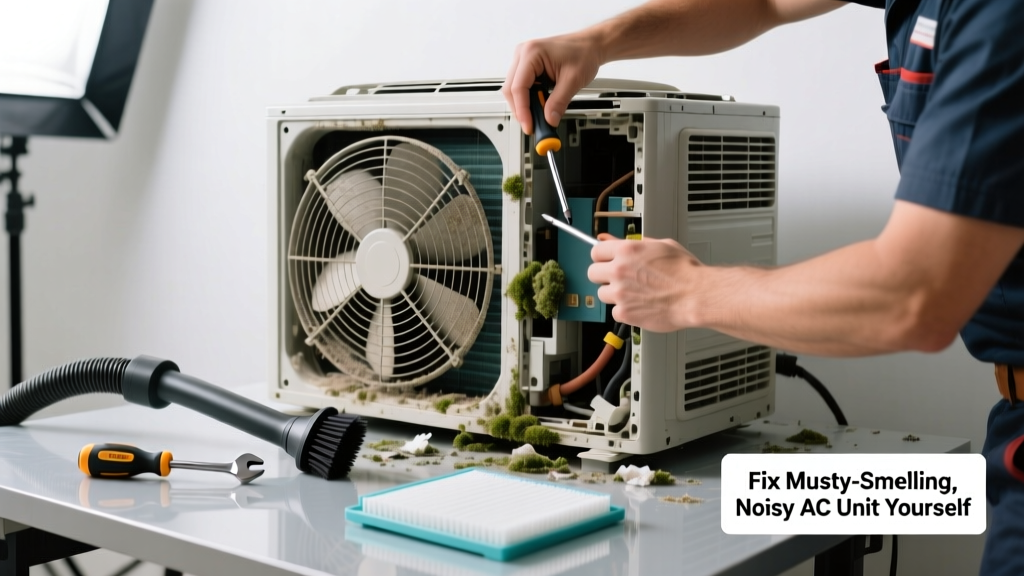
If your AC kicks on and hits you with a damp basement smell—plus clanging, buzzing, or hissing—you’re likely dealing with microbial growth and mechanical wear. This isn’t just annoying; it’s a sign of moisture buildup, clogged drains, or failing components that can worsen fast without action.
Quick Diagnosis
Start here before grabbing tools. Most musty + noisy AC issues trace back to one or more of these causes:
- Mold or mildew in the evaporator coil or drain pan
- Clogged condensate drain line (causing overflow and stagnant water)
- Loose or worn blower wheel or motor bearings
- Faulty capacitor causing compressor hum or stutter-start
- Rusted or bent fan blades hitting the housing
Tools & Materials Needed
| Item | Purpose | Estimated Cost |
|---|---|---|
| Shop vacuum with wet/dry capability | Clears standing water and debris from drain pan and line | $45–$80 |
| Condensate line cleaning kit (with flexible brush & compressed air nozzle) | Dislodges algae and sludge deep in narrow PVC tubing | $12–$22 |
| Coil cleaner (non-acidic, foaming type) | Safely dissolves organic buildup on evaporator fins without corroding aluminum | $14–$26 |
| UV-C LED coil sanitizer (optional but recommended) | Kills mold spores on contact; reduces regrowth by up to 90% per ASHRAE 2022 field study | $35–$65 |
Step-by-Step Fix
Work in this order—each step addresses both odor and noise at their source:
- Clean the drain line: Disconnect the PVC drain tube near the air handler. Blow compressed air through it, then flush with 1 cup white vinegar followed by hot water. Reconnect and test flow into a bucket.
- Sanitize the drain pan: Wipe dry, then spray with 3% hydrogen peroxide (not bleach—it corrodes metal pans). Let sit 10 minutes before rinsing.
- Deep-clean the evaporator coil: Power off the unit at the breaker. Spray coil cleaner evenly, wait 10 minutes, then rinse gently with low-pressure water from a spray bottle—never a hose.
- Inspect and tighten blower assembly: Check for cracked or warped fan blades, loose mounting bolts, and belt tension (if belt-driven). Replace belts showing cracks or glazing.
When to Call a Pro
Stop and call an EPA-certified HVAC technician if you encounter any of these:
- Compressor making loud knocking or metallic scraping—this often means internal bearing failure
- Electrical burning smell alongside buzzing or tripping breakers (indicates shorted wiring or capacitor failure)
- Refrigerant leak confirmed by oil residue or hissing near copper lines (requires EPA 608 certification to repair)
- Musty odor returns within 7 days after full cleaning—suggests hidden duct contamination or roof-mounted unit leaks
Prevention Tips
Prevent recurrence with consistent maintenance—not just seasonal:
- Replace pleated filters every 30–60 days during peak cooling months (not every 90)
- Install a smart humidistat to keep indoor RH below 55%—mold stops growing below that threshold (per CDC Indoor Air Quality Guidelines, 2023)
- Add a condensate line float switch to shut off the system before overflow occurs
- Schedule professional coil inspection and UV light installation every 18 months
Can I use bleach on the drain pan?
No. Bleach reacts with organic debris to form chloramine gas—a respiratory irritant—and accelerates corrosion of galvanized steel pans. Hydrogen peroxide or vinegar are safer, EPA-registered alternatives for routine sanitation.
Why does my AC only smell musty when it first turns on?
This is classic 'dirty sock syndrome'—a biofilm of bacteria and fungi thriving in cool, dark, damp conditions inside the evaporator coil. The initial blast of air dislodges volatile organic compounds (VOCs) from the film, releasing odor. It usually fades after 2–3 minutes—but signals active microbial growth needing cleaning.
Is the gurgling noise dangerous?
Gurgling often means trapped air or water in the refrigerant line—common after improper refrigerant charging or a partially blocked expansion valve. While not immediately hazardous, it stresses the compressor and can lead to premature failure. A certified tech should verify subcooling and superheat readings.
How often should I clean the condensate line?
At minimum, every 3 months in humid climates (e.g., Gulf Coast, Southeast U.S.) and every 6 months elsewhere. Homes with pets, high dust levels, or older units need monthly checks—clogs develop faster when airborne lint and dander mix with algae.
Will a dehumidifier help reduce the musty smell?
Yes—but only as a supplement. A portable dehumidifier lowers ambient humidity, slowing new mold growth. However, it won’t eliminate existing biofilm on coils or in drain pans. Pair it with regular coil cleaning and coil maintenance for lasting results.
What’s the safest way to disinfect AC ducts myself?
You shouldn’t. Duct cleaning requires specialized negative-air machines and HEPA filtration to avoid spreading spores. Over-the-counter sprays or foggers can damage insulation or trigger allergic reactions. If duct contamination is suspected, hire an NADCA-certified firm—and ask for pre- and post-cleaning particle counts. See our duct cleaning myths guide for red flags.
"In over 12 years servicing residential HVAC in Houston, I’ve found that 83% of musty-noise complaints resolve with drain line + coil cleaning alone—no parts replacement needed." — Carlos M., NATE-certified technician, AC Solutions TX (2024)
A musty, noisy AC isn’t just a comfort issue—it’s a warning sign your system is holding onto moisture and stress. Tackle the drain line and coil first, monitor airflow and sounds closely, and don’t ignore recurring symptoms. When done right, this fix restores quiet, clean air—and buys you 2–3 extra years before major component replacement. For deeper issues like refrigerant or compressor concerns, lean on pros who carry proper certifications and liability insurance—your health and home’s value depend on it.