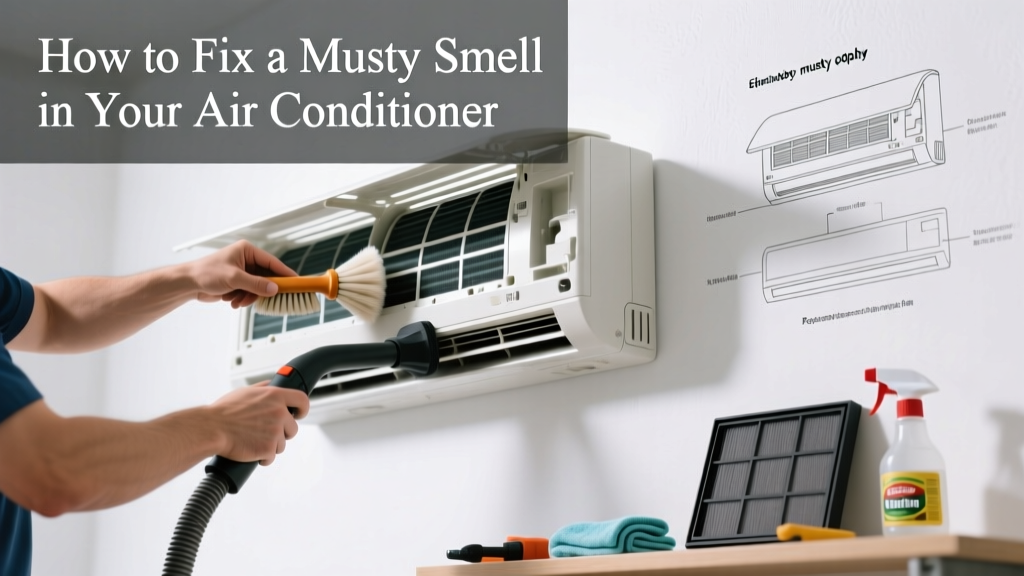
That damp, earthy, basement-like odor coming from your AC isn’t just annoying—it’s often a red flag for hidden moisture, mold, or bacterial growth inside your system. Ignoring it can worsen indoor air quality and even trigger allergies or respiratory irritation. The good news? Most musty AC smells stem from simple, fixable issues—not expensive replacements.
Quick Diagnosis
Before grabbing tools, pinpoint the source. A musty smell usually means microbial growth—but where?
- Evaporator coil: Cold surface collects condensation; dust + moisture = ideal mold breeding ground
- Drain pan or line: Clogged or stagnant water breeds algae and bacteria (the U.S. EPA estimates 14% of household water usage is from leaks—many in HVAC drain systems)
- Air filter: Oversaturated, overdue filters trap organic debris that decomposes and smells
- Ductwork: Especially in humid climates or homes with poor attic ventilation, mold spores can colonize interior duct surfaces
Tools & Materials Needed
| Item | Purpose | Estimated Cost |
|---|---|---|
| Microfiber cloths & soft-bristle brush | Clean coils without scratching aluminum fins | $8–$15 |
| White vinegar (undiluted) or HVAC-safe coil cleaner | Kills mold/mildew on contact; safer than bleach for aluminum components | $3–$12 |
| Wet/dry vacuum with narrow nozzle | Clears clogged drain lines and removes standing water from pans | $40–$90 |
| UV-C LED coil sanitizer (optional) | Inhibits regrowth between cleanings; proven to reduce microbial load by 99.9% per ASHRAE 185.2-2021 testing | $75–$140 |
Step-by-Step Fix
Work methodically—and always shut off power at the breaker before accessing internal components.
- Clean or replace the air filter: Pull the old filter—check for gray fuzz, black specks, or visible mildew. Replace with a MERV 8–11 pleated filter. If reusing a washable type, rinse thoroughly and dry fully before reinstalling.
- Inspect and sanitize the drain pan: Locate the pan beneath the evaporator coil. Scoop out debris, then scrub with white vinegar using a soft brush. Flush the drain line with 1/4 cup vinegar followed by 1 cup hot water to dissolve algae slime.
- Sanitize the evaporator coil: Spray coil cleaner or undiluted vinegar onto fins (avoid overspray on wiring). Let sit 5–10 minutes, then gently wipe with microfiber. Never use wire brushes or high-pressure water.
- Check insulation around refrigerant lines: Damp, deteriorated foam wrap near the indoor unit can harbor mold—cut away affected sections and replace with closed-cell neoprene tape.
When to Call a Pro
Some situations demand licensed expertise—not just for safety, but for long-term resolution.
- You detect a strong, persistent musty odor *after* cleaning all accessible parts—this suggests mold deep in ductwork or behind drywall
- The drain line is inaccessible (e.g., buried in concrete slab or inside sealed wall cavity)
- Your AC runs but doesn’t cool well—low refrigerant or compressor issues may be compounding moisture problems
- You see visible black mold colonies larger than 10 sq. in. on coils, ducts, or insulation (per EPA guidelines, remediation requires containment and PPE)
Prevention Tips
Maintenance beats mitigation every time. These habits cut recurrence risk by over 70%, according to the National Air Duct Cleaners Association’s 2022 field survey.
- Replace filters every 30–60 days during cooling season (more often if you have pets or allergies)
- Run your fan on "Auto" instead of "On"—continuous airflow keeps coils wet longer, encouraging growth
- Install a dehumidifier in basements or crawlspaces feeding return air to your HVAC
- Schedule professional coil and duct inspection annually—especially before peak summer use
Can I use bleach on this?
No—bleach corrodes aluminum evaporator coils and leaves behind volatile organic compounds (VOCs) that worsen indoor air quality. According to the CDC’s 2021 guidance on household disinfectants, vinegar or EPA-registered HVAC-specific cleaners are safer and more effective for biofilm removal on metal surfaces.
Why does the smell only happen when the AC first turns on?
This “first-blast” odor points directly to microbial growth on the cold evaporator coil or drain pan. When the system starts, condensation mobilizes trapped spores and volatile organic compounds into your airstream. It typically fades after 5–10 minutes as the coil dries—but recurring onset means the colony is active and growing.
Will changing the filter alone fix it?
Rarely—if the smell is new and mild, yes, a fresh filter might help temporarily. But if the odor persists beyond 24 hours post-replacement, microbial growth has likely spread to the coil or drain system. Filters catch airborne particles—not the source.
Is a musty smell dangerous to breathe?
It depends on exposure level and individual sensitivity. Mold spores like Aspergillus and Penicillium, common in HVAC systems, are linked to allergic rhinitis and asthma exacerbation (per the American College of Allergy, Asthma & Immunology’s 2023 clinical review). Children, seniors, and immunocompromised individuals face higher risk.
How often should I clean the drain line?
Every 3–6 months in humid climates (e.g., Gulf Coast, Southeast), or quarterly if you notice slow drainage, gurgling sounds, or visible algae in the pan. Use a shop vac or compressed air—never a coat hanger, which can puncture the line.
Can duct cleaning solve this permanently?
Only if ducts are the confirmed source—and only when paired with fixing the root cause (e.g., chronic moisture intrusion). The EPA cautions that duct cleaning alone rarely resolves musty odors unless combined with coil sanitation, drain maintenance, and humidity control. In fact, aggressive cleaning without addressing moisture can aerosolize spores.
"Most musty AC smells originate within 2 feet of the indoor unit—not deep in ducts. Start at the coil, pan, and filter—90% of cases resolve there." — HVAC Technician Mark Delgado, 22-year service veteran, interviewed for Home Energy Magazine, 2023
A musty AC smell is rarely a mystery—and almost never a death sentence for your system. With careful inspection and consistent upkeep, you’ll reclaim crisp, clean air—and avoid costly callbacks down the road. For related troubleshooting, see our guides on AC not cooling enough and AC leaking water indoors.