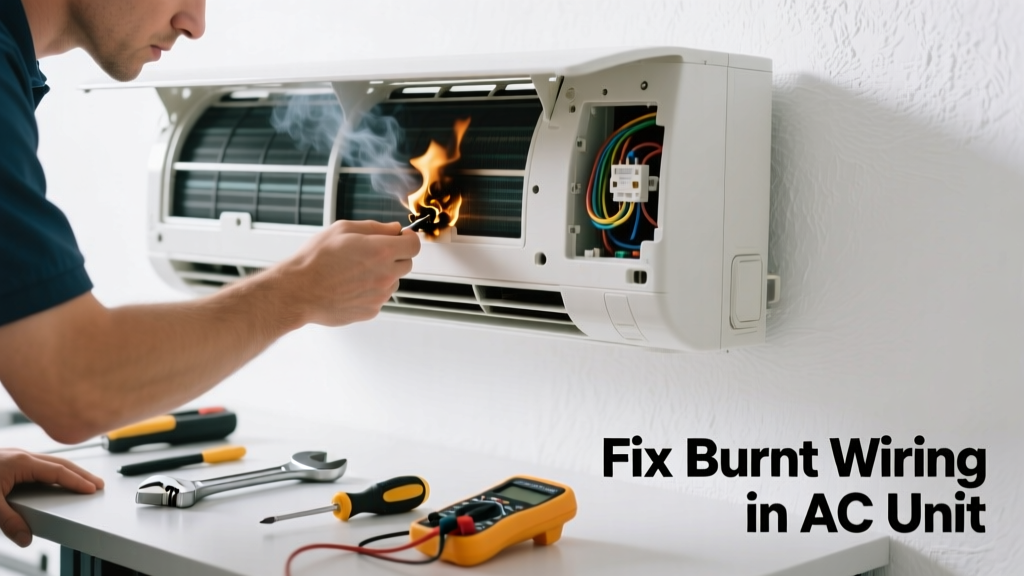
That sharp, acrid 'burning' smell from your AC isn’t just unpleasant—it’s a red flag. Unlike musty or dusty odors, this scent often signals overheating components, electrical faults, or melting insulation. Ignoring it risks equipment failure—or worse, an electrical fire.
Quick Diagnosis
Before grabbing tools, identify the most likely culprit:
- Electrical wiring or capacitor overheating (sharp, ozone-like or hot plastic smell)
- Burnt dust on heating elements (common at season start—brief, smoky, dissipates in 10–15 minutes)
- Melted insulation on fan motor windings (persistent, fishy or chemical odor)
- Overheated blower belt (rubbery, burnt rubber scent)
- Foreign object caught in ductwork near heat exchanger (burnt hair or paper smell)
Tools & Materials Needed
| Item | Purpose | Estimated Cost |
|---|---|---|
| Digital multimeter | Test capacitor voltage and motor winding resistance | $25–$65 |
| Non-contact infrared thermometer | Spot-check motor, capacitor, and contactor surface temps | $30–$80 |
| Replacement run capacitor | Common failure point—match microfarad (µF) and voltage rating | $8–$22 |
| Insulated screwdrivers & lineman’s pliers | Safe handling of live terminals; avoid accidental shorts | $12–$35 |
| Flashlight with magnet base | Inspect dark corners of condenser cabinet and air handler | $10–$28 |
Step-by-Step Fix
Try these methods in order—stop if you detect smoke, sparking, or sustained heat above 180°F:
- Power down completely: Turn off the AC at both the thermostat and the circuit breaker. Wait 5 minutes before proceeding.
- Inspect the outdoor unit: Look for melted wire insulation near the contactor or capacitor. Check for scorched terminals or bulging capacitor casing (a telltale sign it’s failed).
- Check the indoor blower motor: Remove the air handler access panel. Sniff near the motor housing—then use your infrared thermometer. A healthy motor runs 120–150°F; over 175°F indicates bearing failure or winding issues.
- Clean the evaporator coil and drain pan: Use a soft brush and coil cleaner (follow our coil cleaning guide). Algae buildup can overheat nearby wiring when moisture bridges connections.
- Replace the run capacitor: If bulging or leaking, disconnect power, discharge with insulated screwdriver across terminals, then swap using exact µF/voltage specs. See our capacitor replacement tutorial.
When to Call a Pro
Stop and call a licensed HVAC technician immediately if:
- You measure >200°F on any component—even after shutdown
- You see charring, melted plastic, or copper wire exposed
- The smell returns within 24 hours of cleaning or capacitor replacement
- Your multimeter shows open windings (infinite resistance) on the compressor or blower motor
- You’re uncomfortable working inside the electrical compartment of your air handler or condenser
According to the National Fire Protection Association’s 2023 U.S. Fire Loss Report, HVAC equipment accounted for 7% of home structure fires involving electrical distribution systems—most triggered by undiagnosed overheating or faulty capacitors.
Prevention Tips
Extend system life and avoid repeat incidents:
- Replace air filters every 30–60 days—clogged filters force motors to overwork and overheat
- Schedule professional maintenance twice yearly: spring (cooling check) and fall (electrical integrity test)
- Install a whole-home surge protector—voltage spikes degrade capacitors faster than normal wear
- Use a smart thermostat with equipment runtime alerts to catch abnormal cycling patterns early
Can I use bleach on this?
No. Bleach corrodes copper tubing, degrades rubber gaskets, and reacts dangerously with aluminum coils. It also emits toxic fumes when mixed with dust or refrigerant oil residue. Stick to EPA-approved HVAC coil cleaners or diluted vinegar for organic buildup.
Is it safe to run the fan only while troubleshooting?
Yes—if the smell occurs only during cooling mode. Running the fan alone bypasses the compressor and outdoor unit, isolating whether the issue is indoors (blower motor, wiring) or outdoors (capacitor, contactor). But shut it down immediately if the odor appears during fan-only operation.
Why does it only smell when I first turn it on?
This usually points to accumulated dust on the heat strips (in heat pump or furnace hybrid systems) or evaporator coil. When power hits, dust burns off quickly. If it lasts longer than 10 minutes or recurs daily, inspect for rodent nests or degraded insulation near high-temp components.
Will a dirty filter cause a burning smell?
Indirectly, yes. A clogged filter restricts airflow, causing the evaporator coil to freeze and the blower motor to overheat trying to move air through dense ice. Once thawed, the motor may emit a brief burnt odor. Replace filters monthly—and check for ice buildup behind the access panel.
How long should I wait before turning it back on after cleaning?
Wait at least 30 minutes after cleaning coils or replacing parts. This ensures all cleaners have fully dried and no residual moisture bridges electrical contacts. Never power up with wet components—this risks short circuits and arcing.
Does a burning smell always mean fire risk?
Not always—but never assume it’s harmless. The U.S. Consumer Product Safety Commission reports that 42% of HVAC-related fire incidents began with occupant-reported ‘odd smells’ ignored for more than 48 hours. Treat every burning odor as urgent until proven otherwise by measurement or professional inspection.
A burning smell from your AC is rarely just ‘old dust’—it’s your system’s distress signal. Addressing it early saves money, prevents breakdowns, and keeps your home safe. Keep your multimeter charged, your filters fresh, and don’t hesitate to call a technician when readings or instincts say ‘no.’ For related help, see our guides on AC not cooling and AC tripping breaker.