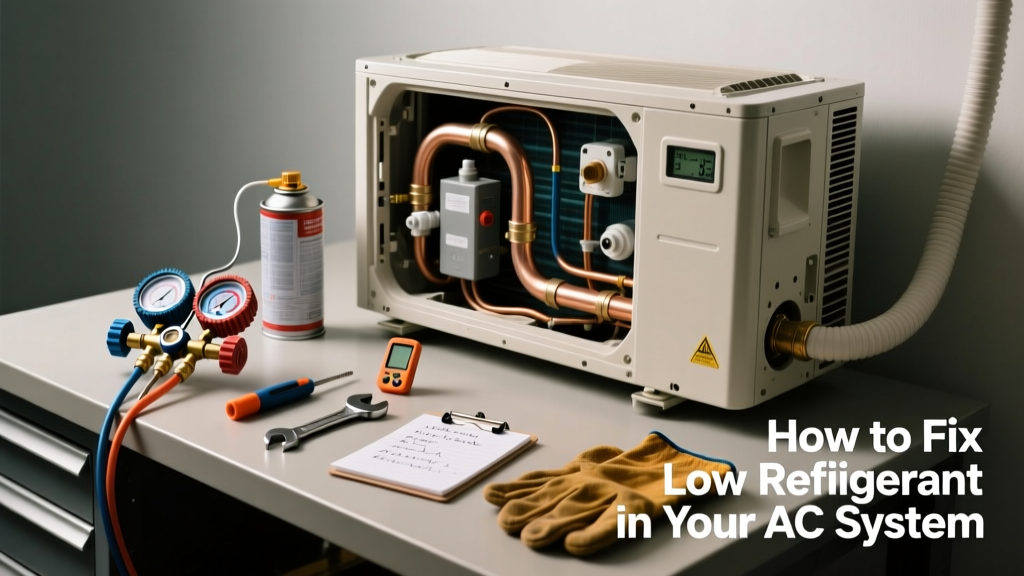
If your air conditioner runs constantly but blows warm air, struggles to cool below 75°F, or forms frost on the evaporator coil, low refrigerant is a likely culprit—but it’s rarely as simple as ‘topping off.’ Refrigerant doesn’t get used up; it leaks. That means every refill without fixing the leak violates EPA regulations and risks compressor failure.
Quick Diagnosis
Low refrigerant isn’t a standalone failure—it’s a symptom. Here are the most common root causes:
- Corroded copper lines (especially near outdoor units in coastal or high-humidity areas)
- Poorly sealed flare connections at the condenser or evaporator
- Pinhole leaks from vibration-induced abrasion against framing or ductwork
- Failed Schrader valve cores (common after repeated gauge hookups)
- Manufacturing defects in older units (pre-2010 R-22 systems show higher leak rates)
Tools & Materials Needed
| Item | Purpose | Estimated Cost |
|---|---|---|
| Refrigerant manifold gauge set | Measures high/low side pressure to confirm undercharge or restriction | $85–$220 |
| Electronic leak detector (halogen-sniffer type) | Finds refrigerant leaks as small as 0.1 oz/year—critical for locating hidden pinholes | $120–$350 |
| UV dye injector kit + yellow-lens safety glasses | Injects fluorescent dye into system; reveals leaks under UV light after 24+ hours of operation | $45–$95 |
| Flare nut wrenches (¼", ⅜", ½") | Prevents rounding soft brass/copper fittings during service | $18–$42 |
| R-410A refrigerant (recovery-certified cylinder) | Only legal for EPA Section 608 certified technicians—NOT for DIY topping off | $65–$110 per 25-lb cylinder (but legally inaccessible without certification) |
Step-by-Step Fix
You cannot legally or safely add refrigerant without certification and leak repair. However, you can locate and temporarily seal minor leaks before calling a pro. Here’s what’s within safe DIY scope:
- Check for obvious signs: Inspect copper lines near the outdoor unit for green corrosion or oily residue (a telltale sign of R-410A leakage).
- Use UV dye: Inject dye per kit instructions, run system for 24–48 hours, then scan with UV light—leaks glow bright yellow-green.
- Seal accessible pinholes: For leaks on straight copper tubing (not bends or joints), apply HVAC-rated epoxy sealant like Copper-Bond Pro after cleaning and drying the area thoroughly.
- Tighten flare connections: Using flare nut wrenches, gently snug (not overtighten) connections at the evaporator and condenser service ports—if they were previously disturbed.
- Verify airflow: Replace dirty filters and clear debris from condenser coils—restricted airflow mimics low-refrigerant symptoms and worsens real leaks.
When to Call a Pro
Stop immediately if you encounter any of these:
- Leak located inside the evaporator coil, compressor, or welded joint—requires component replacement or brazing
- System pressure reads below 50 PSI on the low side while running (indicates deep undercharge or blockage)
- Frost forms on the suction line past the filter drier—suggests internal contamination or metering device failure
- You detect multiple leaks (>2 locations)—often signals systemic corrosion or aging system failure
- Your unit uses R-22 (phased out since 2020); handling requires special recovery equipment and licensing
"Over 70% of premature compressor failures stem from undetected refrigerant leaks—not low charge alone. The real damage comes from oil starvation as refrigerant escapes, leaving the compressor dry." — HVAC Excellence Technician Certification Manual, 2022 edition
Prevention Tips
Extend your system’s life and reduce leak risk with these habits:
- Schedule professional coil cleaning and refrigerant level verification every spring (before peak cooling season)
- Install a condenser pad with 2" gravel base to reduce moisture pooling and copper corrosion
- Use vibration isolators on line sets where they pass through walls or framing
- Keep shrubbery and mulch at least 24" away from outdoor unit to prevent moisture retention and pest nesting
- Log refrigerant pressure readings annually—you’ll spot slow leaks before they drop below 85% of design charge
Can I buy refrigerant online and add it myself?
No—and it’s illegal. As of 2023, the EPA prohibits sale of R-410A and R-32 to non-certified individuals under Section 608. Online retailers require proof of certification before shipping. Attempting to add refrigerant without proper gauges, recovery gear, and training risks overcharging, freezing the coil, or rupturing components.
Why does my AC lose refrigerant every year?
It shouldn’t. A properly installed, modern AC system holds refrigerant for 12–15 years. Annual loss points to chronic issues: undersized or poorly insulated line sets, improper installation torque on flares, or environmental stressors like salt air or chemical runoff from nearby driveways.
Will low refrigerant damage my compressor?
Yes—quickly. Refrigerant carries lubricating oil through the system. When levels drop, oil circulation slows. Compressors can overheat and seize in under 48 hours of sustained low-charge operation. According to the Air-Conditioning, Heating, and Refrigeration Institute (AHRI), 41% of warranty-compliant compressor failures trace directly to undocumented refrigerant loss.
Can a clogged filter cause low refrigerant symptoms?
No—but it mimics them perfectly. A dirty filter restricts airflow, causing evaporator coil temperatures to drop below freezing. This leads to frost buildup, reduced cooling, and high head pressure—symptoms often mistaken for low refrigerant. Always rule out airflow issues first using this airflow diagnostic checklist.
Is it cheaper to repair a leak or replace the whole AC?
Depends on age and leak location. For units under 8 years old with a single accessible leak, repair averages $220–$480. For systems over 12 years—or those with evaporator coil or compressor leaks—replacement often costs less than $1,800 total and qualifies for federal tax credits via the Inflation Reduction Act (2023). Use our AC replacement cost calculator to compare.
How long does refrigerant last in a sealed system?
Indefinitely—if the system stays sealed. Unlike oil or fuel, refrigerant isn’t consumed. The U.S. EPA estimates that fewer than 5% of properly installed residential AC systems develop leaks in their first decade. Most ‘low refrigerant’ calls stem from poor initial installation or physical damage—not material degradation.
Low refrigerant is less about refilling and more about finding why the system isn’t holding pressure. Every leak you ignore increases strain on the compressor, raises energy bills by up to 25%, and brings your system closer to catastrophic failure. Treat it like a warning light—not a tune-up item—and you’ll extend your AC’s life by years.