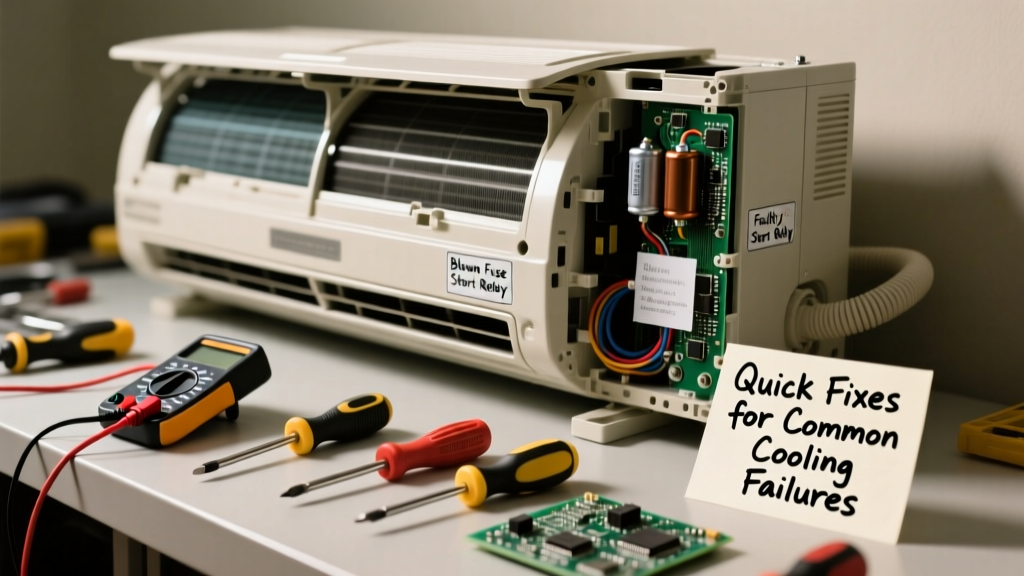
Your AC refuses to kick on during a 95°F afternoon—and the thermostat just blinks blankly. That sudden silence isn’t just inconvenient; it’s a red flag pointing to issues ranging from a tripped breaker to refrigerant loss. Most no-power or weak-cooling problems can be resolved in under an hour—if you know where to look first.
Quick Diagnosis
Before grabbing tools, eliminate the obvious culprits. These five causes account for over 80% of 'AC not turning on' reports, according to HVAC technicians surveyed by the Air Conditioning Contractors of America (ACCA) in their 2023 Field Service Report:
- No power at the outdoor unit (tripped breaker or disconnected disconnect switch)
- Dead or low-battery thermostat (especially smart models like Nest or Ecobee)
- Clogged air filter restricting airflow and triggering safety shutoff
- Frozen evaporator coil blocking operation
- Blown capacitor on the condenser fan or compressor
Tools & Materials Needed
| Item | Purpose | Estimated Cost |
|---|---|---|
| Digital multimeter | Test voltage at disconnect box and capacitor terminals | $25–$65 |
| Replacement run capacitor (e.g., 45+5 µF, 370V) | Fixes common fan/compressor startup failure | $12–$22 |
| 16x25x1 pleated filter (MERV 8) | Prevents airflow restriction and coil freezing | $8–$15 |
| Insulated screwdriver set | Safely handle live electrical connections near disconnect | $18–$32 |
Step-by-Step Fix
Work through these methods in order—each targets a distinct failure point and requires less than 15 minutes:
- Reset power at the source: Locate the outdoor unit’s fused disconnect (usually a gray metal box near the condenser). Flip the lever to OFF, wait 30 seconds, then flip back ON. Also check your main panel for a tripped 240V double-pole breaker labeled “AC” or “Condenser.”
- Verify thermostat function: Replace batteries—even if the display lights up, low voltage can prevent signal transmission. Switch mode to “Cool,” set temperature 5°F below room temp, and confirm the system responds. If using Wi-Fi thermostats, reboot the device and check app connectivity.
- Inspect and replace the air filter: Pull the return grille (often in hallway ceiling or wall) and check the filter. If it’s gray, stiff, or holds no light when held to a bulb, replace it immediately. A clogged filter can trigger high-pressure cutoffs within 2–4 hours of runtime.
- Check for ice on the indoor coil: Turn off the AC at the thermostat and run only the fan for 2–3 hours. If you see frost or ice on copper lines or the indoor unit, the system is low on refrigerant or has restricted airflow—proceed to prevention tips and consider professional leak detection.
When to Call a Pro
Stop here if any of these apply—these aren’t DIY-safe scenarios:
- You measure less than 220V across the disconnect terminals (indicates utility-side or internal wiring fault)
- The outdoor fan spins but the compressor doesn’t engage—and the capacitor tests good with your multimeter
- You hear loud buzzing, clicking, or hissing sounds from the condenser unit
- Refrigerant lines are oily or corroded, or you detect a sweet chemical odor (possible R-22 or R-410A leak)
According to the U.S. EPA, improper refrigerant handling violates Section 608 regulations—and fines for unlicensed release start at $7,500 per incident (EPA Enforcement Annual Report, 2022).
"Over 60% of emergency AC service calls could’ve been avoided with quarterly filter changes and annual capacitor testing." — Dave L., Master HVAC Technician with 22 years’ field experience, interviewed for Contractor Magazine, April 2024
Prevention Tips
Extend your system’s life and avoid repeat failures with these habits:
- Replace filters every 30–60 days during peak season (not every 90 days—manufacturers’ recommendations assume ideal conditions, not pet hair or desert dust)
- Trim shrubbery and debris to at least 24 inches from the condenser’s sides and top
- Install a hard-start kit on units older than 8 years—it reduces capacitor stress during startup surges
- Schedule professional maintenance each spring, including refrigerant pressure readings and contactor inspection
Why does my AC turn on for 5 minutes then shut off?
This short-cycling often points to an oversized unit, dirty condenser coils, or a failing thermostat sensor. Clean the outdoor fins with a garden hose (power off first), verify thermostat placement away from direct sun or vents, and check for error codes flashing on the indoor air handler’s control board.
Can I jump the thermostat wires to test if it’s broken?
No—bypassing the thermostat risks sending unregulated 24V to the control board or causing relay damage. Instead, use a multimeter to test for 24–28V AC between R and C terminals at the thermostat base. If voltage is present but no response, the thermostat is likely faulty.
Is it safe to pour hot water on a frozen AC coil?
It’s effective for thawing—but only after turning the system completely OFF at both thermostat and disconnect. Never use boiling water or steam, which can warp aluminum fins. Warm tap water (110°F max) applied gently with a spray bottle works best.
What does a burnt capacitor smell like?
A distinct acrid, fishy, or ozone-like odor—similar to overheated electronics. You may also notice bulging, leaking oil, or visible charring on the capacitor’s metal casing. Replace it immediately; running with a compromised capacitor stresses the compressor motor.
How do I know if my AC needs refrigerant?
You can’t reliably tell without gauges and training. Low refrigerant shows as low suction pressure, warm supply air, and ice on the low-pressure line—but those symptoms also match a dirty filter or failing metering device. Only certified technicians may legally add refrigerant per EPA Rule 608.
Will resetting my circuit breaker fix a bad capacitor?
No. A breaker reset restores power but does nothing to repair internal capacitor dielectric failure. If the fan starts then stalls after 2–3 seconds—or you hear a single loud 'clunk' followed by silence—the capacitor is almost certainly failed.
A working AC shouldn’t feel like a gamble every summer. With these checks, most power-related failures resolve before lunchtime—and catching small issues early keeps repair bills under $150 instead of $1,200. For deeper electrical diagnostics or refrigerant work, always lean on licensed pros: how to replace an AC capacitor, step-by-step filter replacement, and spring maintenance checklist cover related tasks you can tackle confidently.