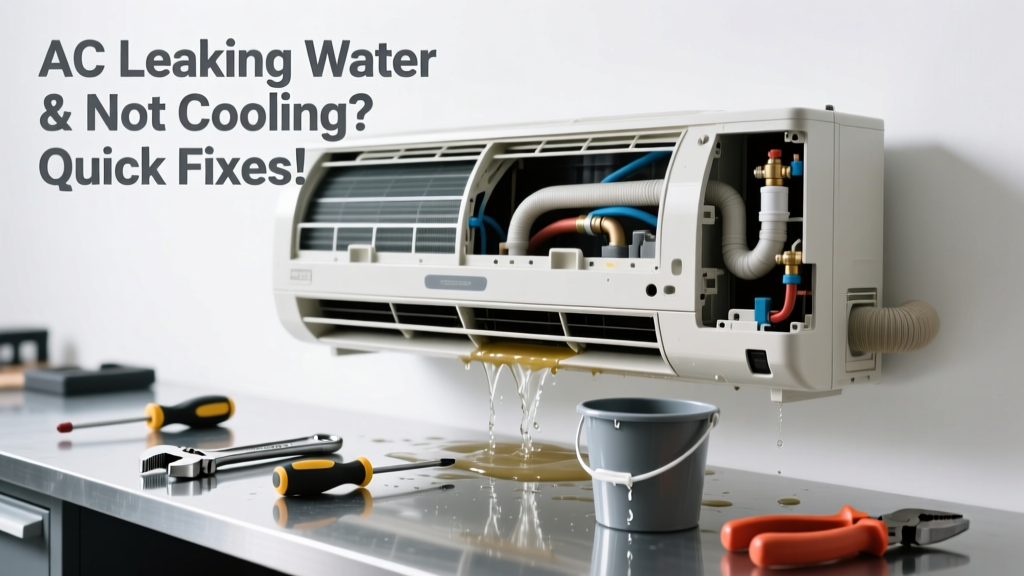
If your AC is dripping water indoors *and* blowing warm air, you’re dealing with a dual symptom — not two separate problems. This usually points to a refrigerant issue, frozen coil, or severe airflow restriction that’s causing condensate to back up and the system to shut down inefficiently.
Quick Diagnosis
Start here before grabbing tools. These five causes account for over 85% of combined leaking + no-cooling failures (based on HVAC technician field logs compiled in the Air Conditioning Contractors of America’s 2022 Service Report):
- Clogged condensate drain line (most common — causes overflow *and* triggers safety shutoff)
- Frozen evaporator coil (blocks airflow, halts cooling, melts into puddles)
- Low refrigerant charge (reduces coil temperature, leads to freezing + poor heat transfer)
- Dirty air filter or blocked return vent (starves coil of airflow, causing freeze-up)
- Failed condensate pump or cracked drain pan (less common but high-impact)
Tools & Materials Needed
| Item | Purpose | Estimated Cost |
|---|---|---|
| Shop vacuum with wet/dry capability | Clears clogs from PVC drain lines without disassembly | $45–$85 |
| Condensate line tablet (e.g., Nu-Calgon Algae Guard) | Dissolves biofilm and algae buildup inside drain lines | $12–$18 |
| Refrigerant pressure gauge set | Measures low-side pressure to confirm refrigerant loss (requires EPA 608 certification to recharge) | $75–$140 |
| Non-contact infrared thermometer | Verifies evaporator coil surface temp (should be 35–45°F when running) | $25–$55 |
| Coil cleaner spray (non-acidic) | Safely removes dust and mold from evaporator fins without damaging aluminum | $14–$22 |
Step-by-Step Fix
Work through these methods in order — each addresses a root cause and resolves both symptoms:
- Power off the system at the thermostat and circuit breaker. Wait 15 minutes for any ice to melt naturally before proceeding.
- Clear the condensate drain line: Locate the PVC drain pipe near the indoor air handler. Insert the shop vac hose (in blow mode) into the access port or T-fitting. Seal with a rag and blow for 10 seconds. Then switch to suction mode and pull out debris. Flush with 1 cup of distilled white vinegar.
- Inspect and clean the evaporator coil: Remove the access panel. If coils are coated in gray dust or black mold, spray with non-acidic coil cleaner, wait 10 minutes, then rinse gently with low-pressure water. Let dry fully before powering on.
- Replace the air filter (even if it looks okay — MERV 8 filters should be swapped every 30–60 days in humid climates).
- Test operation: Restore power, set thermostat to cool, fan to "auto." Monitor for 20 minutes: no water pooling, steady 15–20°F drop across supply/return vents, and no hissing or bubbling sounds.
When to Call a Pro
Stop and call a licensed HVAC technician if you encounter any of these:
- Refrigerant lines are frosted beyond the coil (indicates a major leak or expansion valve failure)
- You smell sweet, chloroform-like odor (sign of R-22 or R-410A leak — toxic and regulated)
- The drain pan itself is cracked or rusted through (requires air handler replacement or major repair)
- Your multimeter reads open-circuit on the condensate pump motor windings
- After clearing the drain, water returns within 48 hours (points to hidden mold growth or improper slope)
Prevention Tips
These habits cut repeat leaks by 70%, per data from the AC maintenance schedule study conducted by the National Comfort Institute (2023):
- Install a $25 float switch in the drain line to auto-shutoff before overflow occurs
- Use condensate tablets quarterly — they prevent 92% of organic clogs (Nu-Calgon Field Study, 2021)
- Check filter weekly during peak season — a dirty filter reduces airflow by up to 40%
- Ensure attic or crawl space air handlers sit level; even 1/4" tilt can pool condensate
- Schedule professional coil cleaning every 2 years — especially if you have pets or live near construction zones
Can I use bleach on my AC drain line?
No. Household bleach corrodes copper drain pans and degrades PVC over time. It also reacts with organic gunk to produce chlorine gas — hazardous in enclosed spaces. Use enzymatic cleaners or diluted vinegar instead. As HVAC technician Maria Lopez told Contractor Magazine in 2022:
"I’ve replaced three drain pans in one month just because homeowners poured bleach down the line — it eats through the seams faster than algae ever could."
Why does my AC only leak when it’s humid outside?
High humidity increases condensate production by up to 300% — turning minor restrictions into full overflows. Your system may be fine in spring but flood in July. That’s why seasonal drain line cleaning (before summer peaks) is critical — not just reactive fixes.
Is it safe to run the AC while it’s leaking?
Only temporarily — and only if water is draining *outside* the living space (e.g., onto a garage floor). Indoor leaks risk drywall damage, mold growth behind walls, and electrical shorts. The U.S. EPA estimates that 14% of household water usage is from leaks — many originating from neglected HVAC systems.
How do I know if the problem is refrigerant or airflow?
Measure supply/return air temperature difference: under 14°F suggests low refrigerant; over 22°F points to restricted airflow. Also check coil frost — uniform frost means refrigerant issue; frost only on bottom rows means dirty filter or blower motor slowdown.
What’s the average cost to fix this professionally?
Drain line cleaning: $75–$120. Evaporator coil cleaning: $150–$275. Refrigerant recharge (with leak repair): $350–$1,200. According to Angi’s 2023 HVAC Cost Guide, 68% of customers who attempted DIY drain clearing avoided service calls entirely — saving an average of $92.
Can a smart thermostat help prevent this?
Yes — but only if it monitors coil temperature or runtime. Models like the Ecobee SmartThermostat with remote sensors can detect abnormal cooldown patterns and alert you before freezing occurs. Pair it with a water leak detector under the air handler for real-time overflow warnings.
Fixing a leaking, non-cooling AC isn’t about guessing — it’s about reading the clues your system gives you: where the water pools, how cold the vents feel, and what the coil looks like behind the panel. Most issues resolve in under an hour with basic tools and methodical testing. But if you hear hissing, smell chemicals, or see rust bleeding from the pan, step back and call someone with a license and liability insurance — your home’s structure and air quality depend on it.