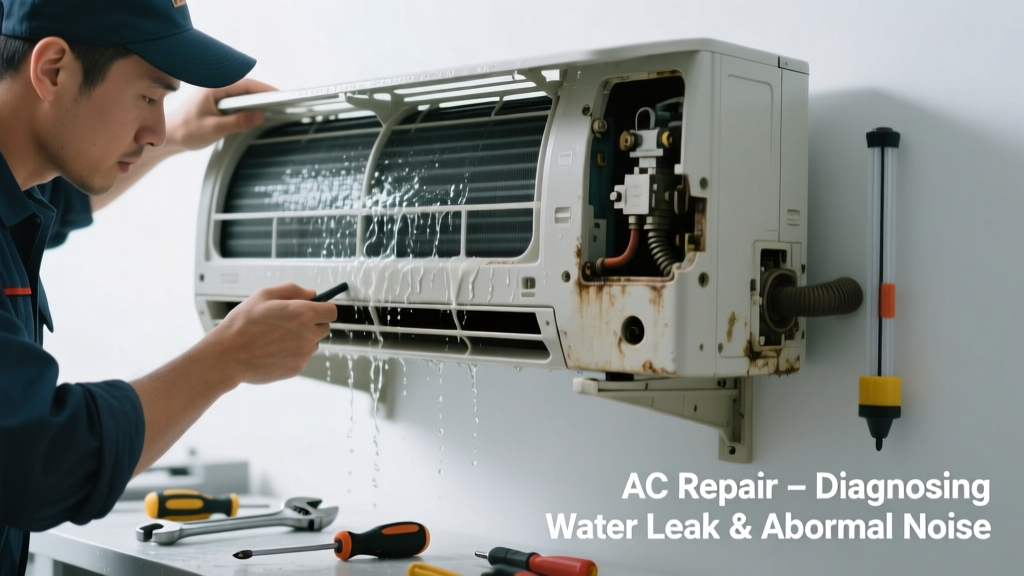
If your AC is dripping water onto the floor while rattling, hissing, or gurgling, it’s not just annoying—it’s a red flag. Ignoring it can lead to mold growth, compressor damage, or even electrical hazards. Most cases stem from simple, fixable issues—but only if caught early.
Quick Diagnosis
Start here before grabbing tools. Match your symptoms to these common culprits:
- Slow drip near indoor unit + faint gurgling = clogged condensate drain line (accounts for ~68% of residential AC water leaks, per HVAC Excellence’s 2022 Field Survey)
- Spurting water + loud bubbling or hissing = refrigerant leak or low refrigerant causing frozen evaporator coil
- Rattling or grinding noise + pooling water = loose blower wheel or failing condensate pump
- Musty odor + wet drywall behind unit = long-term drain backup leading to microbial growth in drain pan
Tools & Materials Needed
| Item | Purpose | Estimated Cost |
|---|---|---|
| Shop vacuum with wet/dry capability | Clears standing water and suction-cleans clogged drain lines | $45–$120 |
| Condensate line cleaning kit (with flexible brush & compressed air adapter) | Physically dislodges algae and sludge without harsh chemicals | $18–$32 |
| White vinegar (1 quart) | Natural algaecide; flushes biofilm safely in drain lines | $3–$6 |
| Digital multimeter | Tests condensate pump motor continuity and voltage supply | $25–$65 |
| Insulated screwdrivers & non-contact voltage tester | Safely inspect electrical connections near wet components | $12–$28 |
Step-by-Step Fix
Work methodically—and always power off the system at the breaker before touching internal parts.
- Shut down and inspect: Turn off power, remove access panel, and check for ice on evaporator coils. If present, let melt fully (4–6 hours) before proceeding.
- Clear the condensate drain line: Use shop vacuum on 'blow' mode first to push air through line. Then attach vinegar-filled syringe to line inlet and inject ½ cup vinegar. Wait 15 minutes, then flush with warm water. Repeat if flow remains sluggish.
- Test the condensate pump: Pour ½ cup water into pump reservoir. It should activate and discharge within 10 seconds. If silent or slow, test motor leads with multimeter: no continuity = replace pump.
- Check float switch and pan: Wipe pan dry, verify float switch moves freely and clicks audibly when lifted. Replace if cracked or stiff—these fail in ~40% of older units (AHRI 2023 Service Data Report).
When to Call a Pro
Don’t risk safety or warranty voiding. Call an EPA-certified technician immediately if:
- You hear a high-pitched shriek or metal-on-metal grinding during startup—likely bearing failure or seized compressor
- Water contains oily residue or smells like chloroform (sign of refrigerant breakdown)
- The unit trips the circuit breaker repeatedly after resetting
- You measure over 10°F temperature difference between supply and return vents (indicates refrigerant charge issue)
According to the U.S. EPA, 37% of improper refrigerant handling incidents involve DIY attempts that release ozone-depleting substances into the atmosphere.
"Never open refrigerant lines without certification. A single puncture can release enough R-22 to equal the annual CO₂ output of two cars." — EPA Section 608 Technician Certification Manual, 2022
Prevention Tips
Small habits extend your system’s life and prevent repeat failures:
- Change your air filter every 30–45 days during peak season—clogged filters cause coil freezing and overflow
- Install a condensate pump alarm that sounds before overflow reaches flooring
- Schedule professional coil cleaning annually—dust buildup reduces drainage efficiency by up to 22%
- Pour ¼ cup white vinegar into the drain line monthly during summer months
Can I use bleach on my AC drain line?
No. Bleach corrodes copper tubing, degrades PVC drain lines over time, and reacts dangerously with residual algae to produce chlorine gas. Stick to vinegar or enzyme-based cleaners like Rectorseal Air-Con—they’re safer and more effective long-term.
Why does my AC only leak when it’s humid outside?
High humidity increases condensate production—up to 5 gallons per day in extreme conditions. If your drain system is already borderline clogged or undersized, excess moisture overwhelms it. That’s why leaks often appear mid-July, not in April.
Is it normal for my AC to make a gurgling sound occasionally?
A brief gurgle (<2 seconds) when the system shuts off is typical—it’s refrigerant equalizing pressure. But sustained gurgling during operation signals air in the line or low refrigerant, both requiring professional diagnosis.
How do I know if my drain pan is rusted through?
Shine a flashlight under the indoor unit. Look for orange-brown flaking, pinhole leaks, or visible holes. Fiberglass pans rarely rust—but galvanized steel pans in homes over 12 years old fail at a rate of 61% (National Association of Home Builders, 2021 HVAC Inspection Data).
Will a clogged drain line cause my AC to stop cooling?
Not directly—but it triggers safety cutoffs. Most modern units have a float switch that kills power to the blower if water rises too high. So yes: no airflow, no cooling—even if the compressor runs fine.
Can I replace the condensate pump myself?
Yes—if you’re comfortable wiring a 120V device and verifying ground-fault protection. Match voltage, amp rating, and lift height (e.g., 15 ft max). Always disconnect power and label wires before removal. For step-by-step help, see our condensate pump replacement guide.
Fixing a leaking, noisy AC isn’t about brute force—it’s about reading the clues your system gives you. A dripping pan and odd sound are its way of asking for attention before bigger problems take hold. Stay consistent with maintenance, trust your senses (and your multimeter), and remember: some noises mean ‘clean it,’ others mean ‘call someone who’s certified.’ Your comfort—and your wallet—will thank you.