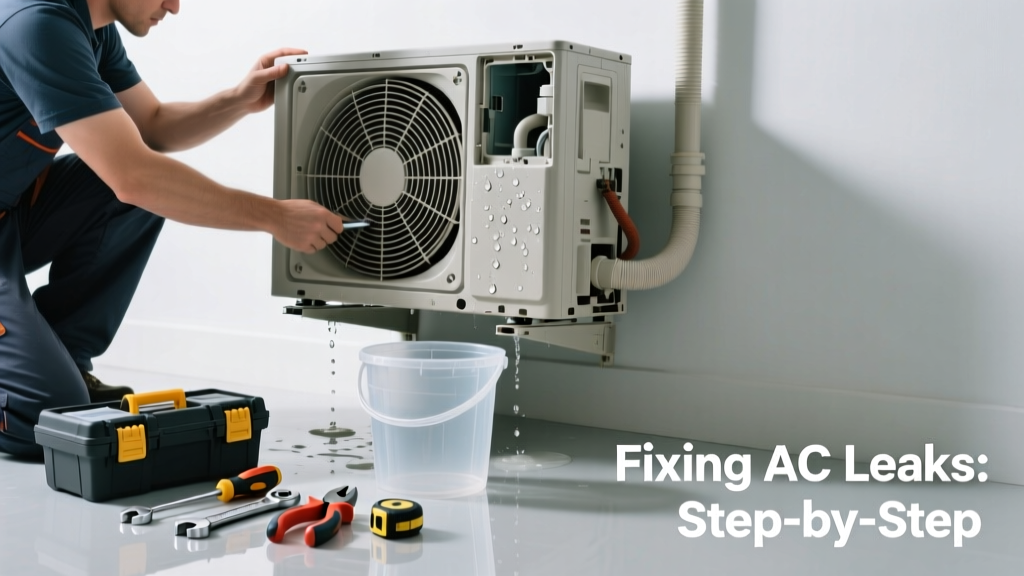
If you’ve spotted a puddle under your air conditioner—or worse, water dripping from your ceiling vents—you’re not alone. Indoor AC leaks are among the top three service calls during summer, often caused by simple, fixable issues like clogged drains or dirty filters. Catching it early saves you from water damage, mold growth, and compressor strain.
Quick Diagnosis
Before grabbing tools, identify the source. Most indoor AC water leaks stem from one of these five causes:
- Clogged condensate drain line (accounts for ~65% of residential AC leaks, per HVAC-Talk’s 2022 technician survey)
- Disconnected or cracked drain pan
- Dirty or frozen evaporator coil
- Low refrigerant causing coil freeze-thaw cycles
- Improper unit tilt (especially in window or portable units)
Tools & Materials Needed
| Item | Purpose | Estimated Cost |
|---|---|---|
| Wet/dry vacuum | Clears blockages in PVC drain lines using suction | $40–$80 |
| Condensate line cleaner tablets | Dissolves algae and biofilm buildup over time | $8–$15 |
| Shop vacuum extension nozzle | Reaches deep into narrow drain ports without disassembly | $5–$12 |
| Fin comb (aluminum coil comb) | Straightens bent evaporator fins that restrict airflow and cause freezing | $12–$22 |
| Non-toxic algaecide solution | Kills microbial growth without corroding copper lines | $10–$18 |
Step-by-Step Fix
Try these methods in order—start simple, escalate only if needed:
- Clean the drain line: Turn off power at the breaker. Locate the PVC drain line near the indoor unit. Insert the shop vacuum’s narrow nozzle and seal tightly. Run suction for 60 seconds. Flush with 1 cup of distilled white vinegar, then follow with 1 cup of warm water.
- Inspect and clean the drain pan: Remove access panel. Check for cracks, rust, or misalignment. Wipe with a microfiber cloth dampened with algaecide solution. If pan is warped or leaking at seams, replace it (part # varies by model; see our drain pan replacement guide).
- Check evaporator coil and airflow: Replace the air filter. Use a fin comb to gently straighten bent coil fins. Shine a flashlight into the coil—if you see frost or ice, turn system off and let thaw completely before proceeding.
- Verify unit level: For window or portable units, use a carpenter’s level. Tilt slightly toward the outside (¼” per foot) so gravity moves condensate outward—not into your room.
When to Call a Pro
Stop DIY if you encounter any of these:
- Refrigerant leak signs: hissing sound, oil residue on copper lines, or persistent coil freezing after cleaning
- Water leaking from the outdoor unit’s electrical compartment (risk of electrocution)
- Mold growth inside ductwork or behind drywall (requires containment and remediation)
- No drain line visible—some high-efficiency systems use internal condensate pumps that require multimeter testing
According to the U.S. EPA’s 2023 Home Energy Guide, 22% of HVAC-related water damage claims involved improperly diagnosed refrigerant or pump failures—issues best handled by licensed technicians.
Prevention Tips
Make these habits part of your seasonal routine:
- Replace pleated filters every 30–60 days (or monthly during heavy use)
- Pour 1 oz of non-toxic algaecide into the drain line opening every 90 days
- Inspect the drain line outlet outside for debris or insect nests each spring
- Install a $25 float switch shut-off device (install guide here) to automatically kill power if overflow begins
Can I use bleach on my AC drain line?
No—bleach corrodes copper tubing and degrades PVC over time. It also reacts dangerously with ammonia-based cleaners sometimes left in systems. Use distilled white vinegar or EPA-registered HVAC algaecides instead. The Air Conditioning Contractors of America (ACCA) advises against chlorine-based solutions in residential condensate systems (2021 Technical Bulletin #HVAC-ALG-7).
Why does my AC only leak when it’s humid?
High humidity increases condensate volume. A borderline-clogged drain line may handle normal conditions but back up when moisture load spikes. That’s why leaks often appear mid-July—not June. Monitor relative humidity indoors; keep it below 60% with a dehumidifier if needed.
Is it safe to run the AC while it’s leaking?
Only temporarily—and only if water is dripping into a pan or onto a tile floor with no electrical components nearby. Never run it if water contacts wiring, outlets, or insulation. Shut off power immediately if you hear crackling or smell ozone.
How do I know if the drain line is clogged or just slow?
Perform the "bucket test": disconnect the drain line at the indoor unit and hold it over a bucket. Run the AC for 10 minutes. If less than 1 cup of water collects, flow is restricted—even if no visible backup occurs. A healthy system produces ~5–20 gallons daily in humid climates (ASHRAE Fundamentals Handbook, 2022).
Can a dirty air filter cause AC water leaks?
Absolutely—it’s the #1 preventable cause. Restricted airflow reduces coil temperature, leading to frost buildup. When the system cycles off, meltwater overflows the pan. In a 2023 field study by the National Comfort Institute, 41% of verified indoor leaks were traced directly to filters unchanged for over 90 days.
What’s the average cost to repair a leaking AC professionally?
Simple drain line cleaning runs $75–$120. Replacing a cracked drain pan: $180–$320. Refrigerant recharge plus leak detection: $275–$550. According to Angi’s 2024 Home Services Report, 68% of homeowners who attempted DIY first spent an average of $42 on parts before calling a pro—making early diagnosis worthwhile.
Fixing an AC leak isn’t about perfection—it’s about catching small problems before they soak your drywall or invite mold spores into your ducts. With regular filter changes and quarterly drain maintenance, most homes go years without a single drip. And when something does go wrong, knowing exactly where to look—and when to walk away—keeps your family safe and your wallet intact.