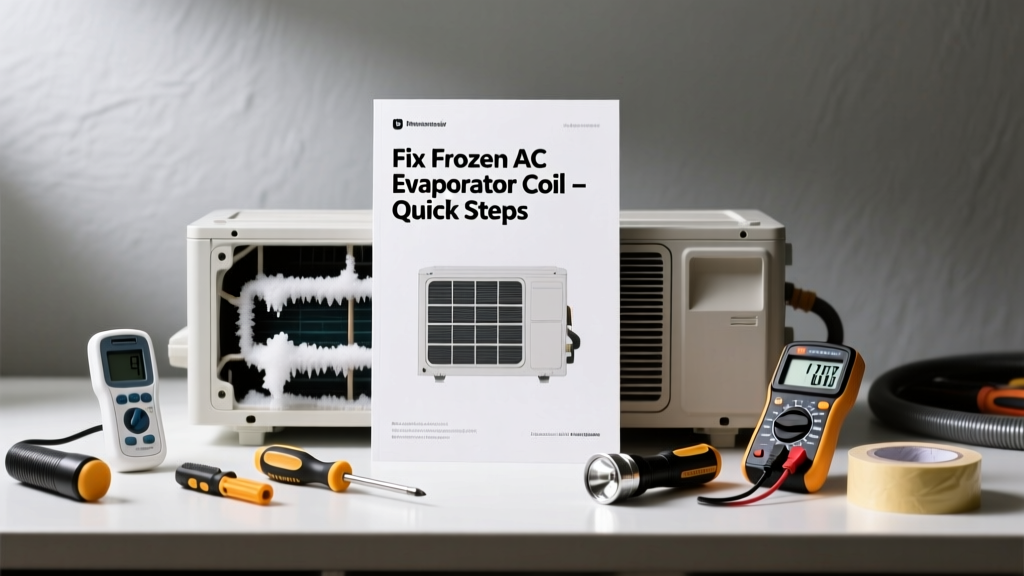
Your AC is blowing warm air—or nothing at all—and you peek inside the indoor unit to find ice coating the evaporator coil. That’s not just inconvenient—it’s a red flag that airflow, refrigerant, or system balance is off. Don’t panic: most frozen coil issues are fixable in under an hour if caught early.
Quick Diagnosis
Before grabbing tools, confirm the root cause. A frozen coil is always a symptom—not the disease. Here are the five most common culprits:
- Dirty or clogged air filter (responsible for ~65% of freeze-ups, per HVAC Excellence’s 2022 field survey)
- Low refrigerant charge (often due to a leak—never add refrigerant without locating and repairing it)
- Blocked or closed supply vents restricting airflow
- Faulty blower motor or capacitor causing reduced fan speed
- Dirty evaporator coil surface reducing heat transfer
Tools & Materials Needed
| Item | Purpose | Estimated Cost |
|---|---|---|
| Non-contact infrared thermometer | Verifies coil surface temperature and detects uneven cooling | $25–$45 |
| Fin comb (aluminum coil straightener) | Realigns bent fins to restore airflow across the coil | $8–$15 |
| Coil cleaner (non-acidic, foaming type) | Safely dissolves organic buildup without corroding copper/aluminum | $12–$22 |
| Multimeter with clamp function | Measures blower motor amperage to confirm proper airflow | $40–$90 |
| Microfiber cloths & soft-bristle brush | Cleans debris without scratching delicate fins | $5–$10 |
Step-by-Step Fix
Follow these methods in order—skip ahead only if earlier steps don’t resolve the issue:
- Power down and thaw completely: Turn off the AC at the thermostat AND the circuit breaker. Let ice melt naturally—never chip or use heat guns. This takes 2–5 hours depending on ambient temperature and ice thickness.
- Replace or clean the air filter: Use a MERV 8 filter (not higher unless your system is rated for it). A dirty filter drops airflow by up to 30%, triggering freeze-ups (U.S. Department of Energy, 2023).
- Inspect and clear supply vents: Ensure at least 80% of registers are fully open and unobstructed by furniture or rugs. Closed vents increase static pressure and reduce coil temperature.
- Clean the evaporator coil: After thawing, spray non-acidic coil cleaner onto the coil surface. Wait 10 minutes, then gently rinse with low-pressure water (or wipe with damp microfiber if access is tight). Let dry fully before powering on.
- Check blower operation: With power restored, verify the indoor fan runs at full speed on “Fan Only” mode. If it’s slow, humming, or intermittent, test capacitor and motor windings with your multimeter.
When to Call a Pro
Some situations require licensed expertise—especially when safety or refrigerant handling is involved:
- You detect a hissing sound or oily residue near copper lines (sign of refrigerant leak)
- The coil refreezes within 24 hours of completing all DIY steps
- Your multimeter shows blower motor drawing more than 110% of its rated amperage
- You lack access to the evaporator coil due to sealed furnace cabinet or ductwork integration
- You smell burning plastic or notice discolored wiring near the air handler
According to the EPA’s Section 608 certification requirements, only certified technicians may recover, handle, or recharge refrigerant—even small amounts.
"A frozen coil isn’t about cold—it’s about insufficient heat exchange. If airflow drops 20%, coil surface temp can drop below 32°F even with correct refrigerant charge." — HVAC Technician Certification Board, 2021 Field Manual
Prevention Tips
Keep your system running smoothly year after year with these habits:
- Change filters every 30–60 days during peak cooling season (more often with pets or allergies)
- Trim vegetation at least 24 inches from outdoor condenser units to maintain unrestricted airflow
- Install a smart thermostat with freeze-protection alerts (e.g., models compatible with HVAC monitoring)
- Schedule professional coil cleaning and refrigerant check every 2 years—even if no symptoms appear
- Add a permanent static pressure port to your ductwork for quick airflow verification (learn how here)
Can I pour hot water on the frozen coil to speed up thawing?
No—applying hot water risks thermal shock to aluminum fins and copper tubing, potentially causing microfractures or solder joint failure. It also increases moisture intrusion into electrical components. Always allow natural thawing with power disconnected.
Why does my coil freeze only at night?
Nighttime freezing often points to low outdoor ambient temperatures combined with oversized equipment or overcharged refrigerant. When outdoor temps dip below 65°F, many standard AC systems struggle to regulate head pressure—causing liquid refrigerant to flood back to the evaporator. Consider installing a low-ambient control kit if this recurs seasonally.
Will cleaning the coil fix poor cooling after thawing?
Cleaning helps—but only if dirt was the primary cause. If cooling remains weak post-thaw and post-clean, suspect low refrigerant, a failing expansion valve, or blower wheel imbalance. Measure supply/return air delta-T: anything under 14°F suggests refrigerant or airflow issues.
Can a frozen coil damage the compressor?
Yes—repeated freeze/thaw cycles cause moisture-laden refrigerant to return to the compressor, diluting oil and accelerating bearing wear. The U.S. EPA estimates that 22% of premature compressor failures stem from chronic low-airflow conditions like recurring coil freeze-ups.
Is it safe to run the fan only while the coil thaws?
Only if the system is designed for continuous fan operation (check your air handler manual). On many older units, running the blower alone during thawing redistributes cold air into ductwork, risking condensation leaks or insulation saturation. Better to wait—patience prevents collateral damage.
How often should I inspect the evaporator coil?
Visually inspect every 3 months during cooling season—look for discoloration, dust buildup, or bent fins. Use a flashlight and mirror to check rear sections. Full cleaning should happen every 12–24 months, depending on filter discipline and home environment (e.g., dusty rural areas need more frequent attention).
A frozen evaporator coil feels alarming, but it’s rarely catastrophic—if you act methodically. Most homeowners resolve it themselves using just a filter, fin comb, and 90 minutes of focused attention. The real win isn’t just fixing today’s freeze—it’s catching the warning signs early next time, before ice forms at all.