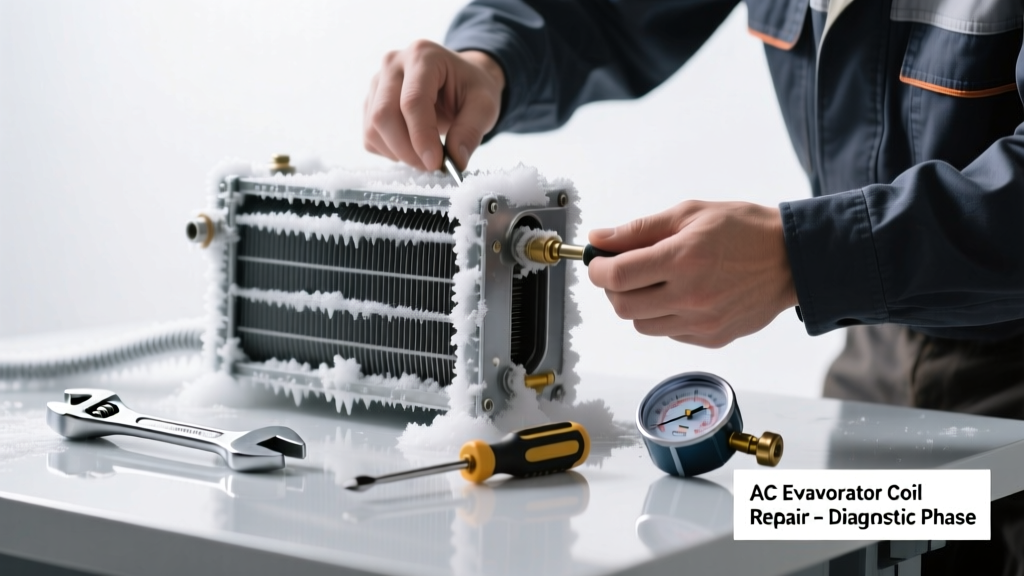
If your AC is blowing warm air, dripping water near the indoor unit, and making a low grinding or intermittent hissing noise—your evaporator coil is likely frozen. This isn’t just inefficient; it’s a red flag that airflow, refrigerant, or drainage is seriously compromised.
Quick Diagnosis
Before grabbing tools, confirm the root cause. A frozen coil rarely happens in isolation—it’s a symptom. Check for these five culprits:
- Dirty or clogged air filter (responsible for ~65% of freeze-ups, per ACCA’s 2022 Field Service Report)
- Blocked or disconnected condensate drain line causing backup and reduced airflow
- Low refrigerant charge (often due to a slow leak—not something you can top off legally without certification)
- Faulty blower motor or capacitor reducing airflow across the coil
- Thermostat set too low (<68°F) with high humidity, especially overnight
Tools & Materials Needed
| Item | Purpose | Estimated Cost |
|---|---|---|
| Digital thermometer (infrared or probe) | Verify coil surface temp is below 32°F before assuming freeze-up | $12–$45 |
| Shop vacuum with wet/dry attachment | Clear standing water and debris from drain pan and line | $40–$120 |
| Coil cleaner (non-acidic, EPA-registered) | Safely dissolve biofilm and grime without corroding aluminum fins | $10–$22 |
| Fin comb (aluminum-specific) | Realign bent fins that restrict airflow and promote icing | $8–$18 |
| Insulated gloves and safety glasses | Protect hands from sharp fins and cold metal during inspection | $12–$25 |
Step-by-Step Fix
Do not force-thaw with a hair dryer or heat gun—rapid expansion cracks solder joints and invites refrigerant leaks. Follow this sequence:
- Power down completely: Turn off the AC at both the thermostat AND the circuit breaker. Wait 15 minutes before opening panels.
- Inspect and clear the drain system: Remove the drain pan cover, vacuum standing water, then flush the PVC drain line with 1 cup of distilled white vinegar followed by 2 cups of hot (not boiling) water. Use a stiff wire or compressed air if flow remains sluggish.
- Check and replace the air filter: Even if it looks clean, swap it out—use MERV 8 or lower for standard systems; higher ratings restrict airflow when dirty.
- Thaw naturally: Leave the system powered off for 4–8 hours. Monitor for water pooling—if it stops draining, suspect a clog deeper in the line or a cracked pan.
- Clean the coil gently: Once fully thawed and dry, spray non-acidic coil cleaner evenly, wait 10 minutes, then rinse with low-pressure water from top to bottom. Let air-dry 90+ minutes before reassembly.
When to Call a Pro
Stop and call an EPA-certified HVAC technician if you notice any of these:
- Frost returns within 24–48 hours after a full thaw and filter change
- You hear a loud metallic clank or continuous buzzing—not just hissing or gurgling
- The copper lines outside are sweating heavily or frosting at the outdoor unit
- Your multimeter reads under 350 CFM airflow at the supply register (a sign of blower failure or duct collapse)
- Refrigerant lines feel warm when they should be cold (low-side) or hot (high-side)—indicating charge imbalance
According to the U.S. EPA, improper refrigerant handling accounts for over 28% of avoidable HVAC service callbacks—and only certified technicians may legally recover, recycle, or recharge R-410A or R-32 systems.
"Never run the system while the coil is frozen—even for 90 seconds. Ice insulates the coil, causing the compressor to overheat and potentially fail within days." — HVAC Excellence Technician Certification Manual, 2023 Edition
Prevention Tips
Freeze-ups recur most often in homes where maintenance is reactive, not scheduled. Build these habits:
- Replace filters every 30 days during peak cooling season (June–September), not every 90
- Install a smart thermostat with coil temperature monitoring (e.g., Ecobee SmartSensor or Honeywell T9)
- Have ducts inspected every 3 years—leaks or collapsed flex duct reduce airflow by up to 40%
- Trim shrubbery 24+ inches from outdoor unit to maintain proper condenser airflow
- Use a dehumidifier in basements or humid climates—keeping indoor RH below 55% cuts coil icing risk by 70% (ASHRAE Handbook, HVAC Applications, 2022)
Can I use bleach on the evaporator coil?
No. Bleach corrodes aluminum fins and damages insulation on wiring. It also reacts with residual refrigerant oils to form toxic chloramine gas. Stick to non-acidic, no-rinse coil cleaners approved by AHRI Standard 110.
Why does my AC make a rattling noise when the coil is frozen?
Rattling usually means ice has formed around the blower wheel or motor mount, causing imbalance during rotation. In severe cases, ice chunks break loose and strike the housing—this is a mechanical stress warning, not just a nuisance.
How long should I wait before turning the AC back on after thawing?
Wait at least 4 hours after all visible frost is gone AND the drain line runs freely for 60+ seconds straight. Then run the fan-only mode for 30 minutes to verify no moisture remains in the pan or insulation.
Will resetting the thermostat fix a frozen coil?
No. Resetting changes settings—but doesn’t address the underlying airflow, refrigerant, or drainage issue causing the freeze. It’s like restarting your car’s computer when the radiator is empty.
Can a dirty outdoor condenser cause the indoor coil to freeze?
Yes—indirectly. A clogged condenser reduces heat rejection, raising head pressure and lowering evaporator saturation temperature. That pushes coil surface temps below freezing, especially with marginal airflow. Clean both units annually.
Is it safe to chip ice off the coil with a plastic scraper?
No. Scraping risks bending fins, puncturing copper tubing, or dislodging insulation. Frost must melt slowly and evenly. If you see ice forming *behind* the coil (inside the cabinet), that signals a serious airflow restriction—don’t attempt DIY removal.
A frozen evaporator coil making noise isn’t just inconvenient—it’s your system screaming for attention before a $1,200 compressor replacement becomes unavoidable. Most fixes take under two hours and cost less than $30 in supplies. Stay proactive: pair monthly filter checks with annual professional tune-ups, and consider adding a coil cleaning kit to your toolkit. For persistent issues, review our guide on AC blower motor noise or clearing stubborn AC drain line clogs.