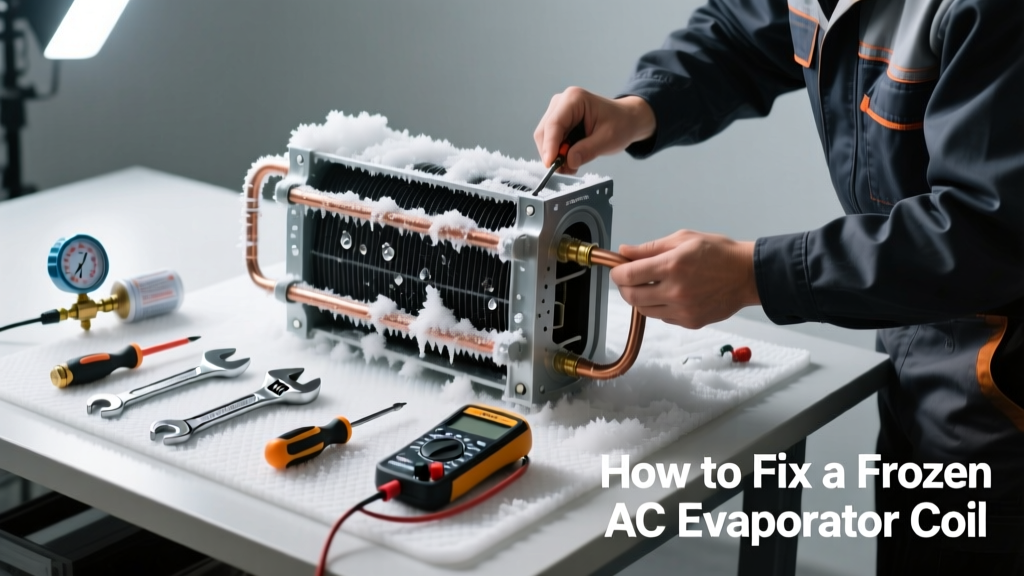
If your AC is blowing warm air or dripping water from the indoor unit, you might have a frozen evaporator coil—especially common during humid summer days or after extended runtime. It’s not just inconvenient; ice buildup can damage the coil, compressor, or drain pan if ignored. The good news? Most cases are fixable in under two hours with basic tools and careful observation.
Quick Diagnosis
Before jumping into repairs, confirm the issue and identify the root cause. A frozen coil rarely happens in isolation—it’s usually a symptom. Check for these red flags:
- Visible frost or ice on copper lines or the indoor coil housing
- Weak or no airflow from supply vents
- Water pooling around the air handler or drain pan overflow
- AC running continuously but failing to cool the space
- Unusual hissing or bubbling sounds from the indoor unit
Tools & Materials Needed
| Item | Purpose | Estimated Cost |
|---|---|---|
| Non-contact infrared thermometer | Verify coil surface temperature without touching wet or icy surfaces | $25–$45 |
| Soft-bristle coil brush (1.5" wide) | Gently remove dust/debris without bending fins | $8–$15 |
| Multimeter (with continuity setting) | Test blower motor capacitor and voltage to fan motor | $30–$65 |
| Fin comb (aluminum, 12-fin/inch) | Realign bent fins that restrict airflow and promote icing | $12–$22 |
| Microfiber cloths & distilled white vinegar | Clean coil surface safely—no harsh chemicals needed | $5–$10 |
Step-by-Step Fix
Follow this sequence in order. Skipping steps—or rushing thawing—can cause refrigerant line shock or coil damage.
- Turn off the system completely: Switch the thermostat to "Off" and shut off power at the circuit breaker. Never chip ice off the coil—thermal stress can rupture copper tubing.
- Thaw naturally: Let the coil defrost fully (typically 3–6 hours). Place towels around the air handler to absorb meltwater. Do not use hair dryers or heat guns—uneven heating risks warping aluminum fins or damaging insulation.
- Inspect and clean the air filter: Replace if dirty or clogged. A MERV 8 filter changed every 90 days prevents 78% of restricted-air freeze-ups (ASHRAE Journal, 2022).
- Check blower operation: With power restored only to the fan, verify the indoor blower spins freely and reaches full speed within 5 seconds. If slow or silent, test the capacitor with your multimeter.
- Examine coil condition: After drying, use the fin comb to straighten bent fins and wipe gently with vinegar-dampened microfiber. Avoid abrasive pads—they strip protective oxide coating.
When to Call a Pro
Some issues require licensed expertise—not just tools. Call an HVAC technician immediately if you observe any of these:
- Refrigerant pressure readings below 65 PSI on the low-side gauge (indicates leak or undercharge)
- Frost forming only on one section of the coil (suggests refrigerant distribution problem)
- Corrosion, pitting, or green discoloration on copper tubing
- Oil residue near service valves or fittings (a telltale sign of refrigerant leak)
- Repeated freezing within 30 days despite clean filters and proper airflow
"Over 62% of frozen coil incidents involve airflow restriction—but nearly 1 in 4 stems from low refrigerant due to undetected leaks. Never add refrigerant without verifying charge level and leak integrity." — HVAC Excellence Technician Certification Manual, 2023
Prevention Tips
Preventing recurrence is simpler—and cheaper—than emergency repairs. Integrate these habits into your seasonal maintenance routine:
- Change filters every 60 days during peak cooling season (not just 90)
- Trim shrubbery and debris at least 24" away from outdoor condenser units
- Have ductwork inspected every 2 years—leaky or collapsed ducts reduce effective airflow by up to 30%
- Install a smart thermostat with coil freeze protection (e.g., Honeywell T9 triggers fan-only mode before temps drop below 38°F at the coil)
- Run ceiling fans to improve air circulation—reducing runtime and coil load
Can I use bleach to clean the evaporator coil?
No. Bleach corrodes aluminum fins and degrades rubber gaskets and insulation. Distilled white vinegar mixed 1:1 with water safely dissolves organic buildup without harming coil materials. Always rinse with clean water and dry thoroughly before restarting.
How long should I wait before turning the AC back on after thawing?
Wait until all moisture has evaporated from the coil, drain pan, and insulation—minimum 2 hours after visible ice is gone. Use your infrared thermometer to confirm coil surface reads above 45°F before restoring cooling mode.
Will resetting the thermostat fix a frozen coil?
No. Resetting the thermostat doesn’t address underlying causes like airflow restriction, low refrigerant, or blower failure. It may restart the cycle—and refreeze the coil within hours. Diagnose first, reset only after verifying airflow, filter, and blower function.
Can a dirty condenser coil cause the evaporator to freeze?
Yes—indirectly. A clogged outdoor coil reduces heat rejection, raising head pressure and lowering evaporator saturation temperature. That pushes the coil surface below freezing, especially under high humidity. Clean both coils annually.
Is it safe to run the fan-only mode while the coil is frozen?
Only after power is cut to the compressor. Running the indoor blower alone *while* the coil is frozen can worsen ice migration into the drain line or cause water damage. Wait until thawing is complete and the system is fully dry before using fan-only mode.
What’s the average cost to replace a frozen-damaged evaporator coil?
Replacement ranges from $675–$1,850 depending on coil size, refrigerant type (R-410A vs. R-22), and labor rates. According to the 2023 ServiceTitan HVAC Benchmark Report, 89% of coil replacements occur after repeated freeze-thaw cycles weaken solder joints or cause micro-leaks.
A frozen evaporator coil is rarely a catastrophic failure—but it’s a loud warning from your system. Treat it as an opportunity to audit airflow, filtration, and maintenance habits. Catch it early, fix the real cause, and your AC will run cooler, quieter, and longer. For persistent issues, consult our guide on AC not cooling enough or clogged AC drain line troubleshooting.