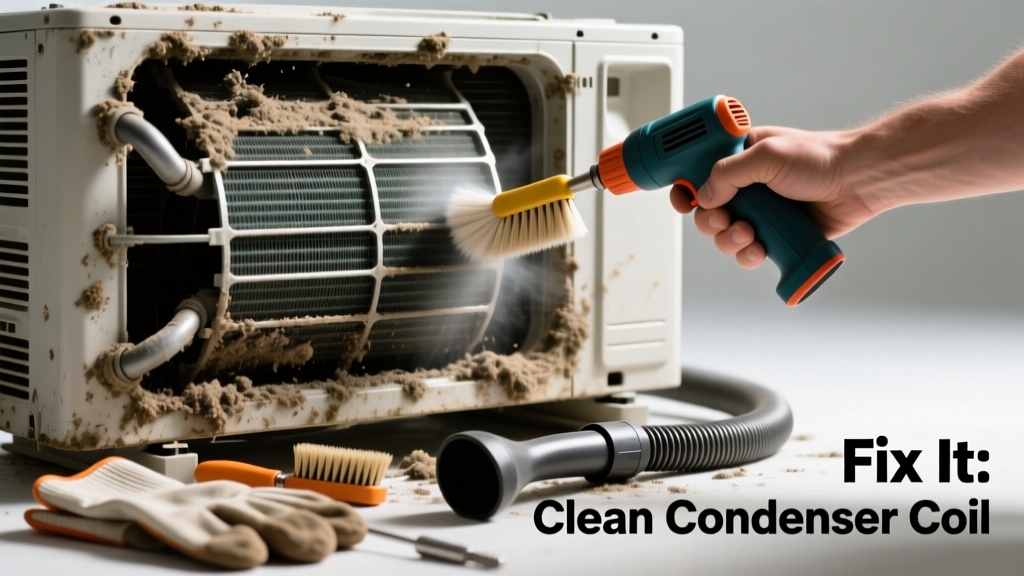
If your outdoor AC unit suddenly starts clattering, buzzing, or emitting a high-pitched hiss—especially when it first kicks on—it’s often the condenser coil choking on dirt, leaves, or bent fins. That noise isn’t just annoying; it’s a red flag that airflow is restricted, forcing the compressor to overwork and risking premature failure. Ignoring it can cost $1,200+ in replacement parts down the line.
Quick Diagnosis
Before grabbing tools, rule out these common culprits:
- Grass clippings, pine needles, or shredded leaves packed between coil fins
- Bent or crushed aluminum fins blocking airflow
- Loose fan blade hitting debris or housing
- Faulty contactor or capacitor causing electrical buzzing (not coil-related)
- Refrigerant leak near the coil producing a faint hissing sound
Tools & Materials Needed
| Item | Purpose | Estimated Cost |
|---|---|---|
| Garden hose with adjustable nozzle | Rinses loose debris without damaging fins | $12–$25 |
| Soft-bristle coil brush (4-in wide) | Cleans between fins without bending them | $8–$15 |
| Non-acidic coil cleaner (e.g., Nu-Calgon Evap Foam) | Dissolves grease, pollen, and biofilm safely | $18–$28 |
| Finned comb (aluminum fin straightener) | Realigns bent fins to restore airflow | $10–$22 |
| Multimeter (optional) | Verifies fan motor voltage and capacitor function | $25–$65 |
Step-by-Step Fix
Follow this sequence—never skip step 1 or 3. Power must be OFF at the disconnect box and breaker panel before touching anything.
- Shut off power completely: Flip the outdoor disconnect switch AND the dedicated breaker inside your main panel. Verify with a non-contact voltage tester.
- Remove surface debris: Use a shop vac or stiff dry brush to clear leaves, twigs, and nesting material from the top and sides of the unit.
- Brush and rinse gently: With the coil dry, use the soft-bristle brush vertically (parallel to fins) to loosen embedded dust. Then spray low-pressure water from the top down—never sideways or upward—to avoid driving gunk deeper.
- Apply coil cleaner: Spray non-acidic cleaner evenly across the coil surface. Let it dwell 5–8 minutes (per manufacturer instructions), then rinse thoroughly until runoff runs clear.
- Straighten bent fins: Use a fin comb—starting at the top—gently pulling downward along each row. Don’t force it; if resistance occurs, stop and reposition.
When to Call a Pro
Stop and call an EPA-certified HVAC technician if you encounter any of these:
- You hear a metallic grinding or screeching—not just buzzing or hissing—that worsens under load
- The unit trips the breaker immediately after cleaning and restarting
- You spot oil residue or frost on copper lines, indicating refrigerant loss
- Coil fins are severely corroded or perforated (not just bent)
- Your multimeter shows <208V at the contactor terminals or capacitor reads outside ±6% of rated µF
According to the U.S. EPA, 14% of household water usage is from leaks—including those caused by DIY pressure washing that cracks solder joints or dislodges refrigerant lines (EPA WaterSense Report, 2022).
Prevention Tips
Keep your condenser coil quiet and efficient year-round:
- Clean the coil every spring before peak cooling season begins
- Trim shrubs and trees to maintain at least 24 inches of clearance on all sides
- Install a louvered guard (not solid mesh) to block large debris without restricting airflow
- Replace disposable air filters indoors every 30–90 days—dirty indoor filters increase coil strain
- Consider signing up for a biannual maintenance plan with a local contractor—most include coil inspection and fin alignment
Can I use bleach on my condenser coil?
No. Bleach corrodes aluminum fins and degrades rubber gaskets and wiring insulation. It also reacts dangerously with residual oils and cleaners. Stick to pH-neutral, non-acidic coil cleaners approved by AHRI (Air-Conditioning, Heating, and Refrigeration Institute).
How often should I clean the condenser coil?
In most suburban environments, once per year is sufficient—but if you live near construction sites, hay fields, or heavy traffic, clean it twice yearly (spring and late summer). The Department of Energy recommends coil cleaning as part of routine maintenance to sustain 95%+ efficiency.
Why does my coil make noise only when the fan starts?
That’s typically debris vibrating against spinning fan blades or a bent fin flexing under airflow pressure. It may also signal a failing fan motor bearing—especially if accompanied by a whining tone. Check for obstructions first, then inspect the motor shaft for wobble.
Will cleaning the coil fix a hissing sound?
Sometimes—but not always. A faint, steady hiss *can* mean a refrigerant leak near the coil (often at a valve or flare connection), which requires leak detection and EPA-certified repair. If hissing persists after cleaning and the unit cools poorly, call a pro immediately.
Can a dirty coil cause the AC to freeze up?
Absolutely. Restricted airflow reduces heat exchange, dropping evaporator coil temperature below freezing. Ice then builds on the indoor coil—but the root cause is often the outdoor coil’s inability to reject heat efficiently. Cleaning both coils and checking airflow solves ~70% of freeze-ups (AC freezing up indoors).
Do I need to replace the coil if it’s dirty?
No—coils rarely need replacing due to dirt alone. Even heavily soiled units respond well to proper cleaning and fin straightening. Replacement is only necessary if there’s physical damage, corrosion holes, or repeated leaks confirmed by dye testing. Most technicians recommend cleaning before quoting replacement.
A clean condenser coil doesn’t just silence noise—it restores capacity, cuts runtime by up to 18%, and extends compressor life by an average of 3–5 years (ASHRAE HVAC Applications Handbook, 2021). Treat it like engine oil: skip the change, and the whole system pays the price. Keep your coil clear, your airflow open, and your summers cool and quiet.