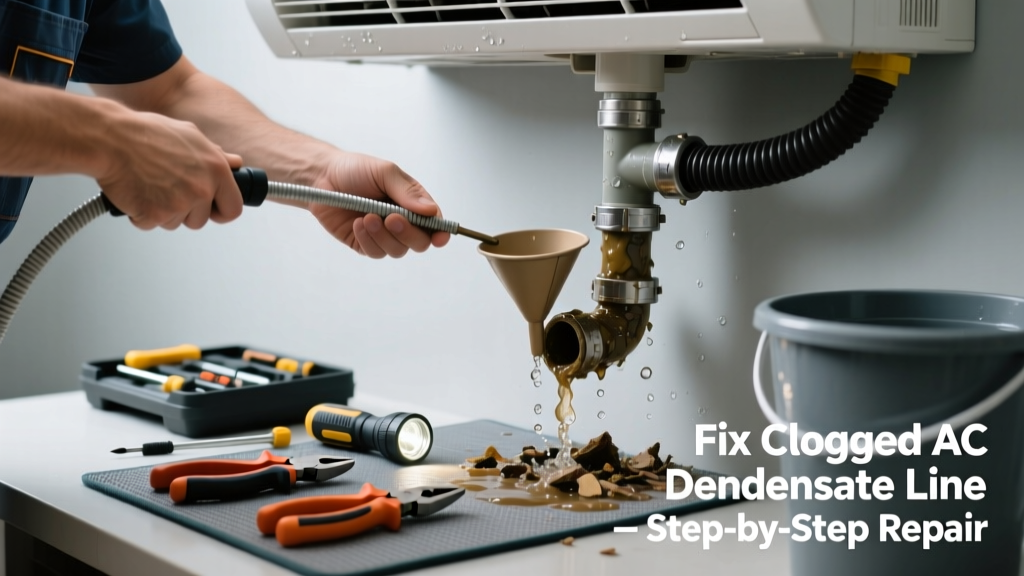
If your air conditioner starts gurgling, bubbling, or dripping erratically—especially when it cycles on—you’re likely dealing with a clogged condensate drain line. This isn’t just an annoyance: a backed-up line can trigger overflow sensors, shut down your system, or leak water into your attic or furnace cabinet. Left unaddressed, it can cause mold growth or corrosion in as little as 48 hours.
Quick Diagnosis
Before grabbing tools, confirm the issue is truly the condensate line—not the blower motor, refrigerant, or ductwork. Listen for these telltale signs:
- Gurgling or bubbling sounds near the indoor air handler or furnace
- Water pooling around the air handler or drip pan
- AC shutting off mid-cycle with no error code (or flashing LED indicating drain fault)
- Musty odor near vents or the unit—often from algae buildup in stagnant water
- Visible algae or slime in the drain pan or at the line’s exterior end
Tools & Materials Needed
| Item | Purpose | Estimated Cost |
|---|---|---|
| Shop vacuum (wet/dry) | Creates suction to dislodge sludge and biofilm | $45–$120 |
| Condensate line brush (1/4" flexible) | Physically scrubs algae and debris from inside the PVC tube | $8–$15 |
| White vinegar (undiluted) | Natural biocide that dissolves organic buildup without corroding copper or PVC | $3–$6 |
| Compressed air (tank or portable compressor) | Blows out residual moisture and loosened debris after cleaning | $25–$180 |
| Algaecide tablets (e.g., Nu-Calgon Drain-Fresh) | Preventative treatment placed in drain pan to inhibit future growth | $12–$22 |
Step-by-Step Fix
Work methodically—start gentle, escalate only if needed. Always power off the AC at the thermostat and circuit breaker before touching any components.
- Locate and inspect the drain line: Find the white PVC pipe exiting your indoor unit (usually near the air handler or furnace). Follow it to its termination point—often outside or into a floor drain. Check for kinks, sagging, or visible algae.
- Vinegar flush: Pour 1 cup of undiluted white vinegar into the access port (if present) or directly into the drain pan. Let sit for 30 minutes. Vinegar kills algae and softens biofilm—according to the U.S. EPA, it’s effective against 99% of common HVAC mold spores when used full-strength (EPA Safer Choice List, 2022).
- Vacuum suction: Attach a wet/dry vac hose to the line’s exterior end using duct tape to seal. Set to suction only. Run for 60–90 seconds. You’ll often hear a ‘pop’ as the clog releases.
- Brush and blow: Insert a 1/4" condensate brush into the line and twist while pushing gently (max 3 ft deep). Then attach compressed air (≤30 PSI) and blow toward the outdoor end. Never blow toward the air handler—this risks pushing debris into the evaporator coil.
- Test flow: Pour 1/2 cup of water slowly into the drain pan. It should evacuate within 15 seconds. If not, repeat steps 2–4.
When to Call a Pro
DIY stops where safety or complexity begins. Call an HVAC technician immediately if:
- You hear hissing or see frost on the evaporator coil—suggesting refrigerant issues or airflow problems worsening the drain condition
- The clog persists after three full cleaning attempts (a sign of internal line collapse or hidden trap blockage)
- Your system uses a condensate pump with a failed float switch or burnt-out motor
- You spot black mold inside the air handler cabinet or insulation—requires containment and remediation per IICRC S520 standards (2023)
Prevention Tips
Prevent recurrence with consistent maintenance—not just annual tune-ups. Replace algaecide tablets every 3–4 months. Install a condensate line UV light near the drip pan for continuous sterilization. Clean the drain pan quarterly with a 50/50 vinegar-water mix. Ensure the line has a minimum 1/4" per foot pitch—recheck slope after any attic insulation work. Consider upgrading to a rigid PVC line if your current one is flexible vinyl, which collapses easily and traps debris.
Can I use bleach on this?
No. Bleach corrodes aluminum drain pans and damages PVC over time. It also reacts dangerously with ammonia-based cleaners sometimes used in HVAC systems. White vinegar or EPA-registered HVAC algaecides are safer and more effective for organic clogs.
Why does my AC make noise only when it first turns on?
That’s classic airlock behavior. When the line is partially clogged, air gets trapped in high points. As condensate builds, pressure forces air through water—creating gurgles. Once the line clears temporarily, noise stops until the next cycle.
How often should I clean the condensate line?
At minimum, twice yearly—before peak cooling season (spring) and again mid-summer. Homes in humid climates (e.g., Houston, Miami) benefit from quarterly cleaning. A seasonal HVAC maintenance checklist helps track this.
Will a clogged drain line trip my circuit breaker?
Not directly—but many modern units have a float switch that cuts power to the blower if water rises in the pan. That’s why your AC shuts off unexpectedly. It’s a safety feature, not an electrical fault.
What’s the white crusty stuff in my drain pan?
That’s calcium carbonate and dried algae—common in hard water areas. It forms a breeding ground for microbes and accelerates clogs. Wipe it away with vinegar and a nylon brush before flushing.
Can a clogged condensate line cause frozen coils?
Indirectly, yes. If water backs up into the drain pan and overflows onto the evaporator coil insulation, it reduces airflow and insulates the coil—leading to freezing. According to the Air Conditioning Contractors of America (ACCA Manual D, 2021), poor drainage contributes to 18% of residential coil freeze incidents.
"A single 1/8-inch layer of algae in a 3/4-inch drain line reduces flow capacity by over 60%. That’s why visual inspection alone isn’t enough—you need flow testing." — HVAC Excellence Certified Technician Handbook, 4th ed., 2023
Fixing a noisy, clogged condensate line takes less than an hour—and saves you from costly water damage or emergency service calls. Keep a small bottle of vinegar and a condensate brush in your garage, and treat it like changing your furnace filter: simple, scheduled, and essential. If you notice recurring clogs despite regular cleaning, inspect your home’s humidity levels and airflow—sometimes the real culprit is oversized equipment or undersized ductwork, not the drain itself.