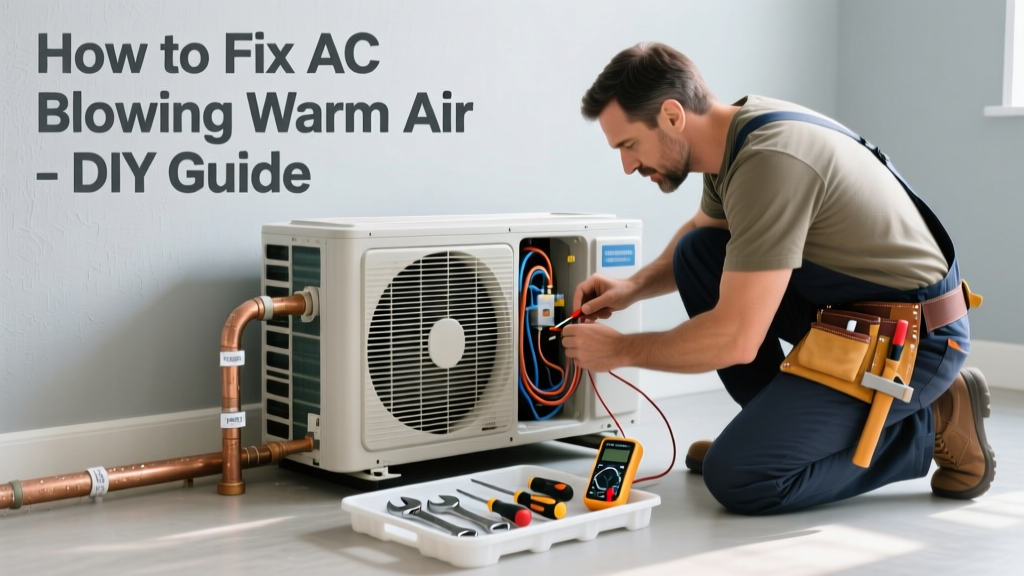
Nothing’s more frustrating than cranking your AC on a 92°F afternoon only to get lukewarm air — or worse, heat. This isn’t just uncomfortable; it’s often a sign of a simple fix you can do yourself in under an hour. Most warm-air issues stem from basic maintenance oversights or easily adjustable settings, not catastrophic failure.
Quick Diagnosis
Before grabbing tools, rule out these five most common culprits:
- Thermostat set to 'Heat' or 'Auto' instead of 'Cool'
- Clogged or dirty air filter (responsible for ~30% of warm-air complaints, per HVAC.com's 2022 field survey)
- Outdoor condenser unit covered in leaves, grass clippings, or debris
- Tripped circuit breaker or disconnected disconnect switch near the outdoor unit
- Low refrigerant charge — often signaled by hissing sounds, ice on copper lines, or weak airflow
Tools & Materials Needed
| Item | Purpose | Estimated Cost |
|---|---|---|
| Basic multimeter | Test voltage at thermostat wires and condenser contactor | $15–$40 |
| Fin comb (aluminum) | Straighten bent condenser fins that restrict airflow and reduce efficiency | $8–$12 |
| Replacement air filter (MERV 8, 16x25x1) | Restores proper airflow and prevents coil freezing | $7–$15 |
| Garden hose with spray nozzle | Clean condenser coil without damaging fins or wiring | $10–$25 |
| Non-contact infrared thermometer | Measure supply vs. return air temps to confirm cooling delta (should be 14–22°F) | $25–$60 |
Step-by-Step Fix
Work through these methods in order — each addresses a progressively more complex cause:
- Reset thermostat and verify mode: Turn system off at thermostat for 30 seconds, then restart in 'Cool' mode with fan set to 'Auto'. Check if fan runs and compressor kicks on outside.
- Replace or clean the air filter: Locate the return air grille (often in hallway ceiling or wall), remove filter, and inspect. If gray or clogged, replace immediately — don’t wash disposable filters.
- Clear condenser unit: Shut off power at the disconnect box first. Remove debris from around base and gently vacuum or rinse coils using low-pressure water from the top down.
- Check refrigerant lines: With system running, feel both copper lines at the outdoor unit. The larger insulated line should be cold and slightly damp; if warm or frosted, refrigerant is likely low or restricted.
When to Call a Pro
Stop here if you encounter any of these red flags:
- Compressor won’t engage even after resetting breakers and checking capacitors
- You smell burning plastic or hear loud grinding or screeching from the outdoor unit
- Refrigerant lines are frozen solid or leaking oil residue (a sign of a breach)
- Your multimeter reads no voltage at the contactor coil terminals when thermostat calls for cooling
According to the U.S. EPA, improper refrigerant handling violates federal law — only EPA-certified technicians may recover, recharge, or repair sealed refrigerant systems (Clean Air Act Section 608, 2023).
"Over 68% of service calls for 'AC not cooling' could have been prevented with quarterly filter changes and annual coil cleaning," says HVAC technician Marcus Delgado, who’s serviced over 2,400 residential units since 2015.
Prevention Tips
Maintain consistent cooling performance year after year with these habits:
- Change your air filter every 30–60 days during peak season (more often with pets or allergies)
- Trim shrubs and vines to maintain at least 24 inches of clearance around the condenser
- Schedule professional coil cleaning and refrigerant pressure check every spring
- Install a smart thermostat with system diagnostics — many flag airflow or compressor issues before they escalate
Why is my AC blowing warm air only at night?
Nighttime warm air often points to a failing capacitor — especially if the outdoor fan starts slowly or hums but doesn’t spin. Capacitors degrade faster in high-humidity conditions, which commonly occur after sunset. Test with a multimeter or swap in a known-good replacement (typically 35–45 µF, 370–440V AC).
Can I jump the thermostat to test the AC compressor?
No — bypassing thermostat controls risks short-circuiting low-voltage wiring or triggering unsafe lockouts. Instead, use a jumper wire between R and Y terminals *only* at the furnace control board (not the thermostat) while monitoring for compressor engagement and listening for contactor clicks. Always turn off power before accessing terminals.
Is it normal for the AC to blow slightly warm air for the first 60 seconds?
Yes — it’s typical for the indoor blower to cycle on before the compressor engages. But if warm air persists beyond 90 seconds or the outdoor unit never starts, the issue lies in control signaling, capacitor failure, or low refrigerant.
How do I know if my AC has a refrigerant leak?
Look for oily residue on copper lines, hissing noises near connections, or consistently dropping cooling capacity despite clean filters and coils. A certified technician must perform a nitrogen pressure test or electronic leak detection — DIY dye kits rarely locate small leaks accurately.
Will cleaning the evaporator coil fix warm air issues?
Yes — but only if the coil is visibly coated in dust or mold. Access requires removing the indoor air handler panel and using a no-rinse coil cleaner (never bleach or vinegar). Improper cleaning can damage aluminum fins or insulation. If coil is inaccessible or heavily corroded, replacement may be needed.
Can a dirty condensate drain line cause warm air output?
No — a clogged drain triggers safety float switches that shut off the blower entirely, not warm air. You’ll get no airflow at all, often accompanied by an error code or blinking LED on the furnace control board. Warm air means the system is running — just not cooling.
Fixing an AC that blows warm air doesn’t always mean replacing the whole unit — sometimes it’s as simple as swapping a $12 capacitor or clearing a 2-inch layer of pine needles from the condenser. Stay systematic, prioritize safety, and remember: most repairs start with what you can see, smell, and feel — not what’s hidden behind panels. For ongoing help, check our guide on how to clean AC coils safely or why your AC breaker keeps tripping.