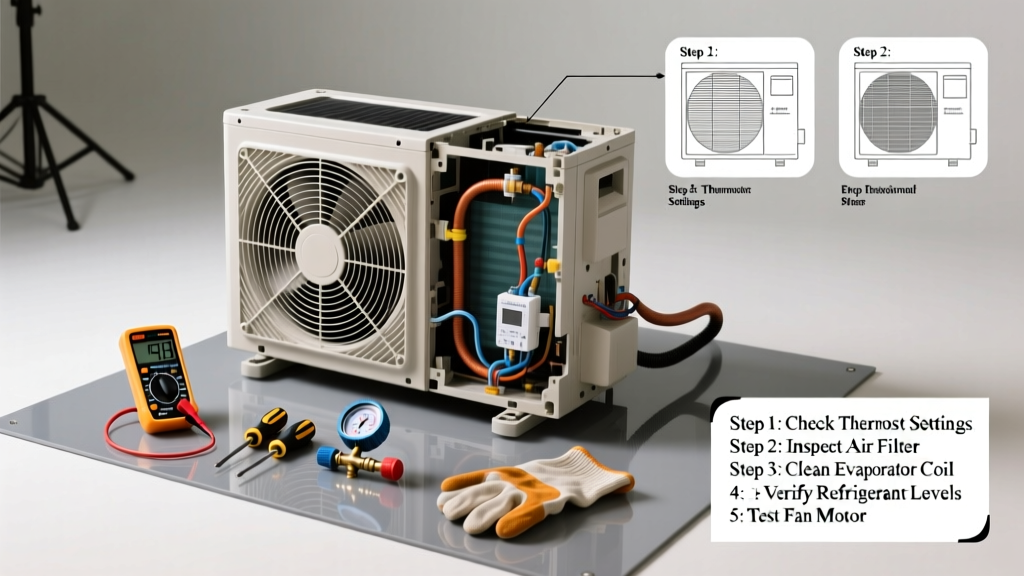
Your AC kicks on, the fan spins, but instead of cool relief, you get lukewarm air—and sweat starts pooling at your temples. This isn’t just uncomfortable; it’s a sign something’s off in your cooling system, and many causes are quick fixes you can handle in under an hour.
Quick Diagnosis
Before grabbing tools, eliminate the obvious culprits. Most warm-air complaints stem from one of these five issues:
- Thermostat set to "Heat" or "Fan Only" mode
- Clogged or dirty air filter restricting airflow
- Outdoor condenser unit covered in leaves, grass clippings, or debris
- Tripped circuit breaker or disconnected disconnect switch near the outdoor unit
- Low refrigerant due to a leak (requires professional handling)
Tools & Materials Needed
| Item | Purpose | Estimated Cost |
|---|---|---|
| Non-contact voltage tester | Verifies power is off before inspecting electrical components | $15–$25 |
| Replacement pleated air filter (MERV 8–11) | Restores airflow and prevents coil freezing | $8–$20 |
| Garden hose with spray nozzle | Cleans condenser coils without bending fins | $12–$30 |
| Fin comb (aluminum coil straightener) | Realigns bent condenser fins that block airflow | $10–$18 |
| Soft brush & vacuum with brush attachment | Removes dust buildup from indoor evaporator coil access panel | $5–$15 |
Step-by-Step Fix
Work through these methods in order—most homeowners resolve the issue by step 3.
- Reset thermostat settings: Switch to "Cool" mode, set temperature at least 5°F below room temp, and ensure fan is set to "Auto" (not "On"). Wait 5 minutes—many systems need time to cycle refrigerant pressure.
- Replace or clean the air filter: Locate your return air grille (often in hallway ceiling or wall), remove the filter, and check for visible dust or discoloration. If it’s gray or clogged, swap it out—even if it’s only been 30 days. According to the U.S. EPA, dirty filters account for nearly 30% of residential AC performance complaints in summer months.
- Clear the outdoor condenser unit: Turn off power at the disconnect switch (usually a gray box near the unit). Remove debris, trim shrubs back 24 inches, then gently rinse coils top-to-bottom with a garden hose—never use high-pressure nozzles. Let dry fully before restoring power.
- Inspect for frozen evaporator coils: If airflow is weak and you hear a hissing sound or see ice on copper lines near the indoor air handler, turn off the system for 4–6 hours to thaw completely. Then repeat steps 1–3 before restarting.
When to Call a Pro
Stop and call a licensed HVAC technician if you encounter any of these:
- No cold air after completing all DIY steps above
- Hissing, bubbling, or sweet chemical odor (sign of refrigerant leak)
- Tripped breaker resets immediately when turned on—or smells burnt
- AC runs constantly but never reaches set temperature (possible compressor failure)
- Water pooling around indoor unit with no drain clog (may indicate failed condensate pump or cracked pan)
"If your system uses R-22 refrigerant and you suspect a leak, don’t delay—R-22 is banned for new production and costs over $120 per pound as of 2024, according to AHRI's Refrigerant Report."
Prevention Tips
Maintaining your AC cuts repair risk by over 60%, per the National Association of Home Builders’ 2023 Home Systems Maintenance Study. Do these quarterly:
- Change air filters every 30–60 days during peak season (every 90 days otherwise)
- Trim vegetation to maintain 24-inch clearance around outdoor unit
- Wipe down thermostat sensors with a microfiber cloth monthly
- Schedule professional tune-ups each spring—includes refrigerant pressure check, coil inspection, and electrical connection tightening
Why does my AC blow warm air only at night?
Nighttime warm-air issues often point to low refrigerant charge or failing capacitors. As ambient temps drop, low refrigerant struggles to absorb heat efficiently—and weak start capacitors may not engage the compressor consistently after extended idle periods. A multimeter test of capacitor µF rating (should be within ±6% of labeled value) helps confirm.
Can I recharge my AC refrigerant myself?
No—and it’s illegal without EPA Section 608 certification. Refrigerant handling requires leak detection, evacuation, precise charging, and documentation. Improper charging damages compressors and violates federal law. Always hire a certified technician for refrigerant work. Learn how pros detect leaks.
Is it safe to spray water on my outdoor AC unit?
Yes—if done correctly. Use a gentle spray from a garden hose (no pressure washer) while the unit is powered off. Avoid soaking electrical components or forcing water into fan motor housings. Never spray upward into the fan blades—water can enter bearings and cause premature failure. See our full coil cleaning guide.
What does a bad AC capacitor sound like?
A failing start or run capacitor often produces a distinct *click-hum-click* when the system tries to start—or silence where there should be a low hum. You might also notice delayed startup, dimming lights, or the outdoor fan spinning slowly or not at all. Test with a multimeter or replace proactively every 5 years.
How long should my AC run before cooling the house?
A properly sized, maintained system should lower indoor temps by 1–2°F every 15 minutes. So dropping from 85°F to 75°F typically takes 60–75 minutes. Longer cycles suggest airflow restriction, undersized equipment, or duct leakage—test your ducts with smoke pencils.
Why does my AC blow warm air after changing the filter?
This usually means the new filter is too dense (e.g., MERV 13+ in a system rated for MERV 8) or was installed backward. Check arrow direction on filter frame—it must point toward the blower. Overly restrictive filters reduce airflow so severely that evaporator coils freeze, then melt and blow tepid air. Stick with MERV 8–11 unless your system is specifically designed for higher ratings.
Fixing warm-air AC issues doesn’t always require a service call—but knowing which steps are safe, effective, and repeatable gives you real control over comfort and cost. Keep a log of filter changes, thermostat adjustments, and outdoor unit cleanings; patterns emerge fast, and early detection saves hundreds in emergency repairs down the line.