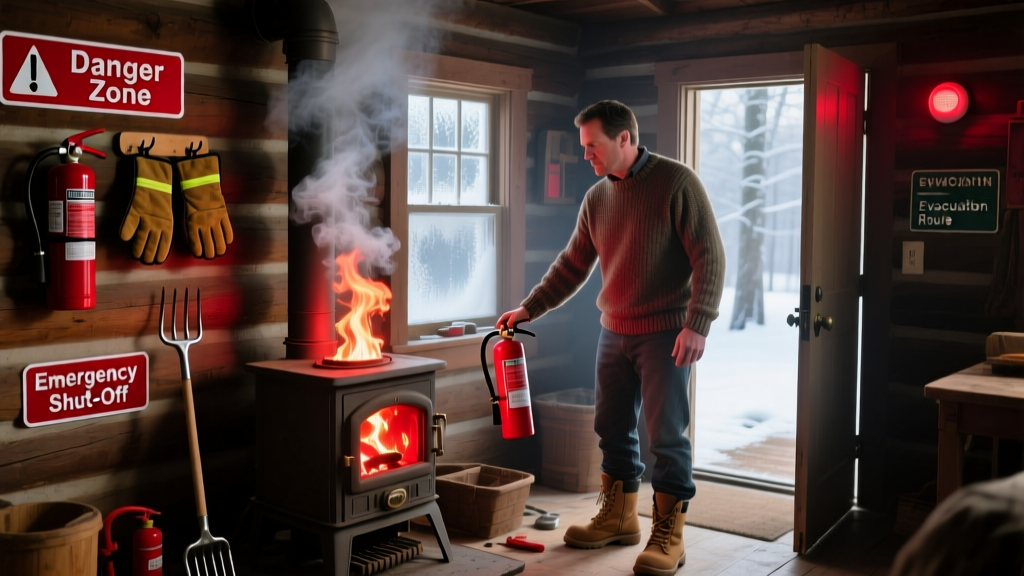
If your wood stove’s surface exceeds 700°F, glows red, or smells like burning metal—shut it down *now*. Close the air intake fully, open windows for ventilation, and evacuate children and pets from the room.
Immediate Actions
- Close all primary and secondary air dampers completely—this cuts oxygen to the fire.
- Use heat-resistant gloves to carefully remove any unburned fuel (logs, kindling) with a metal poker or shovel into a non-combustible bucket.
- Place a fire extinguisher (Class A or ABC) within arm’s reach—do not aim at the stove body; keep it ready for flare-ups or nearby ignition.
- Open exterior windows and doors in the room to lower ambient temperature—but avoid creating drafts that feed the fire.
- Monitor stove surface temperature with an infrared thermometer if available; anything above 750°F demands full evacuation.
When to Call 911 / When to Call a Pro
Call 911 immediately if:
- Smoke is filling the room or spreading beyond the stove area;
- You see flames escaping the stove body, flue collar, or chimney;
- The stovepipe or wall behind the stove is discolored, warped, or emitting smoke.
Call a certified wood stove technician within 24 hours if:
- Stove surface peaked above 650°F but no visible damage occurred;
- Air controls failed to respond or stuck during the event;
- You suspect flue blockage (e.g., reduced draft, soot buildup, animal nests).
According to the U.S. Fire Administration’s 2022 report, wood stoves account for 18% of home heating–related structure fires—and 32% of those involved improper operation or maintenance.
What NOT to Do
- Never pour water on an overheated stove—it can crack cast iron or steel and trigger steam explosions.
- Don’t use combustible materials (blankets, towels) to cover or insulate the stove.
- Don’t restart the stove until inspected—even if it appears undamaged.
- Don’t ignore a warped baffle plate or cracked firebrick; these are critical failure points.
After the Emergency
Once the stove cools below 150°F (minimum 6–8 hours), inspect for damage:
| Component | Signs of Damage | Action Required |
|---|---|---|
| Stove body | Warping, hairline cracks, blistered paint | Retire stove; do not operate |
| Flue pipe | Discoloration beyond golden brown, sagging joints | Replace entire section; check chimney liner |
| Firebrick | Crumbled, chipped, or missing sections | Replace before next use |
| Door gasket | Hardened, cracked, or compressed >50% | Replace gasket kit |
Document everything: take timestamped photos of the stove, flue, and surrounding walls. File a claim with your insurer if interior walls or flooring show scorching or warping—most policies cover stove-related damage if maintenance records exist.
Can I reuse the same stove after overheating?
Only if a certified technician confirms structural integrity, flue gas temperatures remain within manufacturer specs (typically ≤ 1,100°F), and all internal components pass visual and thermal stress testing. Cast iron stoves rarely survive sustained temps over 750°F without microfractures.
Why did my stove overheat in the first place?
Most cases stem from blocked flues (42% per NFPA 2023 data), overloading with wet or oversized wood, or leaving air intakes fully open overnight. A cracked damper seal or missing baffle plate also disrupts airflow balance—learn how to test draft pressure.
How hot is too hot for a wood stove?
Safe operating range: 300–600°F on the stove top, per EPA-certified stove manuals. Surface temps above 650°F risk warping; above 700°F, metal fatigue accelerates exponentially. Use a magnetic stove thermometer placed 2 inches from the flue collar for accuracy.
Is it safe to sleep with a wood stove running?
Only if equipped with automatic draft control, CO detector within 10 feet, and stove is rated for overnight burn. Never leave a stove unattended while glowing red or exceeding 600°F—download our nightly shutdown checklist.
Do I need a new chimney liner after overheating?
Yes—if flue gas temps exceeded 1,200°F (common in runaway burns), stainless steel liners degrade rapidly. The Chimney Safety Institute of America recommends replacing liners after any incident where creosote ignited or metal discoloration reached cherry-red.
What’s the #1 sign I ignored before this happened?
Reduced draft—noticeable as sluggish flame movement, smoke puffing back into the room, or difficulty lighting. That’s often the first warning of flue restriction or failing gaskets. Don’t wait for overheating to act.
"A stove that runs too hot isn’t just inefficient—it’s a delayed structural failure waiting to happen. Every 100°F above 600°F doubles thermal stress on cast iron." — John R. Lauer, CSA-certified stove technician, Hearth & Home Magazine, 2021
Cooling down isn’t the end—it’s the start of verification. If your stove has overheated once, it’s vulnerable to repeat failure without professional recalibration and component replacement. Don’t assume ‘it worked fine before’—thermal history changes metal integrity permanently.