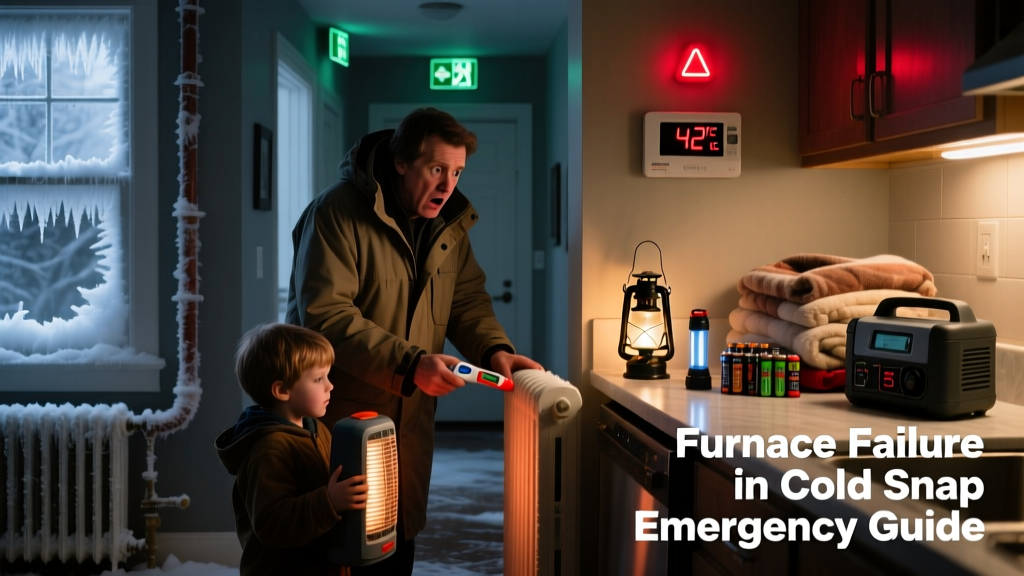
Turn off the furnace at the breaker and open a window slightly for ventilation—right now. If indoor temperatures are dropping below 40°F and you have infants, elderly, or medically vulnerable people present, begin preparing to relocate within 30 minutes.
Immediate Actions
- Shut off power to the furnace at the circuit breaker—not just the thermostat—to prevent electrical hazards or ignition attempts.
- Check for gas smell (rotten egg odor) or hissing near the unit; if detected, evacuate immediately and call 911 from outside.
- Open one interior door and one exterior window (just 1–2 inches) to reduce CO buildup while maintaining some heat retention.
- Layer clothing and use dry blankets; avoid electric space heaters unless they’re UL-listed, grounded, and placed 3+ feet from combustibles.
- Monitor for CO symptoms: headache, dizziness, nausea, confusion—or flu-like illness without fever. Act fast if two or more people experience these simultaneously.
When to Call 911 / When to Call a Pro
If you suspect carbon monoxide exposure, smell gas, hear explosive popping, or see soot around vents, evacuate and dial 911 immediately. Do not re-enter until cleared by fire department personnel.
For non-life-threatening failures—like no heat but no gas odor, error codes on display, or pilot light out—call a licensed HVAC technician within 2 hours if indoor temps fall below 45°F. According to the U.S. Department of Energy’s 2022 Winter Readiness Report, 68% of furnace failures during cold snaps involve igniter or flame sensor issues that require professional diagnosis.
- Install battery-backed CO detectors on every floor and within 10 feet of bedrooms—required by NFPA 720-2022.
- Use only EPA-certified vented heating appliances indoors; unvented propane heaters cause 200+ CO deaths annually (CDC, 2023).
What NOT to Do
- Never use ovens, grills, camp stoves, or generators indoors—even with windows open.
- Don’t cover furnace vents or return air grilles with rugs, furniture, or tape.
- Avoid restarting the furnace repeatedly after it shuts off—it may overheat or ignite dust buildup.
- Don’t ignore cracked heat exchangers: they allow CO into your home. A visual inspection isn’t enough—you need combustion analysis.
"In freezing conditions, every hour below 40°F increases hypothermia risk for seniors by 17%. Never wait for 'just one more degree' before moving to shelter." — Dr. Lena Cho, American College of Emergency Physicians, 2023 Winter Safety Briefing
After the Emergency
Once heat is restored or you’ve relocated safely, document everything: take timestamped photos of the furnace, error codes, thermostat settings, and any visible damage. Note ambient temperature readings every 30 minutes during outage.
| Item | Why It Matters |
|---|---|
| Thermostat model & firmware version | Rules out software glitches vs. mechanical failure |
| Furnace age & service history | Units older than 15 years have 3x higher failure rate in sub-zero temps (AHRI, 2023) |
| CO detector alarm logs (if smart-enabled) | Provides time-stamped evidence for insurance claims |
| Utility company outage map screenshot | Confirms whether issue was grid-related vs. equipment-specific |
Is it safe to relight the pilot light myself?
Only if your furnace has a standing pilot (not electronic ignition), you’ve done it successfully before, and there’s zero gas odor. Turn the gas valve to OFF for 5 minutes first, then follow the label instructions exactly. If the flame won’t stay lit after three tries, stop and call a pro.
Can I run my furnace on a generator?
Yes—but only if the generator is sized for the furnace’s full startup wattage (often 3,500–6,000W for modern units) and connected via a transfer switch installed by a licensed electrician. Backfeeding through an outlet risks electrocution and fire.
How long can pipes freeze without heat?
In uninsulated walls or attics, copper pipes freeze in as little as 3–6 hours when indoor temps drop below 20°F. PEX holds up slightly longer—but burst risk rises sharply below 15°F. Keep cabinet doors open under sinks and let faucets drip at 5 drops/minute.
What’s the minimum safe indoor temperature for pets?
Dogs and cats need at least 55°F sustained; small mammals (rabbits, guinea pigs) need 60–75°F. Birds require 65–80°F. Never leave pets in garages or unheated sheds—even with bedding.
Should I file an insurance claim for furnace damage?
Yes—if failure caused water damage (from condensate line freeze), mold growth, or pipe bursts. Most standard policies cover sudden, accidental damage—but not routine maintenance neglect. Submit your documentation within 72 hours.
How do I prevent this next winter?
Schedule annual tune-ups in early fall, replace filters monthly during heavy use, install a smart thermostat with freeze protection alerts, and insulate exposed ductwork in crawlspaces. According to the National Fire Protection Association, 42% of home heating fires occur in December, January, or February—most linked to lack of maintenance.
Stay warm, stay alert, and never assume ‘it’ll kick back on.’ Your furnace isn’t just comfort—it’s critical infrastructure when thermometers plunge. If doubt lingers, err on the side of evacuation and call a certified HVAC emergency responder before the next cold front hits.