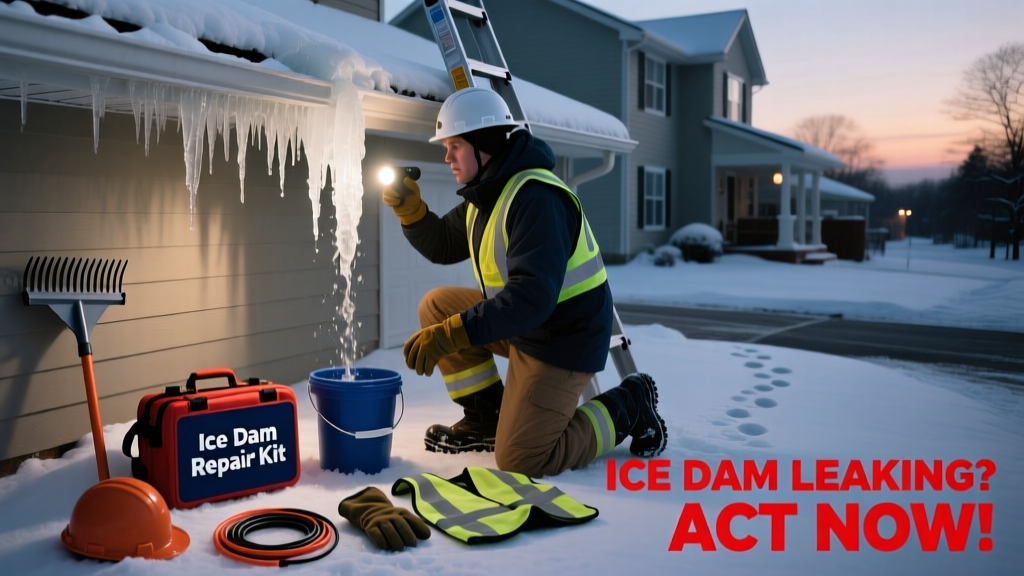
Water dripping from your ceiling or peeling paint near eaves means ice dam leakage is actively damaging your home — act within the first 30 minutes to limit structural harm and mold risk.
Immediate Actions
These steps reduce water flow, prevent electrocution, and protect belongings. Do them in order — no exceptions.
- Turn off electricity to any room with standing water or wet outlets (use main breaker if unsure).
- Place buckets under active leaks and lay towels or tarps on floors and furniture.
- Open attic hatches (if safe) to monitor water path and check for insulation saturation.
- Remove valuables from affected rooms — especially electronics, documents, and heirlooms.
- Run fans (not heaters) in affected areas to slow moisture buildup — only if outlets are dry and circuits are off.
When to Call 911 / When to Call a Pro
Call 911 immediately if you see sparks, smell burning plastic, or notice water contacting live wiring. Also call 911 if water has pooled near gas appliances or basement electrical panels.
Call a licensed roofing contractor or emergency water mitigation specialist if:
- Leaking exceeds 2 gallons per hour;
- Water has soaked >10 sq ft of drywall or insulation;
- You hear cracking sounds in the roof deck or walls;
- It’s below 20°F and snow/ice is still accumulating on the roof.
According to the Insurance Institute for Business & Home Safety's 2023 report, 68% of ice dam-related insurance claims involve secondary damage from delayed response — especially mold growth starting within 48 hours.
What NOT to Do
These actions risk injury, fire, or worsened damage. Avoid them completely:
- Do not use salt or calcium chloride on roofs — they corrode shingles, gutters, and flashing.
- Do not climb onto a snowy or icy roof — 32% of winter residential injuries involve falls from ladders or roofs (CDC, 2022).
- Do not run space heaters near wet drywall or insulation — fire risk spikes dramatically.
- Do not ignore attic ventilation — blocked soffit vents worsen ice dams by trapping heat.
After the Emergency
Once active leaking stops, begin documentation and drying — but only after confirming electrical safety and structural stability.
| Area | Check For | Action If Present |
|---|---|---|
| Attic | Wet insulation, sagging sheathing, frost on rafters | Install baffles and schedule insulation replacement|
| Ceiling/Walls | Bubbling paint, soft drywall, dark stains | Cut and replace damaged sections within 72 hours|
| Gutters | Collapsed sections, bent hangers, missing fasteners | Replace full 10-ft section, not just patches
Take timestamped photos of all damage before cleanup. File an insurance claim within 24 hours — most carriers require proof of prompt action to cover ice dam mitigation costs.
Can I melt the ice dam myself?
No — using blowtorches, hot water hoses, or steam units risks fire, roof punctures, or scalding. The U.S. Fire Administration warns that improvised melting caused 17% of residential winter fires in 2022. Hire a certified ice dam removal technician who uses low-pressure steam equipment.
Will my homeowner’s insurance cover this?
Most standard policies cover sudden, accidental water damage from ice dams — but exclude long-term neglect (e.g., unvented attics, clogged gutters). Document prior maintenance like gutter cleaning receipts and attic insulation upgrades to strengthen your claim.
How fast does mold grow after a leak?
Mold spores can colonize damp drywall or insulation within 24–48 hours. The CDC states visible mold growth often appears by day 3 in humid indoor conditions. Use a hygrometer to confirm humidity stays below 50% during drying.
Why does this keep happening every winter?
Recurring ice dams signal chronic heat loss — usually from insufficient attic insulation (<12 inches of R-49+), missing soffit vents, or recessed lighting leaking warm air into the attic. Fix root causes, not just symptoms.
Can I install heat cables as a fix?
Heat cables are a temporary bandage — not a solution. They fail in 40% of installations within 3 years (NRCA, 2021) and often create new melt paths that refreeze downstream. Prioritize air sealing and ventilation upgrades instead.
What’s the fastest way to prevent next year’s ice dam?
Start now: seal attic bypasses (recessed lights, ductwork, plumbing chases) with fire-rated caulk or foam, then add R-60 cellulose insulation. That combo reduces roof surface temperature differential by up to 70%, according to the Oak Ridge National Laboratory’s 2022 cold-climate study.
Ice dams won’t wait for spring — act now, document everything, and prioritize safety over speed. Your next step: check soffit vent coverage and schedule a pre-winter roof inspection.