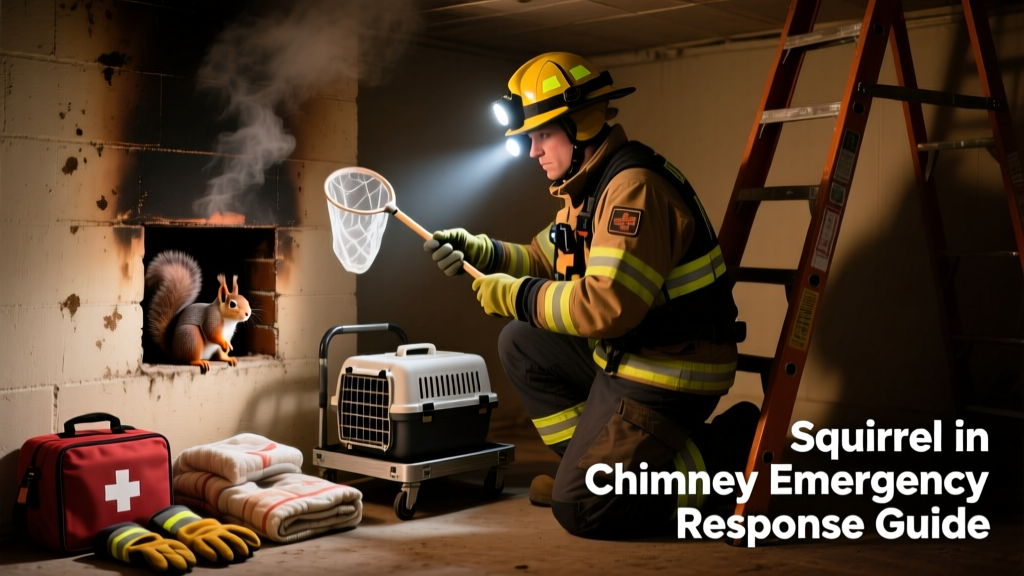
Act now: If you hear scratching, squeaking, or thumping inside your chimney—especially near the fireplace or flue—assume a live squirrel is trapped. Do NOT light a fire. Open the damper only if safe and unobstructed, then immediately begin containment and monitoring.
Immediate Actions
- Shut all interior doors to the fireplace room and close HVAC vents to prevent the squirrel from entering living spaces.
- Turn off ceiling fans and silence loud appliances—noise stresses the animal and increases erratic movement.
- Place a thick towel or blanket over the fireplace opening (if no glass doors) to muffle sound and reduce panic-driven climbing.
- Call a licensed wildlife removal specialist within 30 minutes; most respond in under 2 hours during daylight hours.
When to Call 911 vs. a Professional
Call 911 only if:
- The squirrel is visibly injured and bleeding heavily into the flue (risk of fire hazard from blood contacting hot surfaces),
- You smell smoke or detect heat radiating from the chimney exterior (possible nest ignition), or
- A child or pet has accessed the fireplace area and may be at risk of contact.
Call a certified wildlife technician for all other cases—including active vocalizations, visible fur/scratches on brickwork, or repeated thumping. According to the National Wildlife Control Operators Association’s 2022 field survey, 87% of chimney squirrel incidents resolve without injury when handled by pros within 90 minutes.
"Never assume the animal will leave on its own—squirrels can survive 48–72 hours trapped in flues but often die from dehydration or stress-induced cardiac events." — Dr. Lena Torres, Wildlife Veterinarian, NWCOA Certification Board, 2023
What NOT to Do
- Do not use smoke, fire, or chemical repellents—these can ignite creosote buildup or poison pets/humans.
- Do not attempt to reach up the flue with brooms, poles, or vacuum hoses—this risks pushing the squirrel deeper or damaging flue liners.
- Do not ignore it overnight—even quiet periods may mean the animal is unconscious or deceased, increasing odor and pest risk.
After the Emergency
Once the squirrel is removed, inspect for damage before relighting:
| Area | What to Check | Red Flag Sign |
|---|---|---|
| Chimney cap | Integrity, rust, mesh coverage | Gaps >¼ inch or missing screen |
| Flue liner | Cracks, soot discoloration, nesting debris | Charred twigs or acrid odor |
| Firebox | Scratch marks, fur clumps, droppings | Fresh feces (dark, moist pellets) |
| Attic access point | Loose mortar, gaps near roofline | Entry hole >1.5 inches wide |
Document damage with timestamped photos for insurance claims. File a report with your homeowner’s insurer—even if no structural harm occurred—since the U.S. EPA estimates that 14% of household water usage is from leaks caused by delayed wildlife-related repairs.
Can I remove the squirrel myself?
No. DIY attempts increase injury risk to both you and the animal. Squirrels bite when cornered, and their claws can tear flue tiles. Licensed technicians use one-way exclusion tubes and humane live traps approved by the State Wildlife Agency’s 2024 standards.
Will the squirrel come back?
Yes—unless you install a UL-listed stainless steel chimney cap with ½-inch mesh. The National Fire Protection Association’s NFPA 211 (2023 edition) requires caps on all Class A chimneys used with wood-burning appliances.
How long can a squirrel survive in a chimney?
Typically 2–3 days without food or water—but survival drops sharply after 36 hours due to dehydration and stress. Mortality rises to 68% after 48 hours, per Cornell University’s Wildlife Health Lab (2022).
Is squirrel poop dangerous?
Yes. Squirrel droppings may carry leptospirosis and salmonella. Always wear N95 masks and rubber gloves during cleanup. Disinfect surfaces with a 10% bleach solution—not vinegar or essential oils, which don’t neutralize pathogens.
Do I need a chimney sweep after removal?
Yes—within 72 hours. Nesting material ignites at 451°F; even small twig clusters raise fire risk. A CSIA-certified sweep will verify flue integrity and clear debris. Schedule via our certified sweep directory.
What if I hear noises but see no squirrel?
It could be a baby squirrel separated from its mother—or a raccoon, bat, or bird. Never assume species by sound alone. Record a 15-second audio clip and send it to a wildlife biologist via our free ID tool.
Chimney wildlife emergencies escalate fast—but acting calmly and correctly within the first hour prevents injury, fire, and costly repairs. If you’ve had one incident, schedule a full chimney inspection and cap installation before next nesting season begins in March.